The Financial Due Diligence Checklist Buyers Actually Use

Every buyer runs financial due diligence. The difference between the ones who catch a $600,000 problem and the ones who inherit it comes down to what they ask for and whether they know what the answers should look like.
This checklist covers the requests that matter, organized the way diligence teams actually work them. Use it as a buyer to structure your document request list. Use it as a seller to see what's coming, because every item on this list will be asked of you, and the sellers who prepare answers in advance keep control of the story.
What financial due diligence covers
Financial due diligence tests whether a target's reported results are accurate, sustainable, and transferable to a new owner. It runs deeper than reading financial statements. The work reconciles what management reports against what the general ledger, the bank statements, and the customer contracts actually show.
The core deliverable is usually a quality of earnings analysis, wrapped with working capital, debt, and forecast review. On most deals it runs three to six weeks and starts in earnest once a letter of intent grants exclusivity.
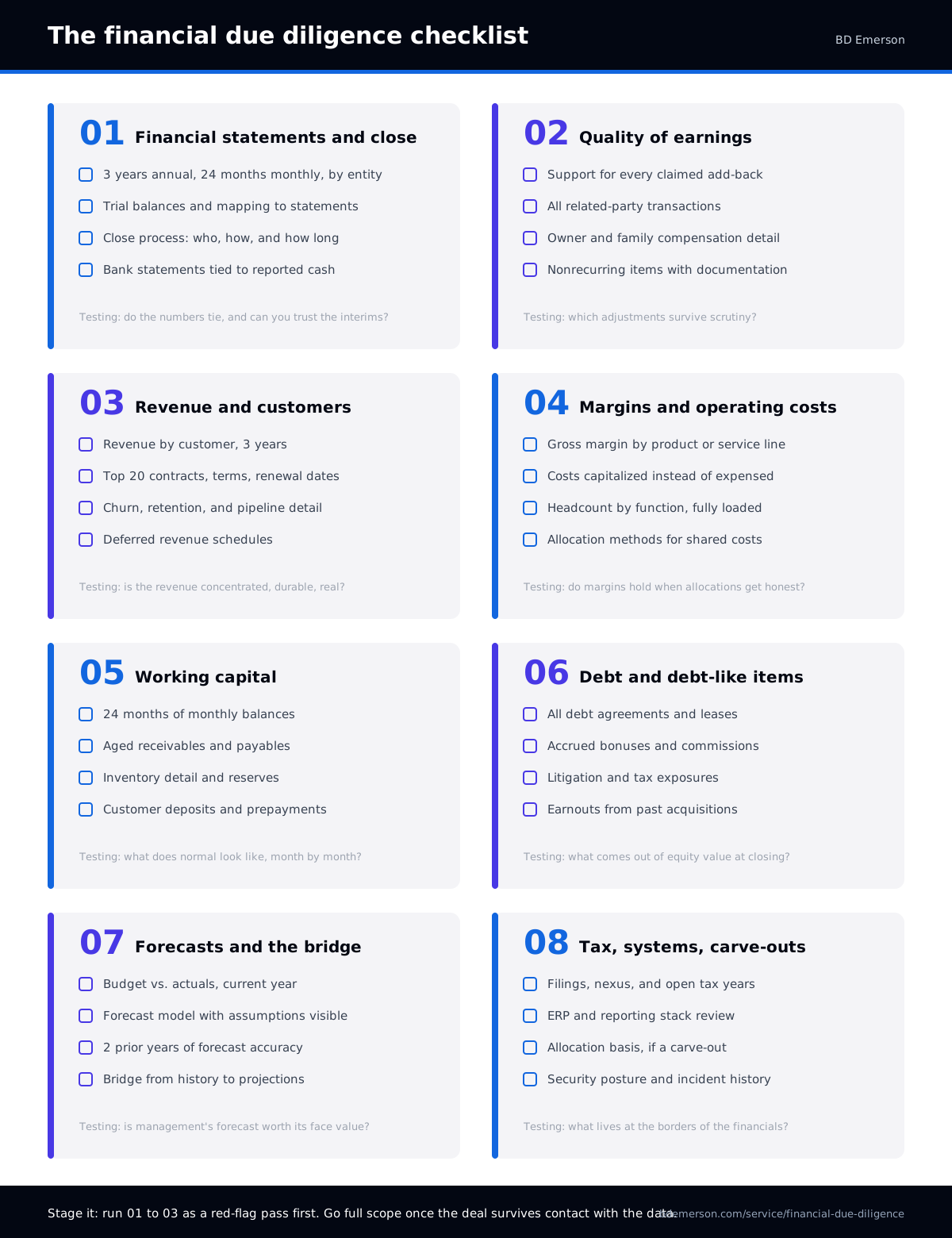
The checklist
1. Financial statements and close process
Request three years of annual financial statements plus monthly P&Ls, balance sheets, and cash flow statements for the trailing 24 months, by entity if there's more than one. Ask for the trial balances behind them and the mapping between the two. Then ask how long the monthly close takes.
What you're testing: whether the statements tie to the ledger, whether monthly results swing in ways management can't explain, and whether the close process is disciplined enough to trust interim numbers. A close that takes six weeks tells you something the statements won't.
2. Quality of earnings and adjustments
Request the detail behind every add-back the seller claims, supporting documents for anything nonrecurring, all related-party transactions, and compensation detail for owners and family members on payroll.
What you're testing: which adjustments survive scrutiny. Sellers propose add-backs; diligence proves or kills them. The gap between claimed and supportable adjusted EBITDA is one of the most common sources of repricing.
3. Revenue and customers
Request revenue by customer for three years, the top 20 customer list with contract terms and renewal dates, churn and retention data, pipeline detail, and deferred revenue schedules. For subscription businesses, cohort retention and net revenue retention.
What you're testing: concentration, durability, and whether growth is real. One customer above 20% of revenue changes the risk profile. A top account with a contract expiring 60 days after closing changes the price.
4. Margins and operating costs
Request gross margin by product line or service, cost allocations, headcount by function with fully loaded costs, and any expenses capitalized rather than run through the P&L.
What you're testing: whether margins hold up when allocations get corrected, and whether costs a new owner must carry (market-rate salaries, real rent, deferred maintenance) are in the numbers.
5. Working capital
Request monthly working capital balances for 24 months, aged receivables and payables, inventory detail, and customer deposit or prepayment schedules.
What you're testing: the normal level of working capital the business needs, which becomes the peg in the purchase agreement. Watch for sellers stretching payables or draining receivables in the months before a sale. The monthly view exposes it; a single balance sheet date hides it. Our net working capital guide walks through the peg calculation and the post-closing adjustment.
6. Debt and debt-like items
Request all debt agreements, lease schedules, unpaid bonus and commission accruals, pending litigation, tax exposures, and any earnout or deferred purchase obligations from the target's own past acquisitions.
What you're testing: everything that behaves like debt at closing regardless of what the balance sheet calls it. Each item found here comes directly out of equity value, dollar for dollar.
7. Forecasts and the bridge to history
Request the current-year budget versus actuals, the forecast model with assumptions visible, and the prior two years' budgets against what happened.
What you're testing: management's forecasting credibility. A team that missed its own budget by 30% two years running is handing you a forecast worth 70 cents on the dollar, at best.
8. Tax, systems, and the rest
Financial diligence borders several neighbors. Coordinate tax due diligence for filing exposure, nexus, and structure questions. If the target is a carve-out from a larger parent, the checklist changes shape: allocations dominate, and you should read our guide to divestitures and carve-out financials. And ask early about the systems producing the numbers, because a business run on spreadsheets and a 2009 QuickBooks file will consume diligence hours you haven't budgeted.
How to run it without drowning
Stage the work. A red-flag pass on items 1 through 3 tells you within two weeks whether the deal survives contact with the data. Full confirmatory scope across all eight areas follows once you're committed. Buyers who fire the entire checklist on day one bury the seller, slow the process, and learn the fatal fact last instead of first. We cover staging in more depth in our buy-side advisory work.
Sequence the requests around the seller's reality too. A five-person finance team fielding 200 requests stops answering the important ones with care.
What findings actually do
Diligence findings are only useful if they land somewhere. Each confirmed issue should move at least one of: the price, the working capital peg, the net debt definition, an escrow or indemnity, the earnout structure, or the integration plan. A finding that changes nothing was a finding not worth chasing. When the buyer insures the seller's representations, the same findings shape the policy's exclusions, which our representations and warranties insurance guide explains.
That mapping from findings to deal terms is where diligence earns its fee, and it's the reason the work belongs with a team that sits inside the transaction rather than beside it. That's how we run financial due diligence at BD Emerson: findings priced, mapped to the agreement, and delivered while you can still act on them.

About the author