Strategy Execution Consulting: Who Stays After the Strategy Is Approved
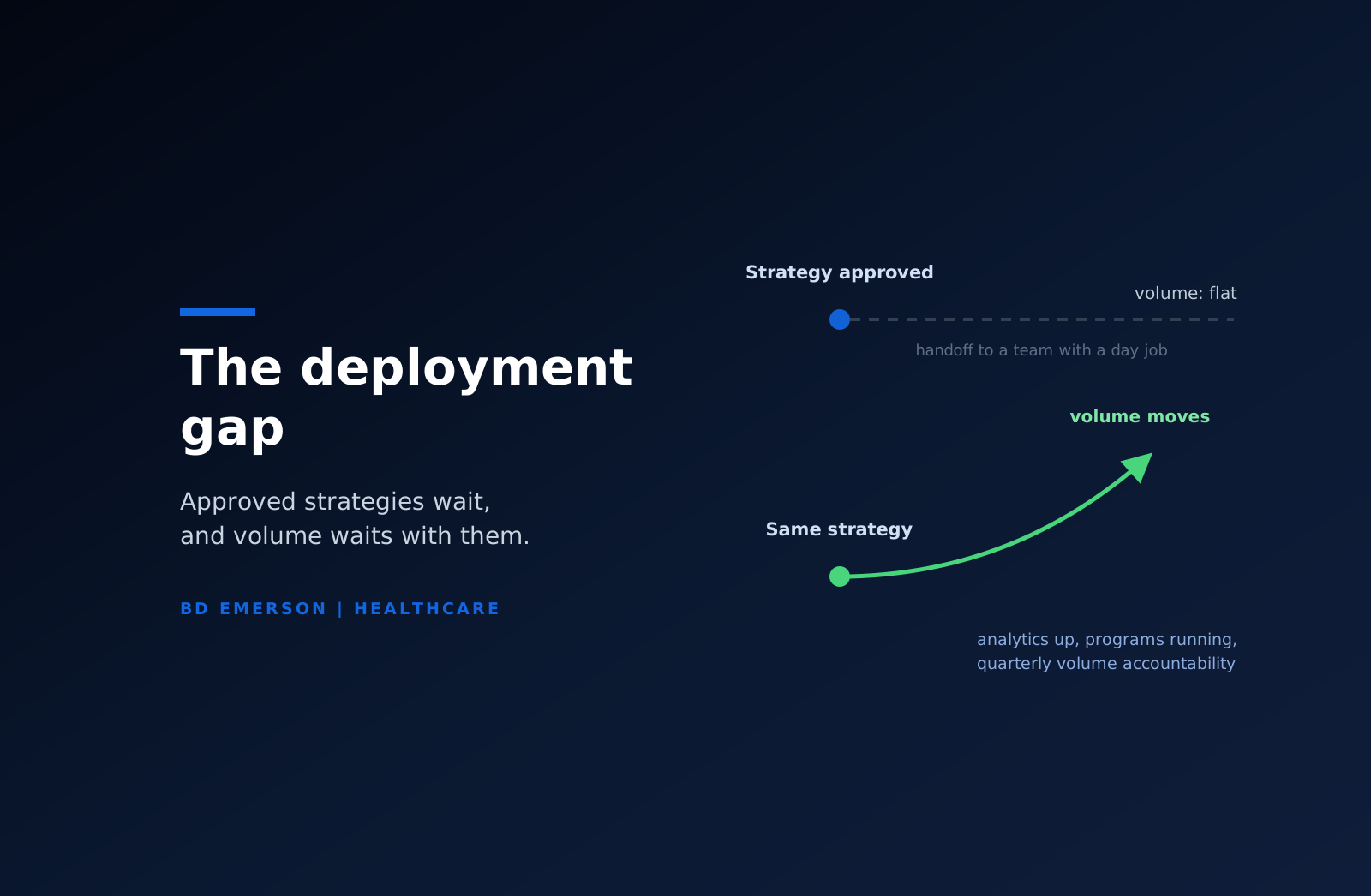
Strategy execution consulting exists because of a gap most executive teams know intimately: the strategy gets approved, the engagement ends, and implementation lands on internal leaders who already run full-time operations. Eighteen months later the strategy is still correct and still unexecuted. Execution consulting closes the gap by keeping outside capacity and accountability in place through deployment, building the analytics, running the programs, and answering for outcomes at quarterly reviews rather than exiting at the recommendation. In healthcare, where growth depends on referral behavior, access capacity, and coordination across five functions, execution is most of the work, and it is the part the traditional consulting model was never built to deliver.
Why approved strategies sit still
Three forces stall implementation, and none of them is a mystery. Bandwidth comes first: the COO who inherits deployment also inherits winter surge, a nursing shortage, and an EHR upgrade, so strategic initiatives get the hours left over, which rounds to zero. Skill mix comes second, because designing a referral analytics capability or standing up an outreach program is specialized work most systems do once a decade while somebody does it every quarter. Accountability comes third and cuts deepest: when execution belongs to everyone on the leadership team, misses have no address. The quarterly review notes the delay, nods gravely, and moves to the next slide.
Meanwhile the cost of stillness accrues invisibly. Every quarter an approved growth plan waits, referral leakage continues at its baseline rate and competitors consolidate positions the plan was written to contest. No variance report captures it, because budgets track money spent rather than volume forgone. A useful exercise for any executive team: estimate the monthly carrying cost of the unexecuted plan, using the plan's own volume math. The number usually ends the debate about whether outside execution help is an extravagance.
What the traditional model structurally cannot do
The large strategy firms do diagnosis well, and their model depends on leaving when it ends. Staffing pyramids, partner economics, and the next engagement all pull toward the handoff. The deliverable is the deliverable. Asking a diagnose-and-depart firm to stay for deployment produces either a politely declined scope or a second engagement staffed by whoever was available, because running programs is a different business than recommending them. None of this criticizes the people involved; it describes the machine they work in, and buyers who understand the machine stop being surprised by its output.
What execution consulting delivers
The work divides into four streams that run together rather than in sequence.
Analytics infrastructure. Claims-based referral visibility, service line dashboards, and attribution that connects investment to volume, built to refresh on a schedule rather than as a one-time study. The instrumentation comes first because every later stream reports through it.
Program operations. Physician outreach running against targets the data ranked, access fixes moving through scheduling and the call center, and marketing deployed against the same service line priorities, with the measurement chain described in our healthcare marketing ROI guide.
Operational alignment. Revenue cycle, scheduling, and clinical operations tuned so recovered demand converts to delivered care instead of dying in a queue. Growth programs fail at conversion more often than at demand generation, and the conversion failures are cheaper to fix.
Cadence. A quarterly forum where the outside team reports against volume commitments it helped set. The structure changes the meeting's texture entirely, because a consultant who must explain a miss in person next quarter plans differently than one who will be gone by then.
The healthcare-specific version of the problem
Healthcare strategy consulting has a harder execution problem than most industries because the growth levers cross organizational lines. A service line grows through referring physician behavior the service line does not manage, access capacity that operations controls, marketing a separate function budgets, and capital a committee allocates on its own calendar. Execution in that environment is mostly coordination engineering: one target list, one data source, and one review where the whole chain is visible to all five functions at once. Systems that solve the coordination problem outperform systems with better strategies and worse plumbing, which is a sentence nobody puts in a vision statement and everyone recognizes from experience.
What the first 90 days look like
Mobilization follows a consistent arc. The first month establishes the baseline and the scoreboard: claims-validated referral flows, access metrics, service line volumes, and the specific numeric commitments the engagement will answer for. The second month stands up the working machinery, meaning the analytics refresh, the outreach target file, the access workstream, and the operating rhythm with named owners on both sides. The third month runs the machinery at full cadence and holds the first accountability review, where early volume movement, usually from access fixes and quick referral recapture, buys organizational patience for the longer builds. Internal teams stay central throughout: the model works as capacity and accountability added to your leaders, with explicit skill transfer, so the system runs the machinery permanently after the engagement steps back to an advisory cadence.
When you do not need this
Execution consulting earns its fee in specific conditions, and honesty about them beats a pitch. A system with a strong internal transformation office, a single-market strategy of modest complexity, and existing referral analytics can deploy on its own, and should. The model pays where the conditions invert: multi-function growth plans, no standing claims analytics, leadership calendars already at capacity, and a history of approved strategies that aged in place. A useful self-test is the last one: pull the prior strategic plan and count the initiatives that reached full operation. Systems that score well on that count need a lighter advisory touch. Systems that wince at the exercise already know what the wince means.
Questions to ask before signing any strategy engagement
Four questions separate firms built for deployment from firms built for documents. Who from your team is still working this in month nine, by name? What happens, contractually and reputationally, when volume targets miss? Which analytics do you stand up, and who operates them after you leave? And when can we speak with a client from the deployment phase rather than the strategy phase? Firms designed to stay answer all four without adjusting their posture. Firms designed to depart answer the first with an org chart of people you will never meet again.
Strategy execution is the spine of our healthcare growth strategy practice, delivered with Endeavor Management's healthcare team and structured around quarterly volume accountability. If your last strategy engagement produced a document you admire and a number that never moved, the strategy was probably fine. Buy the execution this time.

About the author