Change Management Plan Template: The Seven Sections That Matter
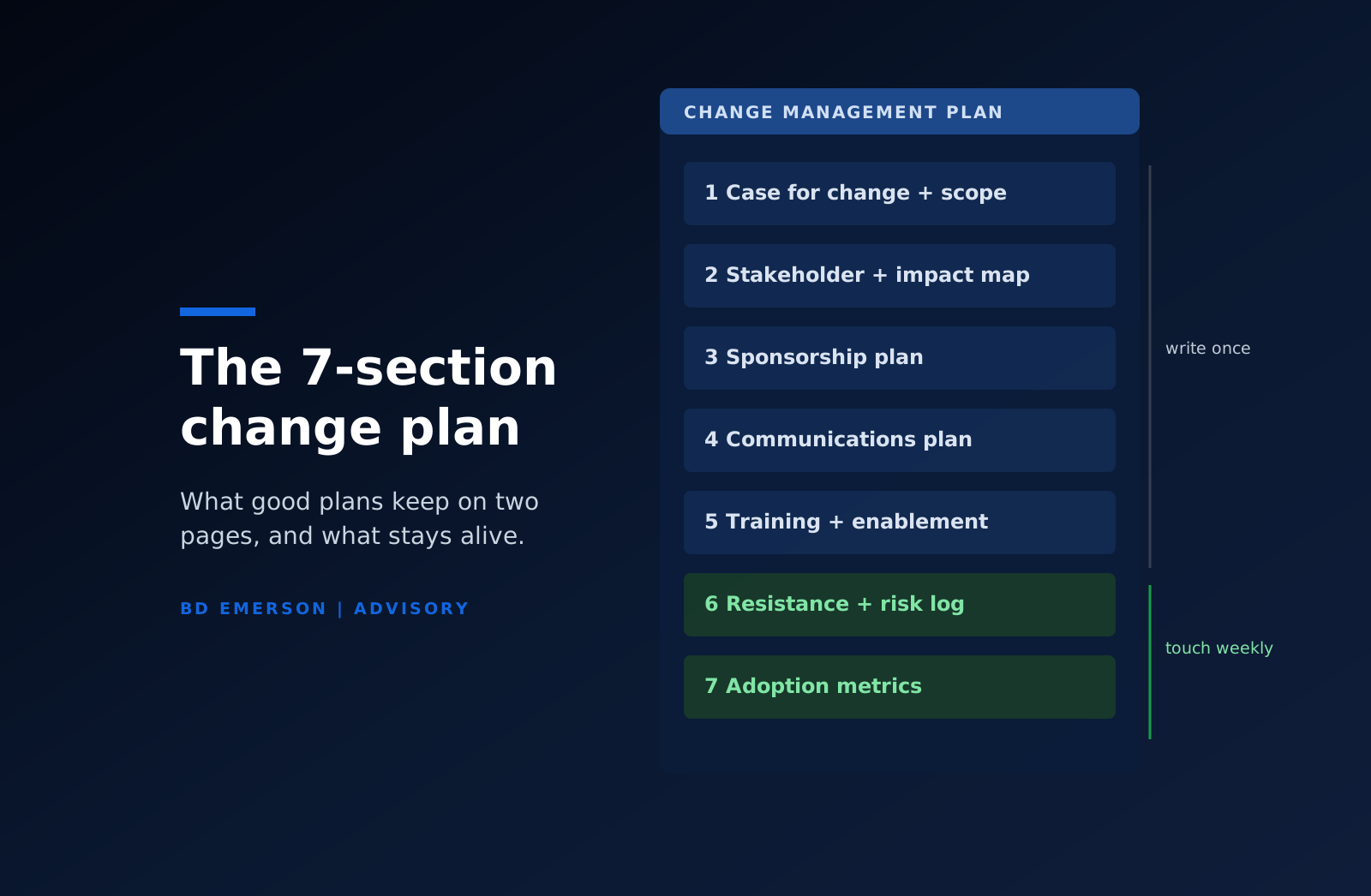
A change management plan needs seven sections: the case for change and scope, a stakeholder and impact map, a sponsorship plan, a communications plan, training and enablement, a resistance and risk log, and adoption metrics with a sustainment owner. Keep the core plan to two pages plus living logs. Plans fail in two directions: forty-page decks nobody opens after kickoff, and no plan at all because the project schedule was mistaken for one. A project plan tracks whether the thing gets built. The change plan tracks whether anyone works differently once it exists. Copy the seven headings below into your own document and fill them in the order given, because each section depends on the one before it.
1. Case for change and scope
Three sentences a skeptical employee would accept: what is changing, why now, and what happens if nothing changes. Name what is explicitly out of scope, because rumors fill every gap you leave. A working example: billing moves from spreadsheets to NetSuite on March 1 because manual rework consumes roughly 30 hours a week and two customers have received wrong invoices this quarter; job titles and reporting lines do not change.
The failure this prevents is drift. When the case for change lives only in an executive's head, every department invents its own version, and six weeks in you are managing five different changes.
2. Stakeholder and impact map
List every group whose Tuesday actually changes, what changes for them, how big the disruption is, and their likely starting stance. A support agent whose entire queue moves systems outranks an executive who sees a new dashboard. Rank groups by disruption, not by seniority, and name an owner for each relationship.
This section is where most plans go wrong, because they map power rather than impact. The groups that can kill a change quietly are almost never the ones in the steering committee.
3. Sponsorship plan
Adoption research keeps finding the same thing: the single strongest predictor of change success is an active, visible sponsor, and sponsorship is a schedule, not a title. Write down which leader says what, to whom, and when, through the life of the change. Three commitments matter most: the sponsor announces the change personally, repeats the case at set intervals, and personally handles the two or three influential resisters the stakeholder map identified.
If the sponsor cannot commit to the schedule, you have found your first risk, and it belongs in section six rather than in a hallway conversation three weeks before go-live.
4. Communications plan
A grid of audience, message, messenger, channel, and date. Two rules carry most of the weight. Managers beat mass email: people believe their direct supervisor over a broadcast, so equip managers with talking points before anything goes wide. And repetition is the feature: the same core message needs five to seven exposures through different channels before it registers as real.
Sequence matters as much as content. Affected teams hear it from their manager first, the wider organization second, and nothing reaches customers before the people who serve them can answer questions.
5. Training and enablement
Specify who needs new skills, how they get them, and when, with one constraint that separates working plans from shelfware: training lands inside two weeks of the moment people must use the skill. Training delivered a quarter early evaporates. Include the day-one support model, whether that is floor walkers, a named channel, or office hours, and decide in advance how long elevated support runs.
Enablement also covers the artifacts people reach for under pressure: the one-page quick reference, the recorded walkthrough, the FAQ that answers the question everyone actually has, which is how do I do my old task in the new way.
6. Resistance and risk log
A living log, not a section you write once. Each entry names the resistance or risk, the group it comes from, what it would cost if ignored, the response, and an owner. Treat resistance as information: when the warehouse team resists a scanning workflow, the usual reason is that the workflow adds seconds to a task they do four hundred times a shift, and the fix is a design change, not a motivational email.
Review the log weekly through go-live. The entries that age worst are the ones assigned to nobody.
7. Adoption metrics and sustainment
Define what adopted means in numbers before go-live, measure a baseline, and name the owner who keeps measuring after the project team disbands. Useful metrics are operational, for example:
- System usage: logins, transactions processed in the new system, percentage of work still done the old way
- Process performance: cycle time, error and rework rates, backlog age
- People signals: regrettable attrition in affected teams, pulse survey deltas, support ticket themes
Set a review at 30, 60, and 90 days after go-live with a standing question: what would make us intervene? Most changes look adopted at week two and wobble at week eight, when the exceptions pile up and the old spreadsheet quietly returns. The sustainment owner exists for week eight.
From template to practice
The two-page discipline is what keeps the plan alive. Sections one through five change rarely once written; sections six and seven are the working documents you touch weekly. If the plan supports a merger, the stakes are higher and the map is doubled, since every section runs across two organizations at once; our post-merger integration 100-day plan covers that case, and the people workstream belongs to M&A change management.
If the change is large enough that filling in these sections surfaces more questions than answers, that is the signal to bring help in. Our change management consulting practice builds and runs exactly this plan, and our digital transformation team pairs it with the system work it supports.

About the author