Divestiture vs. Spin-Off: How Boards Choose Between a Sale and a Spin
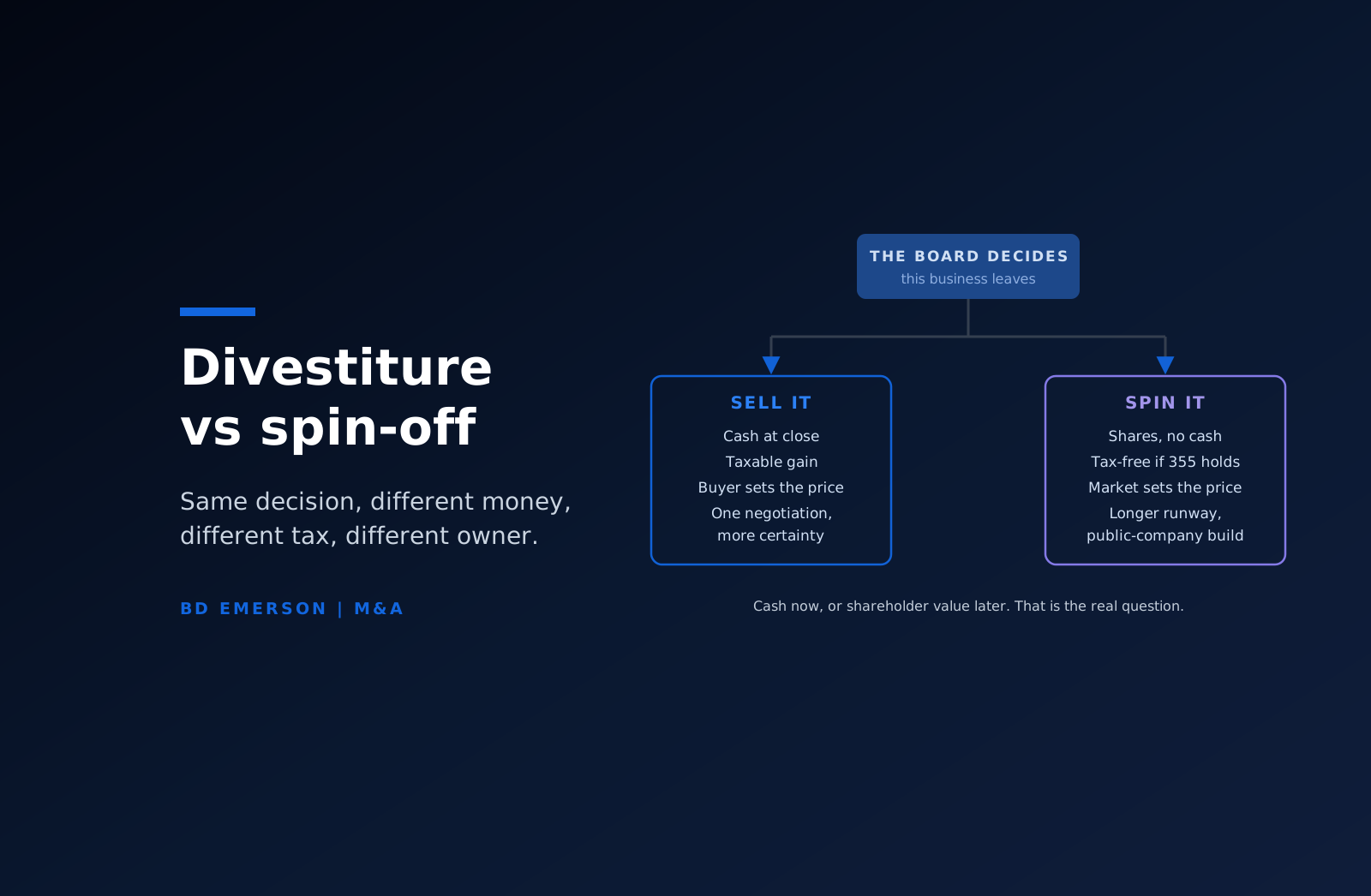
A divestiture sells a business to an outside buyer and brings the parent cash at closing, taxed as a gain on the sale. A spin-off distributes the business to the parent's own shareholders as stock in a new public company, brings the parent no sale proceeds, and, when it qualifies under Section 355 of the tax code, triggers no tax at either the corporate or the shareholder level. That trade, cash now with tax leakage against a tax-free separation with nothing to reinvest, decides most contests between the two. Strictly speaking a spin-off is one form of divestiture, as our overview of what a divestiture is explains, but when a board weighs "divestiture versus spin-off" it means an outright sale against a spin, and that is the comparison this article works through.
The two structures side by side
The differences compound rather than sit in isolation. Each row in the table pushes toward one structure or the other, and the decision usually turns on which two or three rows matter most to this parent in this year.
| Sale to a buyer | Spin-off | |
|---|---|---|
| Who owns the business after | The buyer | The parent's existing shareholders, pro rata |
| What the parent receives | Cash, or buyer stock, at closing | No sale proceeds; limited cash through pre-spin debt moves |
| Tax treatment | Taxable gain on the spread between price and tax basis | Tax-free at both levels if it qualifies under Section 355 |
| Typical timeline | 6 to 12 months for a clean subsidiary, 12 to 18 with a carve-out | 12 to 18 months from announcement through Form 10 and distribution |
| Completion risk | Buyer, financing, and antitrust risk | No buyer to lose; risk sits in the SEC process and the separation |
| Price discovery | Negotiated, known at signing | Set by the market after distribution, often with early selling pressure |
| Best fit | Cash needs, subscale units, a strong buyer universe | Large units with low tax basis and a standalone equity story |
Cash versus shares
A sale converts the business into money the board can redeploy the week after closing: debt paydown, a buyback, or the acquisition the divestiture was quietly funding. The amount is certain once the purchase agreement signs, subject to closing adjustments, and it arrives whether the equity market is receptive that quarter or not.
A spin pays the parent nothing at distribution, but it is rarely cashless in practice. Before the separation, the spun company can raise debt and dividend the proceeds up to the parent, the parent can exchange retained spinco shares for its own outstanding debt, and it can hold back a small stake to monetize later. Each of those moves has a ceiling tied to the parent's tax basis and the anti-abuse rules, and tax counsel sizes them deal by deal. A parent that needs the full value of the business in cash will not get there through a spin. A parent that needs one to two turns of deleveraging often can.
Tax treatment, kept at summary level
On a sale, the parent pays tax on the difference between the price and its tax basis in the business. Businesses held for decades tend to carry low basis, which makes the leakage material: the older and more successful the unit, the bigger the gap between what the buyer pays and what the seller keeps. Whether the deal is structured as a stock sale or an asset sale moves the math for both sides, since an asset sale gives the buyer a stepped-up basis it will often pay for.
A spin-off that qualifies under Section 355 avoids that tax entirely. Qualification has real conditions: both the parent and the spun company must have conducted an active trade or business for five years, the parent must distribute control, the transaction cannot serve as a device for distributing earnings, and acquisitions of either company in the two years after the spin are restricted. Failing the test after the fact is expensive, because the tax lands at the corporate level and again at the shareholder level, which is why boards obtain a tax opinion or a ruling before announcing.
The practitioner summary is this: a sale's tax cost is estimable early from the basis, and a spin's tax benefit is conditional on structure. Tax counsel makes the call on both. The board's job is to ask for the leakage number on the sale and the qualification risk on the spin early enough to compare them on the same page.
Speed, certainty, and who owns the business afterward
A sale of a clean subsidiary runs 6 to 12 months from decision to closing, and a carved-out division runs 12 to 18, most of the extra time spent building financials and a standalone cost model. The full sequence is laid out in our guide to the corporate divestiture process. The risks on that path are the buyer's: a bidder can walk, financing can fail, and antitrust review can stretch or kill the deal. In exchange, the price is negotiated and known at signing.
A spin trades those risks for different ones. There is no buyer to lose, which makes completion highly likely once announced, but the path runs through a Form 10 registration, audited carve-out financial statements, SEC review, and a distribution date, which together take 12 to 18 months. The price is discovered only after the shares start trading, and the early months are usually unkind: index funds and shareholders who owned the parent for the parent's profile sell the spinco they were handed, and that flowback presses the price down before the natural owner base arrives.
Ownership is the quietest difference and often the decisive one. After a sale, the business belongs to a buyer who will integrate it, and the parent's shareholders participate only through the proceeds. After a spin, the same shareholders own both companies on day one, so the value case rests on the two focused companies trading better apart than the conglomerate did together.
When a board picks one over the other
Boards pick a sale when the parent needs the capital, when the business is too small to carry public company costs, when a strategic buyer's synergies support a premium no market listing would match, or when a regulator has ordered the exit, since remedy divestitures almost always require a sale to an approved buyer on a deadline. High tax basis strengthens the case further, because the leakage that argues for a spin is small.
Boards pick a spin when the business is large enough to absorb its own board, audit, listing, and investor relations costs, which start around $5 million a year for a smaller public company, when the tax basis is so low that a sale would surrender a painful share of the proceeds, when no buyer will pay what the board believes the business is worth, or when the strategic point is two focused equity stories rather than one check. Activist campaigns tend to converge on spins for exactly that last reason.
The hybrid forms
Three structures sit between the poles. A sponsored spin brings a private equity firm in to buy a minority stake in the spun company at separation, which anchors the valuation, adds cash to the parent or the spinco balance sheet, and puts an engaged owner on the register before trading starts. A carve-out IPO sells a minority of the business to the public while the parent keeps control, usually as the first step of a staged exit that ends in a distribution of the remaining shares once the market has priced the business. A Reverse Morris Trust pairs a spin with an immediate merger of the spun company into a partner, keeping the tax-free treatment as long as the parent's shareholders end up with a majority of the combined company; it is the structure of choice when a specific merger partner exists but a taxable sale to them would leak too much.
How to decide: three questions
The framework that holds up across deals asks three questions in order. First, what does the parent need: cash on a date, or shareholder value over a holding period it does not control? A debt burden or a funding need answers the question by itself. Second, what can the business support: does it have the scale, the leadership bench, and the balance sheet to live as a public company, or would public life consume its margin? Third, what will the market pay: is there a buyer universe whose synergies clear the business's standalone value, or would a focused public comparable trade at a multiple no bidder will match?
When the answers conflict, the first question usually governs, because a board that needs cash cannot spin and a board that has cash can afford patience. When they align, run the early work as one program anyway. The carve-out financials, the standalone cost model, and the separation plan are identical for either exit, which is why dual-track processes are common: prepare once, and let the bids and the market tell you which path clears.
Where BD Emerson fits
We build the parts of the decision that both paths share: carve-out financial statements, a bottom-up standalone cost model, the separation plan, and the transition services design, alongside the leakage-versus-qualification comparison the board needs before it commits to a structure. Because the same firm runs the financial, tax, technology, and cyber workstreams, the numbers the board compares come from one model. Our divestiture consulting practice is where that work starts, whichever structure wins.

About the author