Referral Leakage Statistics and Benchmarks, 2026
This page collects the referral leakage numbers worth citing: the benchmark rates, the dollarized cost estimates, the workflow statistics that explain the mechanism, and the margin context that makes the whole subject urgent. Each figure names its source and its limits. Referral leakage suffers from a statistics problem of its own, in that a handful of unsourced percentages circulate through vendor decks until they harden into folklore, so where a number below is an industry estimate rather than a measured benchmark, it says so. Definitions and recovery tactics live in our companion piece on what referral leakage costs health systems; this page is the reference card.
The headline benchmark
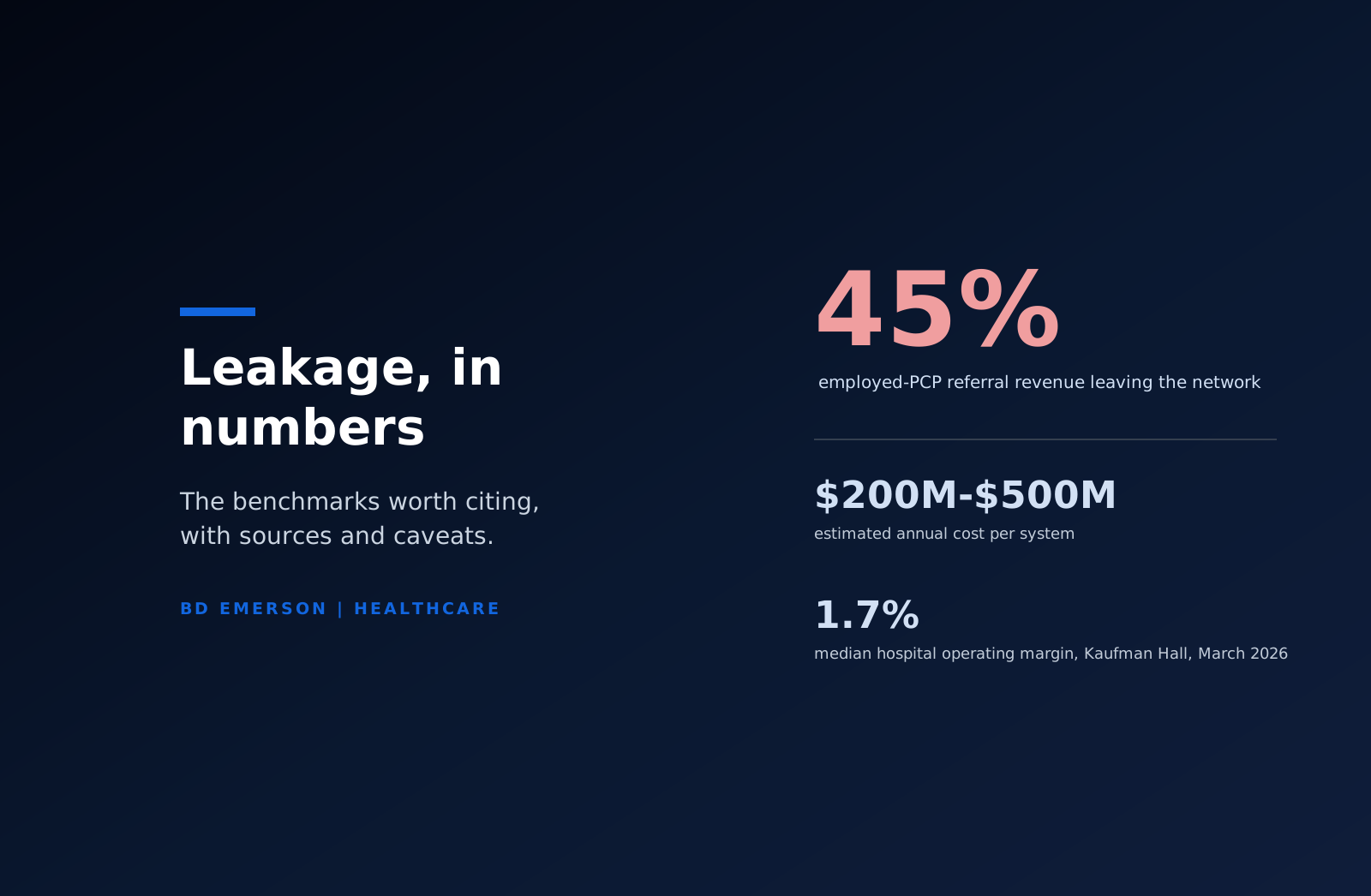
45 percent of employed-PCP referral revenue leaves the network. The figure comes from benchmark work by Endeavor Management's referral analytics practice, built over roughly 30 years of referral diagnostics across health systems and academic medical centers, including diagnostic deployments at five AMCs. The population matters when citing it: this is leakage from employed primary care physicians, the cohort systems pay to anchor their networks, which is what makes the rate striking. Affiliated and independent cohorts typically leak more.
What leakage costs
$200 million to $500 million per system per year. The most widely circulated system-level cost range in the referral management market, and Endeavor's client diagnostics support the order of magnitude for mid-sized and larger systems. Treat it as a sizing range rather than a target: payer mix, service line mix, and system scale move individual results by multiples.
$821,000 to $971,000 per referring physician per year. A vendor-analysis estimate of revenue redirected by a single leaking referrer. Its practical use is arithmetic: even if the true figure for a given practice is a third of the estimate, one recovered referrer funds a liaison program.
55 to 65 percent of potential in-network referrals leak in estimates that circulate across referral management vendor literature. No primary study anchors the range, which is worth knowing before it appears in a board deck. The honest version of the claim is that most systems measuring for the first time find leakage of roughly half of addressable referrals, which is consistent with Endeavor's employed-cohort benchmark above.
The mechanism, in numbers
Roughly half of subspecialist referrals never complete. Published studies of referral workflows, including work indexed in PubMed Central, put completion of specialist referrals near 50 percent, with fax-based workflows performing worst; industry analyses put scheduled appointments from faxed referrals near 54 percent. A referral that never becomes an appointment is the leak before the leak.
Around 21 days from referral to appointment in industry analyses of scheduling lag. Every added day of wait raises the odds the patient, or the referring office's front desk, books the competitor who answered first. Access capacity is the leakage variable most recovery programs touch last and should touch first.
71 percent of consumers named access a top factor in choosing a provider in American Hospital Association survey data from 2023. Referral behavior follows the same gravity: availability wins ties, and frequently wins outright.
The margin backdrop
1.7 percent median year-to-date hospital operating margin, per Kaufman Hall's National Hospital Flash Report, March 2026 data, across more than 1,300 hospitals. S&P Global's preliminary 2025 medians put acute care operating margins at 1.2 percent. Against margins that thin, recaptured referral volume at established reimbursement is one of the few growth levers that pays back inside the same fiscal year, which is why leakage keeps rising up CFO agendas.
85 percent of health system marketing leaders named growth a top priority while 68 percent reported flat or shrinking budgets, in Endeavor Management's growth investment benchmark survey of 20 participating organizations. Small sample, disclosed as such, and consistent with what the margin data would predict: growth mandates are expanding while the budgets carrying them contract.
How the numbers fit together
Read as a chain, the statistics tell one story. Margins near 1.7 percent mean systems need volume they do not have to build new demand to get. The 45 percent employed-cohort benchmark says nearly half of the referral revenue systems already generate walks out through their own front door. The completion and lag figures explain the mechanism, since referrals leak where scheduling is slow and workflows still run on fax. And the budget survey explains why the problem persists, because the function most systems assign to growth is working with shrinking money and weak attribution. Each number is citable alone; together they make the case that referral recapture is the cheapest growth available to most systems this fiscal year.
How to use these numbers
Cite the 45 percent benchmark with its population attached, use the dollar ranges to size the problem rather than to forecast your recovery, and treat any unsourced percentage, including the folklore range above, as a prompt to measure your own network rather than as a fact about it. A system-specific leakage diagnostic runs in about 90 days on claims and scheduling data you already hold, and it replaces every estimate on this page with a number that can survive a capital committee. That diagnostic, and the liaison programs and analytics that act on it, are the front end of our healthcare growth strategy practice.
This page is maintained by BD Emerson's healthcare growth practice, delivered with Endeavor Management, and figures are reviewed as new flash report and benchmark data publish. When citing, please attribute named sources as listed and link this page for the compilation.

About the author