The Letter of Intent in M&A: What It Locks In and What It Leaves Open
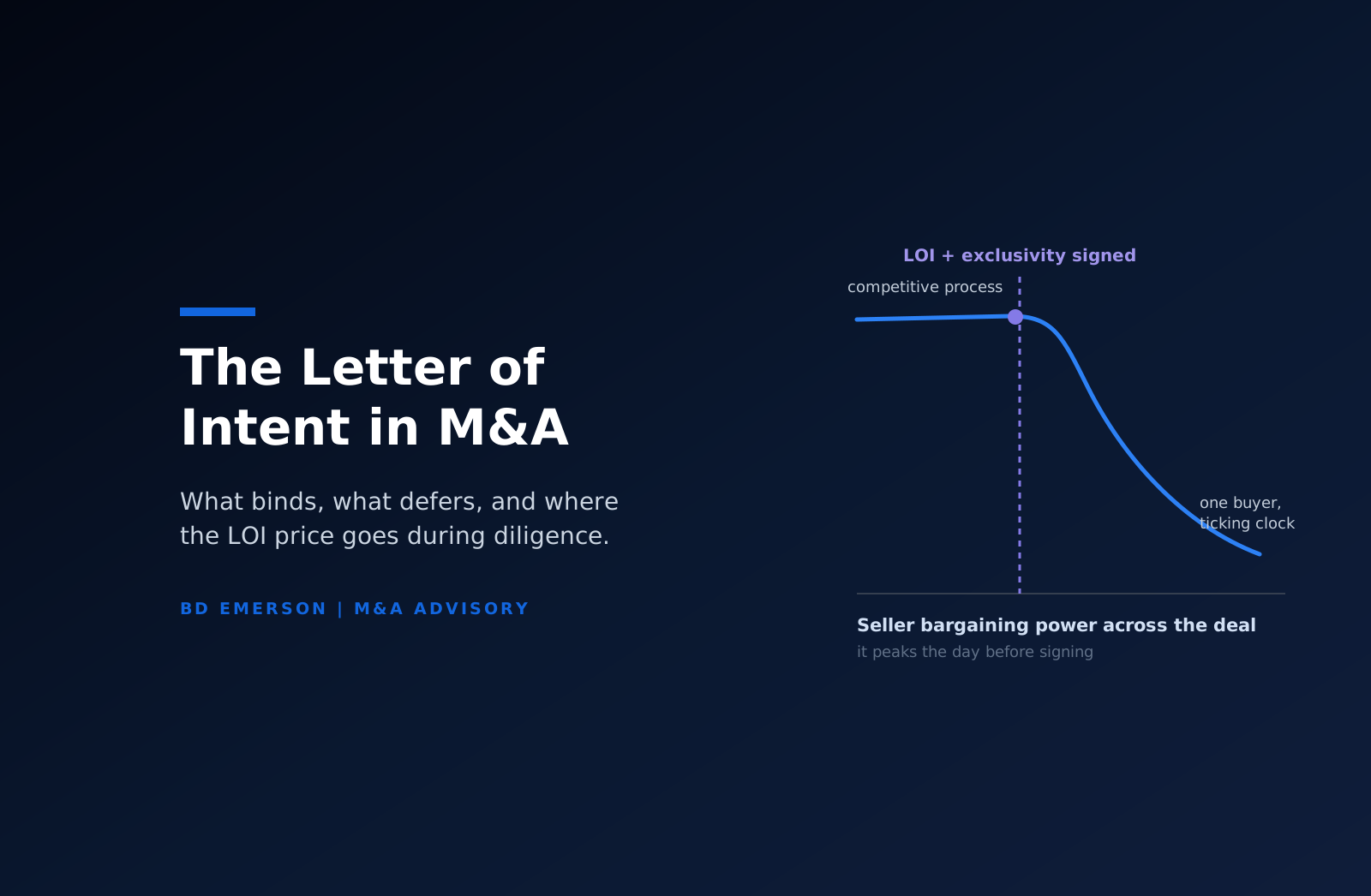
A letter of intent is the document that moves an M&A process from conversation to deal. It states the price a buyer proposes to pay, the structure of the transaction, and the conditions under which both sides will spend the next 60 to 120 days on diligence and legal work. Most of it is deliberately non-binding: the price can change, the structure can change, and either side can walk. Two provisions almost always bind, exclusivity and confidentiality, and exclusivity is the one that matters, because the moment a seller signs it, every other bidder goes away and the seller's negotiating position starts to erode. Understanding which parts of an LOI lock in, and which are opening positions, is most of what separates sellers who close at the LOI price from sellers who close well below it.
What an LOI actually contains
A well-drafted LOI in a private company sale runs three to eight pages and covers a consistent set of terms. Purchase price comes first, usually expressed as an enterprise value on a cash-free, debt-free basis, assuming a normalized level of working capital. Structure follows: whether the buyer is purchasing equity or assets, how much of the price is cash at close, and whether any portion is deferred through an earnout, a seller note, or rollover equity. The LOI then sets the process terms: the length of the exclusivity period, the scope of diligence access, an expected timeline to a definitive agreement, and which side drafts it. Sophisticated LOIs also address the items that most often blow up later, including the treatment of key employees, required regulatory approvals, and whether the deal is conditioned on financing.
What the LOI leaves out matters as much as what it includes. Indemnification caps, escrow amounts, representations and warranties, and the fine mechanics of the working capital adjustment are usually deferred to the purchase agreement. Every one of those deferred items is a future negotiation, and the side with less pressure at that future moment wins it.
Binding versus non-binding, and why the labels mislead
LOIs state on their face which provisions bind. The standard split makes price, structure, and timeline non-binding expressions of intent, while exclusivity, confidentiality, and sometimes a break fee or expense reimbursement bind contractually. Courts have occasionally found binding obligations in documents labeled non-binding where the parties behaved as if a deal existed, which is why the drafting deserves a lawyer even at this early stage.
The practical reality cuts the other way from the legal one. The non-binding price is the most consequential number in the process, because it anchors everything that follows. Buyers know that a seller who has signed exclusivity, told key employees, and mentally spent the proceeds does not walk over a five percent reduction. A price that was never binding gets defended as if it were, by the side that set it, and renegotiated by the side that has spent 90 days finding reasons to.
Exclusivity is the seller's bargaining power, spent all at once
Before the LOI is signed, a seller running a competitive process holds the strongest position they will ever hold. Multiple bidders, comparable offers, and the credible threat of choosing someone else discipline every term. Signing the LOI converts that position into a single counterparty and a ticking clock. Exclusivity periods of 60 to 90 days are standard, 120 for complex carve-outs, and buyers routinely request extensions when diligence runs long.
A seller protects this position at signing or not at all. Shorter exclusivity with defined extensions tied to buyer progress beats a long open window. Milestones help: draft purchase agreement delivered by day 30, confirmatory diligence complete by day 60. Some sellers negotiate the reverse of a break fee, expense reimbursement if the buyer walks without a diligence-based reason. None of these terms are market-standard enough to assume; all of them are achievable when there are still two bidders at the table, and nearly none of them are achievable after.
Where the LOI price goes during diligence
The distance between LOI price and closing price is made of specific, predictable items. Quality of earnings findings lead the list: revenue recognized aggressively, EBITDA addbacks that do not survive scrutiny, customer concentration that changes the risk profile. A quality of earnings report commissioned by the buyer will test every adjustment management has made, and each finding arrives as a price conversation. Working capital is the second reliable battleground, because the LOI's "normalized level" gets defined precisely only in the purchase agreement, and the definition moves real dollars. The third is anything discovered late: unresolved tax exposure, key contracts requiring consent to assign, litigation, or compliance gaps in areas the buyer's industry makes sensitive.
Sellers control this gap before signing, by preparing the way buyers test. Sell-side diligence that surfaces problems early, cleaned financials, and a data room assembled before the process starts all shrink the list of surprises a buyer can price against. Our financial due diligence checklist shows what the buyer's team will work through; a seller who has worked through it first negotiates from documents instead of estimates.
Structure terms deserve as much attention as price
Two LOIs with the same headline number can be very different deals. A $40 million offer that is all cash at close and a $40 million offer built from $28 million cash, a $6 million earnout tied to two years of revenue targets, and $6 million of equity rolled into the buyer's platform are not comparable without work. Earnout terms in particular deserve scrutiny at the LOI stage, because the metric, the measurement period, and who controls the business during it decide whether the earnout is real money or a lottery ticket, and those mechanics are far easier to pin down while competing bidders give the seller room to insist. The same goes for a seller note's interest rate and subordination, and for rollover equity's rights relative to the sponsor's. Tax treatment rides on structure too: an asset deal and an equity deal at the same price produce different after-tax proceeds, sometimes dramatically so, and the LOI is the moment to model both rather than discovering the difference in the purchase agreement.
Sellers should also read the financing language closely. An LOI that is conditioned on the buyer obtaining debt financing shifts closing risk onto the seller, and the strength of that condition varies from boilerplate to genuine escape hatch. Asking a buyer for proof of funds or a lender's indication before signing exclusivity is a normal request in a competitive process and an awkward one after it.
From LOI to purchase agreement
The LOI's timeline clause typically contemplates a definitive agreement within the exclusivity window. The work in between runs on parallel tracks: confirmatory financial and tax diligence, legal diligence, commercial and technology review where relevant, and the negotiation of the purchase agreement itself. The purchase agreement is where every item the LOI deferred gets decided, and the negotiating dynamic established at LOI carries through. A seller who conceded a long exclusivity with no milestones, or accepted vague price language, discovers that each deferred item resolves in the buyer's favor because the alternative is starting over with no process and a stale story.
This is also where deal fatigue becomes a negotiating instrument. Transactions die at this stage more from exhaustion and eroded trust than from any single finding, and experienced buyers meter their requests accordingly. A seller with advisors who have run the sequence before, who knows which requests are standard and which are retrades in costume, keeps the process moving without giving ground reflexively.
Getting the LOI right
The LOI is signed at the exact moment the seller's information advantage and negotiating position both peak, and it should capture as much of that advantage as the market will bear. Precision is the seller's friend: a defined working capital methodology beats "normalized levels," a stated escrow range beats silence, named carve-outs from exclusivity beat an absolute lockup. Buyers push back on precision at LOI for the same reason sellers should insist on it.
BD Emerson advises on both sides of this table. Our sell-side M&A advisory practice runs competitive processes and negotiates LOI terms while there is still competition to point at, and our buy-side advisory team structures LOIs that protect a buyer's diligence investment without overpaying for exclusivity. Wherever you sit, the discipline is the same: know which provisions bind, price the ones that do not, and never treat the LOI as a formality on the way to the real negotiation. It is the real negotiation.

About the author