Referral Leakage: What It Costs Health Systems
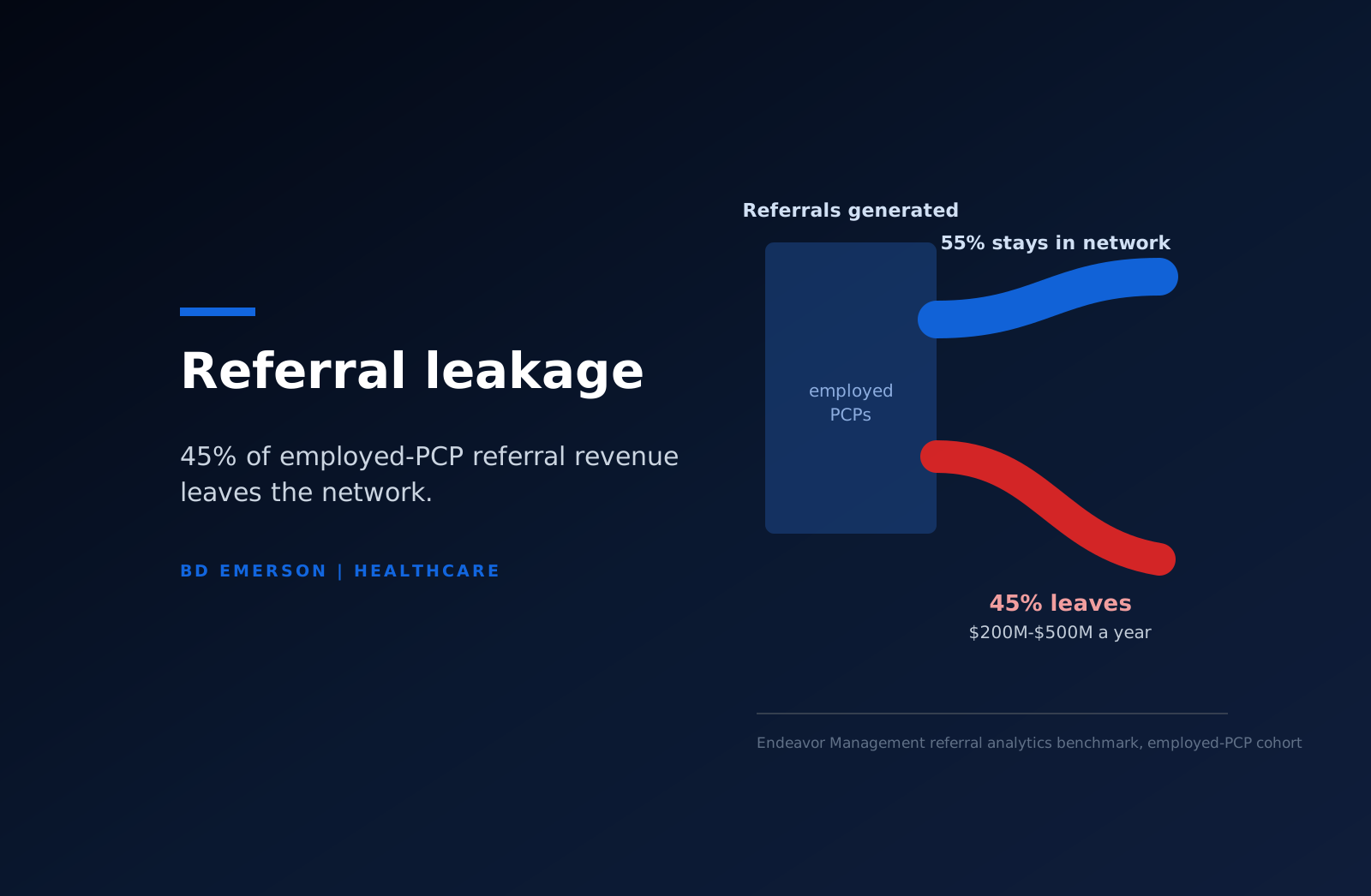
Referral leakage is the share of patient referrals that leave a health system's network when an in-network provider could have delivered the care. When an employed primary care physician sends a knee replacement to an out-of-network orthopedic group, the system loses the surgery, the imaging, the therapy visits, and often the patient relationship that came with them. Benchmark work by Endeavor Management's referral analytics practice puts employed-PCP referral revenue leaving the network at 45 percent, and analyses across the referral management market put the annual cost for a mid-sized system between $200 million and $500 million. The figure that should worry a CFO more than either of those is the one most systems cannot produce: their own.
Patient leakage, referral leakage, and network leakage name the same event
The vocabulary varies by vendor and by department. Referral leakage describes the referral that leaves. Patient leakage describes the patient who receives attributed care elsewhere. Network leakage and out-of-network utilization show up in payer conversations, and keepage, the awkward inverse, appears in population health decks. All of them describe one underlying event, which is a patient your network generated receiving care your network could have delivered.
The distinction worth preserving is intent. Some referrals should leave, because the network lacks the subspecialty, the capacity, or the quality position to serve the patient well, and a pediatric oncology case belongs wherever pediatric oncology is best. Leakage worth fixing is the rest: referrals that left because the in-network option was invisible, the next appointment was three weeks out, or the referring office defaulted to a fax number it has used since 2009. A system that cannot separate chosen outmigration from accidental loss ends up defending both or attacking both, and both responses waste money.
What leakage costs, in numbers a capital committee recognizes
Dollarizing leakage is multiplication, once the inputs exist: leaked referral counts by service line, times contribution per case, adjusted for payer mix. Vendor analyses have estimated the loss at $821,000 to $971,000 per referring physician per year, and the widely circulated range for a full system runs from $200 million to $500 million annually. Treat those as market estimates rather than your number, because service line mix and payer mix move the result by multiples. The 45 percent employed-PCP benchmark from Endeavor's diagnostic work is the more actionable reference point, because employed physicians are the population a system pays for precisely so their referrals stay. We keep the full set of market figures, with sources and caveats, on our referral leakage statistics page.
Margin context makes the case sharper. Kaufman Hall's National Hospital Flash Report put the median year-to-date operating margin at 1.7 percent as of March 2026. A system running near that median does not fix its margin with a new campaign. Recapturing surgical and imaging volume it already generated, at established reimbursement, is the rare growth lever that improves margin in the same fiscal year it is pulled.
Where the money concentrates
Leakage is not evenly distributed, and the concentration is what makes recovery programs affordable. Procedural service lines dominate the dollar impact: orthopedics, cardiology, general surgery, and gastroenterology leak high-contribution cases, and each leaked procedure usually tows imaging, anesthesia, pathology, and rehabilitation revenue behind it. Imaging itself leaks heavily because it is the easiest service to redirect; a referring office with a faster or cheaper freestanding option will use it without ever thinking of the decision as disloyalty. Oncology leakage is fewer patients and larger consequences, since a single redirected treatment course can represent six figures of revenue and a family's entire care relationship. A credible diagnostic ranks service lines by dollars rather than by referral counts, and the top of that ranking usually funds everything below it.
Why leakage persists in well-run systems
Three conditions keep leakage alive, and none of them is negligence.
The data lives apart. Quantifying leakage requires joining claims data, which shows where attributed patients received care, with internal referral and scheduling records, which show what the network intended. Those datasets sit in different systems, refresh on different cycles, and answer to different owners, so the join rarely happens without a deliberate project.
Nobody owns the number. Marketing is measured on campaign activity, operations on throughput, employed physicians on RVUs. A referral that quietly exits touches all three functions and lands in none of their scorecards. Losses without owners repeat.
Access does the leaking. Studies of referral workflows have found roughly half of subspecialist referrals never complete, and industry analyses put average appointment lag around three weeks. When the out-of-network group answers the phone today and the in-network clinic offers a date in October, the referring office books what serves the patient in front of it. Loyalty rarely survives a five-week wait, and it should not have to.
The value-based wrinkle
Under fee-for-service economics, leakage is lost revenue. Under value-based contracts it becomes something worse: cost without control. An ACO or risk-bearing network remains financially responsible for attributed patients who receive care outside the network, where the system can influence neither the price nor the quality of what happens. That converts leakage from a growth-team concern into a contract-performance problem, and it is why population health leaders and growth leaders keep discovering they were staring at the same number from opposite sides. Systems carrying meaningful risk should compute leakage twice, once as forgone revenue and once as unmanaged medical spend, because the second number is often the one that moves the board.
How to measure your own leakage rate
A credible leakage diagnostic runs in roughly 90 days on data the system already holds. The sequence is short. Define the attributed population, employed physicians first, then affiliated cohorts. Join claims data against internal referral and scheduling records so every out-of-network event is visible. Attribute each event to a referring provider, a service line, and a receiving competitor. Dollarize with contribution math finance signs off on, then rank.
The output that changes behavior is specific: leakage rate by service line, by employed versus affiliated cohort, and by receiving competitor, each line carrying dollars. That format converts a vague anxiety into a ranked recovery list, and it hands the physician liaison team a target file instead of a coffee route. Refresh it quarterly. A one-time study ages into trivia, while a standing view becomes a management instrument that shows whether the recovery work is working.
What recovery involves
Recapture programs succeed on sequencing. Access comes first, because outreach that drives referrals into a three-week queue manufactures its own relapse; next-available windows, direct scheduling lines for referring offices, and call center scripts that route to in-network options are prerequisites, and they are also the cheapest fixes on the list. Field outreach comes second, aimed by the diagnostic at the specific practices splitting their referrals, with liaisons carrying specific asks rather than brochures. Loop closure comes third, meaning the referring office learns what happened to its patient, which is the single behavior that most reliably earns the next referral. Revenue cycle and scheduling alignment follow, so recovered demand converts to delivered, reimbursed care. Monthly measurement against the baseline keeps the whole effort honest, practice by practice.
Expectations deserve honesty too. Recovery programs move split practices, the offices already sending you part of their volume, far more readily than they convert never-referrers. A realistic program recaptures a meaningful fraction of addressable leakage over four to six quarters; the drivers are access capacity, service line mix, and how contested the geography is. Anyone promising to eliminate leakage is describing a network with no competitors.
Where leakage sits in the growth strategy
Leakage recovery is usually the first play in a broader growth plan because the demand already exists and the payback is fast. It is also the play that funds the rest: a service line that stops losing its own referrals produces the margin that pays for the marketing pillar, the network build, and the capital case. That sequencing logic, and the analytics and outreach machinery behind it, is the core of our healthcare growth strategy practice, delivered with Endeavor Management's referral analytics team. If you cannot say what your leakage rate is, that is the first number worth buying, and it is sitting in data you already own.

About the author