Physician Liaison Programs That Actually Move Referrals
A physician liaison is a field representative who builds and maintains referral relationships between a health system and the physicians who send it patients. The liaison visits referring practices, resolves the friction that quietly redirects referrals elsewhere, carries service line updates out to the community, and brings market intelligence back in. Done well, the role is the most direct instrument a system has against referral leakage, because referrals move on relationships and logistics, and the liaison works both. Done as many systems still do it, coverage routes and cookie drops, the role produces mileage reports. The difference between the two versions is program design, and program design is what this guide covers.
What a physician liaison does all day
The working version of the job splits into three motions. Outbound, the liaison calls on referring practices with a specific agenda per visit: a new subspecialist's availability, a turnaround improvement in imaging, a direct scheduling line for the practice's staff. Inbound, the liaison functions as the referring office's fixer, chasing the unreturned report, the unreachable scheduler, the patient nobody called back, because every resolved complaint is a referral relationship repaired at the moment it was about to move. Intelligence, the third motion, is the one systems undervalue: liaisons hear in waiting rooms why referrals shifted to a competitor months before any dashboard shows it. Practices stop referring quietly, one redirected patient at a time, and a good liaison is the early warning system.
Titles for the role vary, and the variation confuses org charts more than it should. Physician liaison, physician relations representative, provider relations manager, and outreach coordinator describe substantially the same field function; what separates strong programs from weak ones is whether the role is aimed by data and measured on referral volume, and the title has nothing to do with it.
Build the program on claims data, not coffee routes
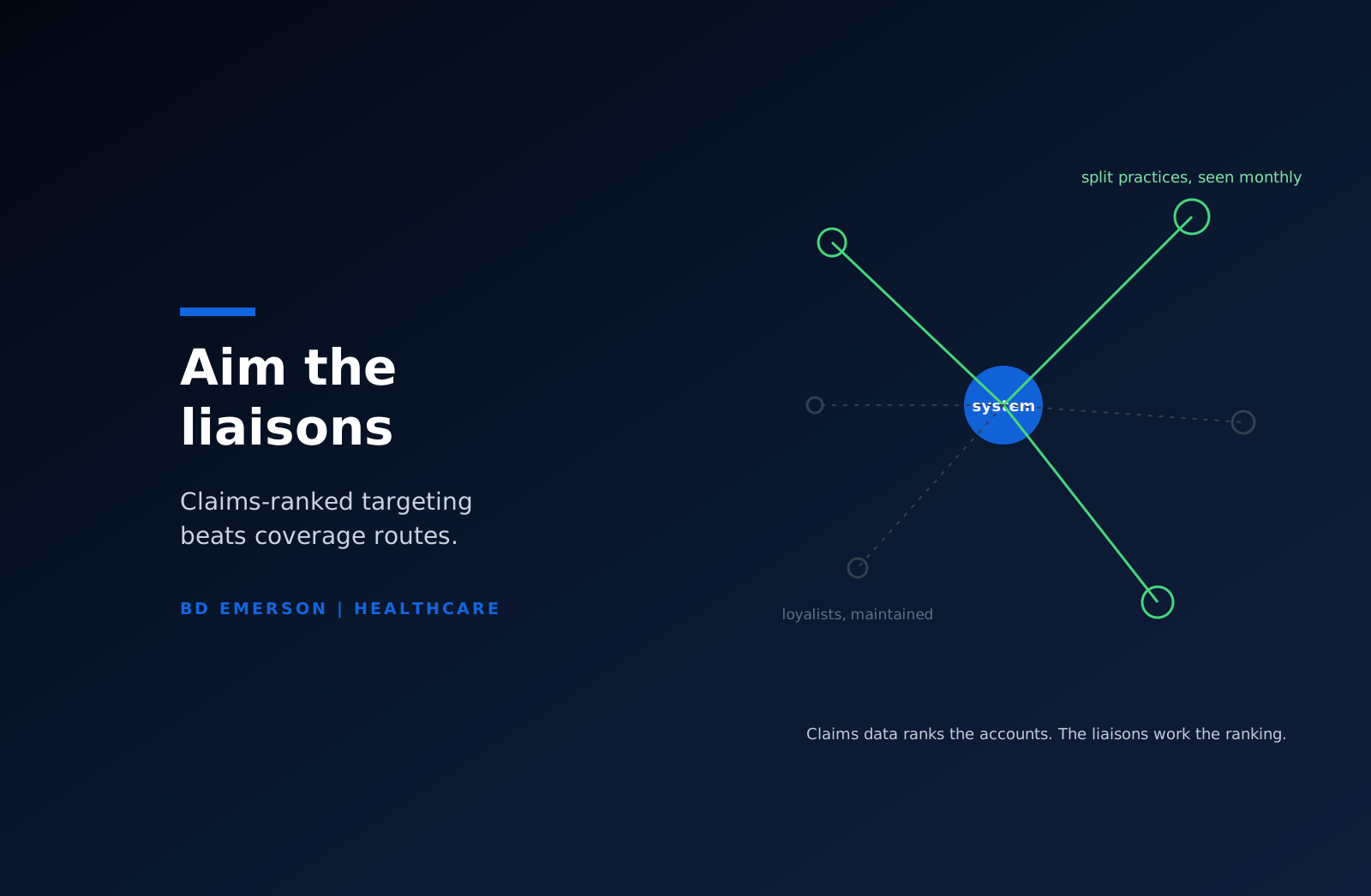
Program design starts with targeting, and targeting starts with data. Claims analysis shows which practices refer, where those referrals go, and what each practice's redirected volume is worth by service line. From that base, the target list nearly draws itself: high-volume practices splitting their referrals between you and a competitor outrank both the loyalists, who need maintenance visits rather than courtship, and the never-referrers, whose patterns rarely move. Territory design follows referral geography rather than county lines. Visit cadence follows account value, with split accounts seen monthly and stable accounts quarterly. A liaison with a claims-ranked target file works a fundamentally different job than a liaison with a ZIP code and a tank of gas, and the difference shows up in recovered volume within two quarters.
Team sizing and what a program costs
Programs scale by account load. A liaison can manage between 75 and 125 active accounts well, depending on geography and visit cadence, which sizes most single-market systems at two to four liaisons and multi-market systems proportionally. Compensation in industry postings generally runs from the high five figures to low six figures in base salary, often with incentive tied to referral movement, and the loaded cost of a small program, meaning people, CRM, claims data access, and management, typically lands in the mid six figures annually. Set that against the arithmetic on the referral leakage statistics page, where vendor analyses estimate a single leaking referrer at several hundred thousand dollars a year, and the program math is forgiving: a handful of recovered split practices carries the entire budget. The programs that fail to pay for themselves are the unaimed ones, which is a targeting failure wearing a headcount costume.
Measurement: referral volume by practice, or it did not happen
The program's scoreboard is referral volume by target practice, tracked monthly against the pre-program baseline, dollarized by service line contribution. Activity metrics, visits completed and issues logged, help manage liaisons and prove nothing about referral movement. The claims-based baseline makes honest measurement possible: when a split practice moves from sending 40 percent of its orthopedic referrals in-network to 65 percent, the program can claim that movement, practice by practice, in dollars. That reporting discipline also protects the program at budget time, because liaison programs compete with consumer campaigns for the same marketing dollars and win on attribution whenever both are measured properly, as covered in our healthcare marketing ROI guide.
Physician liaison training that survives the field
Training fails when it teaches product catalog instead of practice operations. A liaison earns access to a referring physician by being useful to the practice, which requires fluency in how referrals move: scheduling pathways, insurance authorization friction, report turnaround, and the daily reality of a front desk drowning in faxes. The training that pays covers the system's service lines at conversational clinical depth, the referral workflow end to end so the liaison can fix what breaks, objection handling grounded in honesty about the system's real access constraints, and CRM discipline so intelligence becomes institutional rather than personal. Most programs also under-train the second year: liaisons who mastered relationship maintenance need coaching toward expansion conversations, new service lines into existing accounts, or the program plateaus at politeness.
The strategies that separate working programs
Across programs that recover real volume, five practices repeat. Every visit carries a specific ask or a specific fix, never presence for its own sake. Access commitments get made carefully and kept religiously, because one broken direct-scheduling promise undoes a year of visits. Wins get closed publicly, meaning the referring office hears what happened to its patient, the loop closure that most reliably earns the next referral. Intelligence gets written down the same day, in the CRM, in a form a successor could use. And the target file gets re-ranked quarterly against fresh claims data, because referral markets move and last year's split account may be this year's loyalist or this year's loss. None of the five requires charisma. All five require management.
Where liaisons fit among alignment strategies
Liaison outreach is one instrument in the physician alignment toolkit, alongside employment, professional services agreements, clinical integration, and joint ventures. Its distinct advantage is reach without acquisition: it influences referral behavior across independent practices the system will never employ, at a cost one recovered surgical case per month can justify. The honest constraint runs the other way. A liaison cannot outwork broken access, and sending the field team to sell appointments the call center cannot schedule burns credibility the program needs. Fix access first, or at minimum concurrently, and give liaisons the direct scheduling pathways that let them promise what the system delivers.
Claims-based targeting, program design, and the referral analytics that keep the scoreboard honest are standing components of our healthcare growth strategy practice. If referral leakage is the diagnosis, a properly aimed liaison program is usually the first prescription, and the data to aim it is already sitting in your claims feed.

About the author