How Drata Pricing Works
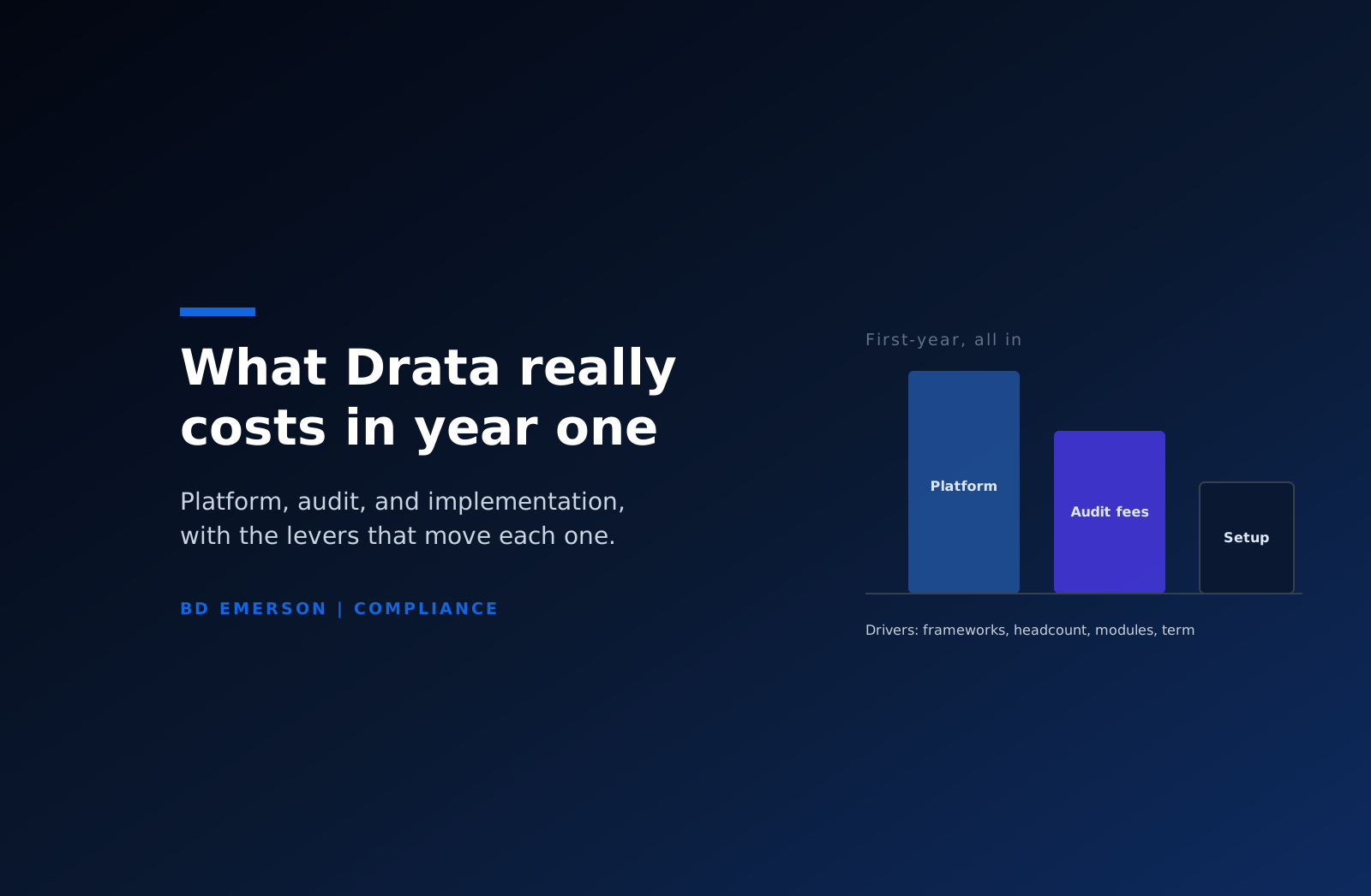
Drata does not publish prices. It sells annual subscriptions quoted per company, and the quote moves on three drivers: employee count, the number of compliance frameworks you activate, and add-on modules. For a company under 100 employees on a single framework such as SOC 2, quotes typically land in the low five figures per year. Multi-framework programs at mid-market headcount run into the mid five figures, and enterprise scopes with modules like third-party risk management and custom frameworks climb toward six. Third-party benchmarks that track actual transactions report the same shape: entry tiers starting under $20,000 and a wide band above that. The platform license is also the smaller half of the story, because the audit, implementation, and internal time around it usually cost more than the software.
What moves the quote
Employee count. Drata prices in headcount bands, and crossing a band raises the quote even if nothing else changes. Personnel records, training assignments, and device monitoring scale with people, so this is the driver you can least negotiate around. If a hiring wave is coming, expect it to show up at renewal.
Frameworks. The base subscription includes a framework or two, and each additional one is a paid add-on, commonly reported in the low four figures to around five thousand dollars per year each. SOC 2 plus ISO 27001 is the most common pairing. HIPAA, PCI DSS, GDPR, and CMMC stack from there. This is the driver most under your control, and the place discipline pays: activate a framework when a customer or contract requires it, and no earlier.
Modules. Trust Center, third-party risk management, questionnaire automation, and user access review tooling are each separately priced. Some earn their keep quickly; a public trust center that deflects security questionnaires can pay for itself in sales-engineering hours. Others duplicate tools you already own. Inventory what your ticketing system, identity provider, and procurement tooling already do before adding modules to the order form.
Term and tier. Contracts run annual and are paid up front, with multi-year commitments trading length for discount, commonly in the 10 to 25 percent range. Higher support and feature tiers move the number too. Mid-contract downgrades are generally not available, so size the tier to this year's program rather than the aspirational one.
Drata packages these drivers into several plan tiers, from an entry package aimed at startups on their first framework up to an enterprise tier with custom frameworks and advanced GRC features. The tier names and contents shift over time, so treat any specific tier pricing you find online as a snapshot rather than a quote. What stays stable is the structure: every tier is an annual commitment, every framework beyond the included set costs extra, and every module is its own line.
The first-year math nobody quotes you
The license is one line of four. A realistic first-year budget for a company pursuing SOC 2 with Drata looks like this: the Drata subscription in the low-to-mid five figures; the audit itself, at $7,000 to $25,000 for a Type 1 or $12,000 to $45,000 for a Type 2 at startup and mid-market scope; implementation, whether performed by your team in evenings, by Drata's services, or by a partner, typically a five-figure line when outsourced; and 100 to 300 hours of internal staff time that never appears on an invoice. A penetration test adds $8,000 to $25,000 if your customers expect one, and most enterprise customers do.
All in, most first-year programs land between $40,000 and $120,000 depending on scope, auditor tier, and how much of the work stays in-house. The full breakdown of the audit-side spend is in how much SOC 2 costs. The point of assembling the whole number early is that it changes the platform negotiation: a few thousand dollars of license discount matters less than an implementation that shortens the path to the audit by a quarter.
Year two is the real price
First-year quotes are courtship pricing. Renewals commonly arrive higher, sometimes materially, and by then the platform holds your controls, your evidence history, and your team's habits, which is exactly the leverage the increase is priced against. Benchmarks of actual transactions show wide gaps between first-year and steady-state pricing on the same scope. The defense is contractual and it only works at signing: a written renewal cap, add-on prices locked now, and a term long enough to carry you through your next audit cycle. A two or three year term with a cap usually beats a cheap first year followed by an uncapped second.
Budget the program's steady state, too. Year two drops the implementation line but keeps the license, the audit, a penetration test if customers expect one, and 50 to 150 internal hours. For most companies that is $30,000 to $80,000 a year as an ongoing compliance program, with Drata as one line inside it.
Implementation deserves its own scrutiny in that budget. Done internally, it costs engineering evenings and usually a missed quarter. Done by a partner, it is a fixed five-figure engagement that connects integrations, maps controls to your environment, adapts policies, and gets personnel onboarded, typically across four to ten weeks depending on headcount and framework count. The failure mode worth paying to avoid is a platform that runs for six months mis-scoped, because evidence collected against the wrong configuration does not count, and the audit clock restarts.
Where companies overspend
Four patterns account for most wasted Drata spend we see in client environments. Speculative frameworks: activating ISO 27001 or HIPAA years before any customer asks, which adds license cost and control overhead while the dormant framework clutters the dashboard with failing tests nobody owns. Oversized tiers: buying enterprise features for a 60-person company because the demo was impressive. Duplicate modules: paying for risk or questionnaire tooling that overlaps systems already under contract. And renewal drift: signing a discounted year one without a cap, then absorbing a materially higher year two after the platform is embedded and switching is painful. Every one of these is avoidable at signing and expensive afterward.
Negotiation levers that actually move the number
Custom-quoted pricing means real negotiating room. A competing quote from Vanta or Secureframe is the strongest lever, and running a live evaluation rather than mentioning one changes the tone of the conversation. Multi-year terms trade commitment for discount, and quarter-end timing helps, as it does with most SaaS. Ask directly for a renewal cap in writing, first-year pricing to be stated separately from the standard rate, and framework add-ons priced now even if you activate them later, so next year's expansion is a known number instead of a fresh negotiation. Companies under 50 employees should ask about startup pricing, which exists even when the rep does not open with it. If the choice between platforms is still open, our Vanta vs Drata comparison covers where each fits, and either answer strengthens your quote on the other.
When Drata pays for itself, and when it does not
The platform earns its subscription when audits recur. Continuous evidence collection replaces the annual screenshot hunt, auditors quote lower against organized platforms because fieldwork moves faster, and the second framework costs a fraction of the first once controls are mapped. For a company that will hold SOC 2 year over year and add ISO 27001 behind it, the license is cheaper than the internal hours it replaces, usually by a wide margin.
The math inverts for narrow cases. A company that needs a single point-in-time attestation to close one deal, with no renewal pressure behind it, can sometimes run a leaner readiness effort with a consultant and shared documentation for less than a multi-year platform commitment. The same is true for very small teams whose entire evidence surface is a dozen systems an experienced consultant can document directly. These cases are the minority, and most companies that defer a platform buy one within two years, but the honest answer is that Drata is infrastructure for a recurring program, and a recurring program is what makes it cheap.
Getting the number right before you sign
Price Drata as a program, and the components stop surprising you: license, audit, implementation, and internal time, each with its own range and its own drivers. Scope the frameworks to what customers require, size the tier to this year, cap the renewal, and decide who configures the platform before the subscription starts burning. BD Emerson runs fixed-scope Drata implementations, and we will also sit on your side of the license conversation: we do not resell Drata and take no margin on the subscription, so the only number we care about is the one that fits your program.

About the author