Best Technical Due Diligence Firms in 2026
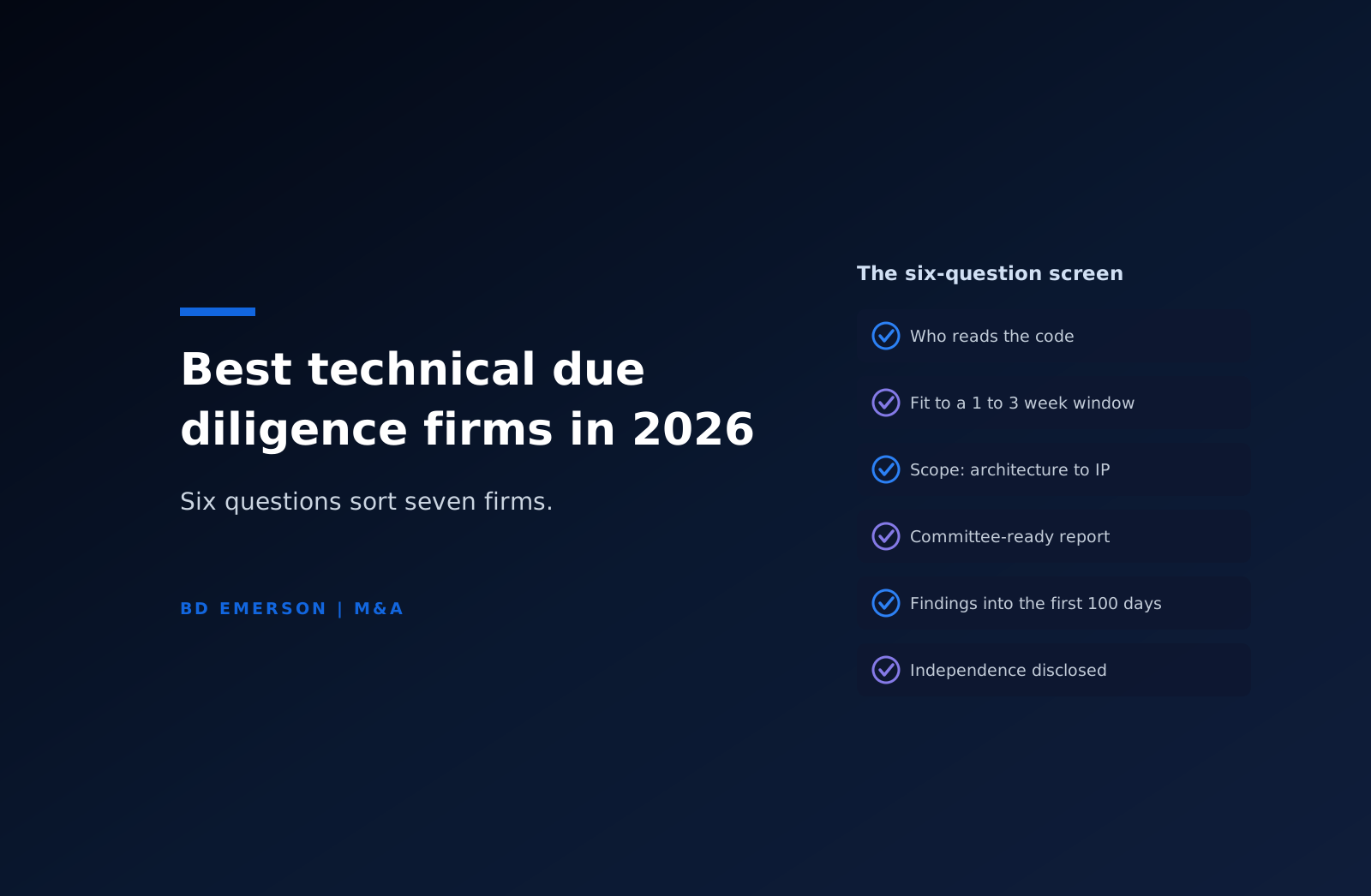
The best technical due diligence firm depends on the deal in front of you. Seven firms stand out in 2026: Crosslake Technologies and AKF Partners among the specialists, West Monroe and RSM in the middle market, Alvarez & Marsal and Deloitte at global scale, and BD Emerson, which is our own firm, included here with that disclosure made plainly. The right choice turns on who actually reads the code, whether the firm fits a one to three week deal window, how deep the scope runs across architecture, security, team, scalability, and IP, whether the report holds up in front of an investment committee, and what happens to the findings after close.
Every firm on this list runs a verifiable technology or technical due diligence practice. We checked each against the firm's own published positioning, we describe only what that positioning supports, and we make no pricing claims about any firm other than our own.
How to evaluate a technical due diligence firm
The criteria come before the names because the ranking changes with the deal. A one-week exclusivity sprint on a SaaS target rewards a different provider than a multi-country carve-out does. Six things separate the firms that produce decisions from the firms that produce documents.
- Who does the work. The finding you pay for comes from someone reading the repository, the architecture, and the ticket history, then interviewing the engineers who live in them. Ask whether senior practitioners do that directly or whether a questionnaire does it for them.
- Deal-speed fit. Most diligence windows run one to three weeks. A firm that needs six weeks is the wrong firm for your deal, whatever its other merits.
- Scope depth. Architecture, security posture, the engineering team, scalability, and IP ownership all belong in scope. A review that skips the team or the IP chain of title leaves the two most expensive surprises uninspected.
- Report usability. An investment committee needs findings ranked by cost and deal impact, with remediation estimates written as ranges tied to named drivers. A long appendix without a ranked summary forces the committee to do the analyst's job.
- Post-close follow-through. The findings should convert into the first 100 days of ownership. Ask each firm to show how a past report became an integration plan.
- Independence from the upsell. A firm that sells post-close implementation has an incentive to find post-close implementation. Some firms on this list, ours included, do both. The honest handling is disclosure up front, plus remediation estimates the buyer can take to any provider.
For what the work should catch once it starts, our list of technology due diligence red flags covers the findings that kill deals or reprice them.
Crosslake Technologies
Crosslake is the volume specialist in private equity technology due diligence. The firm staffs engagements with former CTOs, CIOs, architects, and engineers, and says it has evaluated more than 6,000 investments across more than 500 private equity firms, a history that feeds its TechIndicators benchmarking dataset. Its January 2023 acquisition of UK-based Intechnica added a European delivery arm, which is why Intechnica no longer appears on lists like this as a separate firm. Crosslake also sells value creation, interim technology leadership, and exit preparation across the hold period.
Crosslake fits best for private equity funds with a steady deal pipeline that want each target scored against a large comparison set, and for deals that need US and European coverage from one provider. The thing to watch is the lifecycle model: the firm that grades the technology also sells the transformation work that can follow, so ask for remediation estimates written so that anyone can execute them.
West Monroe
West Monroe runs diligence as an integrated package across six tracks: technology, cybersecurity, operations, commercial, compliance, and people. The firm reports working more than 500 transactions a year, which powers benchmarking across spend, headcount, and operating metrics, and its Value Management Office carries synergy targets past close. Its stated aim is to quantify value alongside risk rather than stop at a risk catalog.
West Monroe fits buyers who want the technology read delivered inside one coordinated diligence effort with cyber, operational, and commercial workstreams, which describes much of the middle market. The watch-for is breadth: the integrated package is the product, so a buyer who needs only a deep standalone code and architecture review should confirm who staffs the technology track and which artifacts they will actually examine.
Alvarez & Marsal
Alvarez & Marsal offers software product and technology diligence inside its private equity services group. The published scope covers four areas: product portfolio and roadmap, architecture and technology, organization and process, and hosting and security. The distinctive part of the positioning is the translation layer: findings are framed against the investment thesis, with technical debt expressed as remediation cost and EBITDA impact rather than as an engineering task list.
Alvarez & Marsal fits private equity deals where the committee wants technology findings priced in deal terms, and software or tech-enabled targets where diligence may flow into performance improvement work. The watch-for is staffing visibility: the public pages describe the framework and the practice leaders, so ask who on the team will read the code and interview the engineers on a deal your size.
Deloitte
Deloitte brings the largest machine on this list, with more than 28,000 M&A practitioners across more than 150 countries and diligence that spans financial, tax, commercial, operational, HR, regulatory, and IT and cyber workstreams under one engagement. After close, it fields integration management offices and Day 1 readiness teams, which matters when the acquisition is a carve-out with entangled systems in a dozen jurisdictions.
Deloitte fits large cross-border transactions and carve-outs where technology diligence has to sit beside tax, financial, and regulatory workstreams from a single provider. The watch-for is scale on smaller deals: technology is one workstream among many, so confirm the seniority of the technology team assigned to your engagement, and note that Deloitte also sells the integration services a critical report would recommend.
RSM
RSM aims its technology due diligence at the middle market and scopes it around the IT estate: front and back office applications, infrastructure, IT organization, vendor relationships and spend, and cyber risk governance. A separate software due diligence offering covers product companies. The firm emphasizes quantified remediation and execution plans over bare findings, and the natural pairing is RSM's own financial diligence on the same transaction.
RSM fits middle-market acquirers whose target's value sits in operations, where a review of ERP, infrastructure, and back-office applications with cyber attached answers the real question. The watch-for is the default lens: if the target is a software company whose codebase is the asset, ask specifically for the software due diligence practice rather than the general technology review.
AKF Partners
AKF Partners is the opinionated specialist. Its technical due diligence assesses architecture and scalability, the engineering organization, development process and metrics, and security posture, with a separate lens for AI and machine learning products. The format is compressed, typically one day onsite, and the firm is direct about the philosophy behind it, promising practical guidance instead of a long report that collects dust. Technical debt gets quantified as a cost to fix before you commit capital.
AKF fits short exclusivity windows, architecture and scalability questions, and buyers who value fast engineering judgment from practitioners. The watch-for is the same compression: a one-day read trades away exhaustive artifact review, so a committee that needs a deep written evidence trail should scope for one explicitly.
BD Emerson
BD Emerson is our firm, so read this entry knowing who wrote it. We are a boutique built deliberately senior: the people who scope the engagement are the people who read the code, sit with the architecture, and interview the engineers, inside the one to three week windows that deals actually allow. We run software due diligence for software-heavy targets and technology due diligence for the broader estate, for corporate acquirers and private equity alike.
Two things connect our findings to what happens after close. We also run cyber due diligence and post-merger integration, so findings carry into the first 100 days already priced and sequenced. And our licensed CPA attest arm performs SOC 2 examinations, which sharpens the security read whenever a target holds a SOC 2 report or should. An anonymized example of the downstream work is our fintech platform modernization case study.
The independence question applies to us, and we would rather answer it than hide it. We do both diligence and post-close work, which is exactly the incentive the criteria section warns about, so we disclose it here and we write every remediation estimate as a range with named drivers that any provider can execute. We fit one to three week windows on software-heavy targets where senior reviewers must read code, and buyers who want the diligence team able to carry findings into integration. We are the wrong fit for multi-country carve-outs that need dozens of practitioners across tax, HR, and finance under one roof; that work belongs to the global firms.
Running the selection
Shortlist two or three firms whose model fits the deal, then make the comparison concrete. Ask who specifically will read the code and interview the engineers, and get names rather than titles. Request a sanitized past report and judge whether your investment committee could act on it. Confirm turnaround against your window before signing, and ask each firm to walk one past finding through to its 100-day outcome. Our software due diligence checklist shows the ground a full review should cover, which makes it a useful scoring sheet for the sample reports you are shown.
If the deal in front of you needs a senior team inside a tight window, start with our technology due diligence practice.

About the author