Top Technology Consulting Firms in 2026
The best technology consulting firm depends on the shape of the project: a global platform program, a data or AI build with governance attached, a modernization of systems the business cannot afford to break, or the technology work inside an acquisition. Our shortlist for 2026: Accenture, Deloitte, EPAM, Thoughtworks, Slalom, West Monroe, Publicis Sapient, and BD Emerson, our own firm, disclosed up front and held to the same criteria as everyone else. Criteria come before names because most bad consulting purchases were criteria failures: nobody asked who would actually do the work, what the firm ships besides slides, or what the client owns when the engagement ends. Fix those questions and the shortlist mostly picks itself.
How to evaluate a technology consulting firm
Six criteria separate the field:
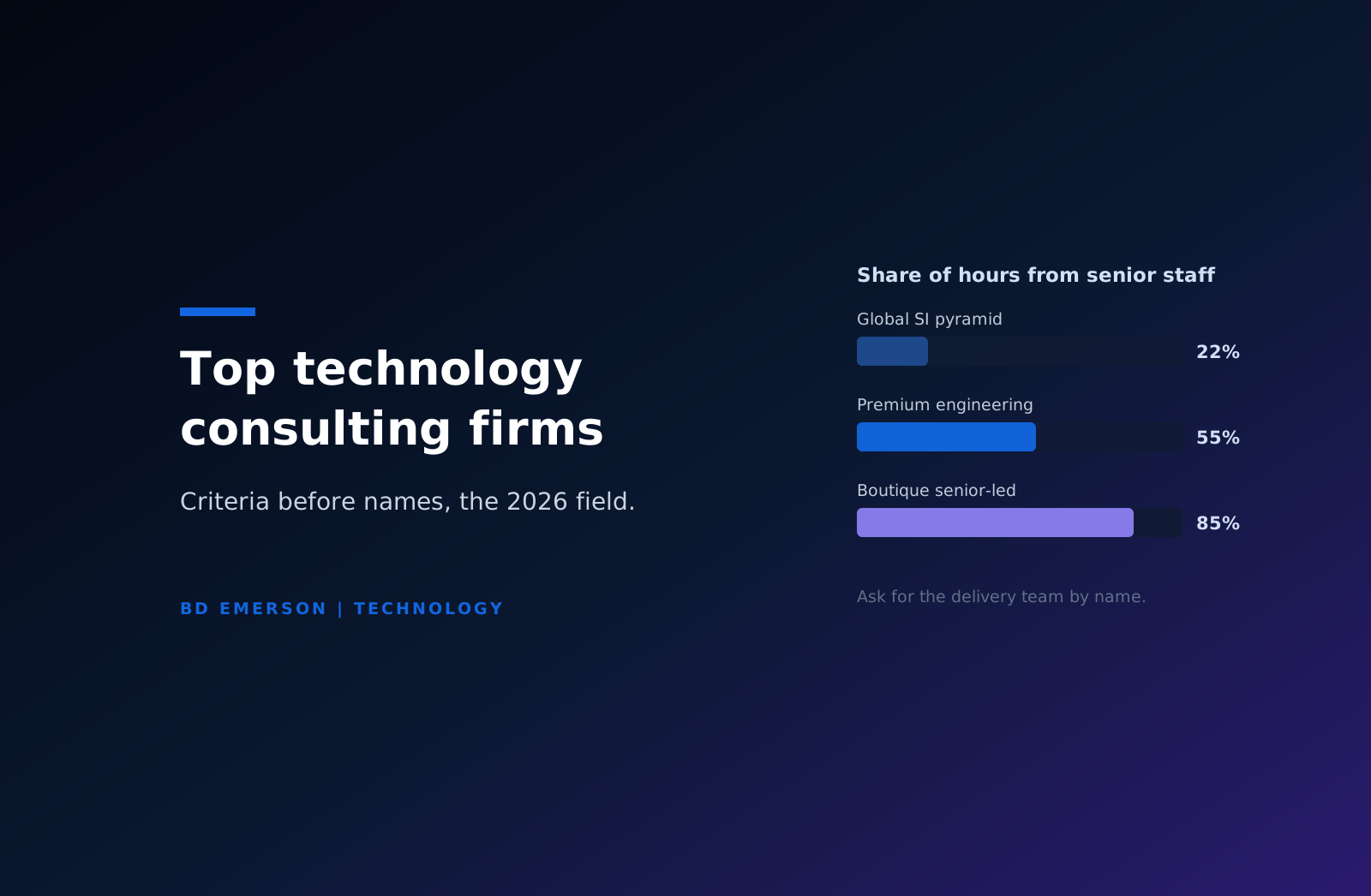
- Who actually does the work. Large firms staff a pyramid: a partner sells the engagement, a senior manager runs it, and most billed hours come from staff two to five years into their careers. Boutiques invert that. Ask for the delivery team by name and the ratio of senior hours to total hours.
- Engineering depth. A firm that only produces strategy decks hands the hard part to someone else. Ask what the firm has shipped to production in the last year, on which platforms, and who maintains it now.
- Security and compliance built in. Technology programs in regulated industries fail audits, not demos. A firm that also runs security and compliance work will design controls in from the start rather than remediating after the fact.
- Pricing structure. Blended rates hide the pyramid. Fixed-scope phases with named deliverables make change orders visible and comparable. Ask how the firm priced its last three projects of your size.
- Industry specificity. A team that has built policy administration integrations or loan servicing workflows starts weeks ahead of one that has not. Generic capability decks do not close that gap.
- Exit artifacts. Documentation, runbooks, admin access, and trained internal owners. If the operating knowledge leaves when the consultants do, the engagement bought a dependency, and dependencies renew themselves.
Accenture
The largest technology consultancy in the world, and the default for global programs that need thousands of certified people across every time zone. Accenture's strength is industrial delivery: reference architectures, offshore scale, and alliance depth with every major platform vendor, including an expanded global partnership with Palantir announced in 2025. Best for multinational programs where coordination cost dominates and the buyer needs one throat to choke. Watch for the staffing pyramid and for minimums: below a few million dollars a year, mid-market clients rarely get the A team.
Deloitte
The strongest choice when the technology program sits next to audit, tax, or regulatory exposure, because the firm can field all of those disciplines under one engagement letter. Deloitte's technology arm is enormous and its industry practices are real, with a strategic alliance with Palantir aimed at enterprise functions. Best for regulated-industry transformation where the board wants a name it already knows. Watch for cost and for handoffs between the consulting, audit-adjacent, and offshore delivery arms, which can each carry their own agenda.
EPAM
An engineering company that consults, rather than a consultancy that subcontracts engineering. EPAM's nearshore delivery model produces working software at a rate most strategy houses cannot match, and its product engineering heritage shows in code quality. Best for large custom builds and platform engineering where the deliverable is software, not advice. Watch for strategy depth at the front of the engagement: EPAM executes a well-defined build brilliantly, and a poorly defined one just as fast.
Thoughtworks
The firm that popularized much of how modern software gets built: continuous delivery, evolutionary architecture, and honest technical debt conversations. Thoughtworks is best for application modernization and engineering culture transformation, where the client wants its own teams to get better rather than to rent capability forever. Watch for scale and price: it is a premium boutique at global-firm rates, and it will decline work that reduces to staff augmentation.
Slalom
A local-market model: consultants live in the city they serve, which produces better relationships and lower travel burn than the fly-in model. Slalom is strong on cloud partnerships, particularly AWS, Salesforce, and Microsoft, and comfortable in the mid-market and enterprise middle tier. Best for cloud and data programs where proximity and continuity matter. Watch for depth at the hardest edges: for the most specialized platform or security work, Slalom often partners rather than staffs.
West Monroe
Built around the intersection of industry operations and technology, with a strong private equity practice: diligence, value creation, and merger integration for mid-market deals. Best for PE-backed companies where the technology plan has to survive an investment committee. Watch for engagements far from its industry cores of financial services, healthcare, energy, and software, where the bench gets thinner.
Publicis Sapient
The digital experience specialist of this list, born from Sapient's engineering culture inside a global advertising group. Strong at customer-facing platform builds: commerce, content, and the data plumbing behind personalization. Best for consumer-facing transformation where marketing and engineering must ship together. Watch for back-office and regulated-infrastructure work, which is not the center of its gravity.
BD Emerson
Our firm, so read this section knowing who wrote it. BD Emerson is a boutique built deliberately senior: the people who scope the work deliver it, across enterprise AI, data platforms including Palantir and Databricks, application modernization, cloud migration, and the security and compliance programs that make those systems defensible, including SOC 2 examinations performed directly through a licensed CPA attest arm. The same firm runs technology due diligence and post-merger integration for acquirers, which keeps the advice grounded in what deals actually pay for. A recent example, anonymized under our confidentiality terms: a major fintech business replacing its core platform in phases without interrupting revenue. Best for mid-market and enterprise projects that want senior engineers with governance built in, at boutique economics rather than pyramid economics. Watch for scale: a program that needs five hundred people in nine countries belongs with the firms above.
What these firms cost
Structure matters more than the sticker. Global firms typically bill blended rates in the $250 to $450 per hour range for onshore work, with offshore blends bringing program averages down to $90 to $180. Premium engineering boutiques run $150 to $300 with far more senior hours in the mix. The number that predicts your outcome is the effective rate of the people actually on your project: a $200 blended rate composed of first-year analysts costs more per unit of judgment than a $300 senior engineer. Ask every finalist the same question: for this scope, list the delivery team, their years of experience, and the share of hours each will bill. The answers vary more than the rates do.
Match the firm to the project
Global platform rollout across regions: Accenture or Deloitte. Custom software or platform engineering at scale: EPAM or Thoughtworks. Cloud and data work where local continuity matters: Slalom. Private equity diligence and value creation in the mid-market: West Monroe or BD Emerson. Customer experience and commerce builds: Publicis Sapient. AI, data, and modernization programs that need senior delivery with security and compliance in the same team: that is the work our technology consulting practice is built for, and if the honest answer is that you need a build-versus-buy decision before you need any consultant, start with our build vs buy framework and calculator and run your own numbers first.

About the author