Healthcare Marketing ROI: Why Nobody Can Answer the Question
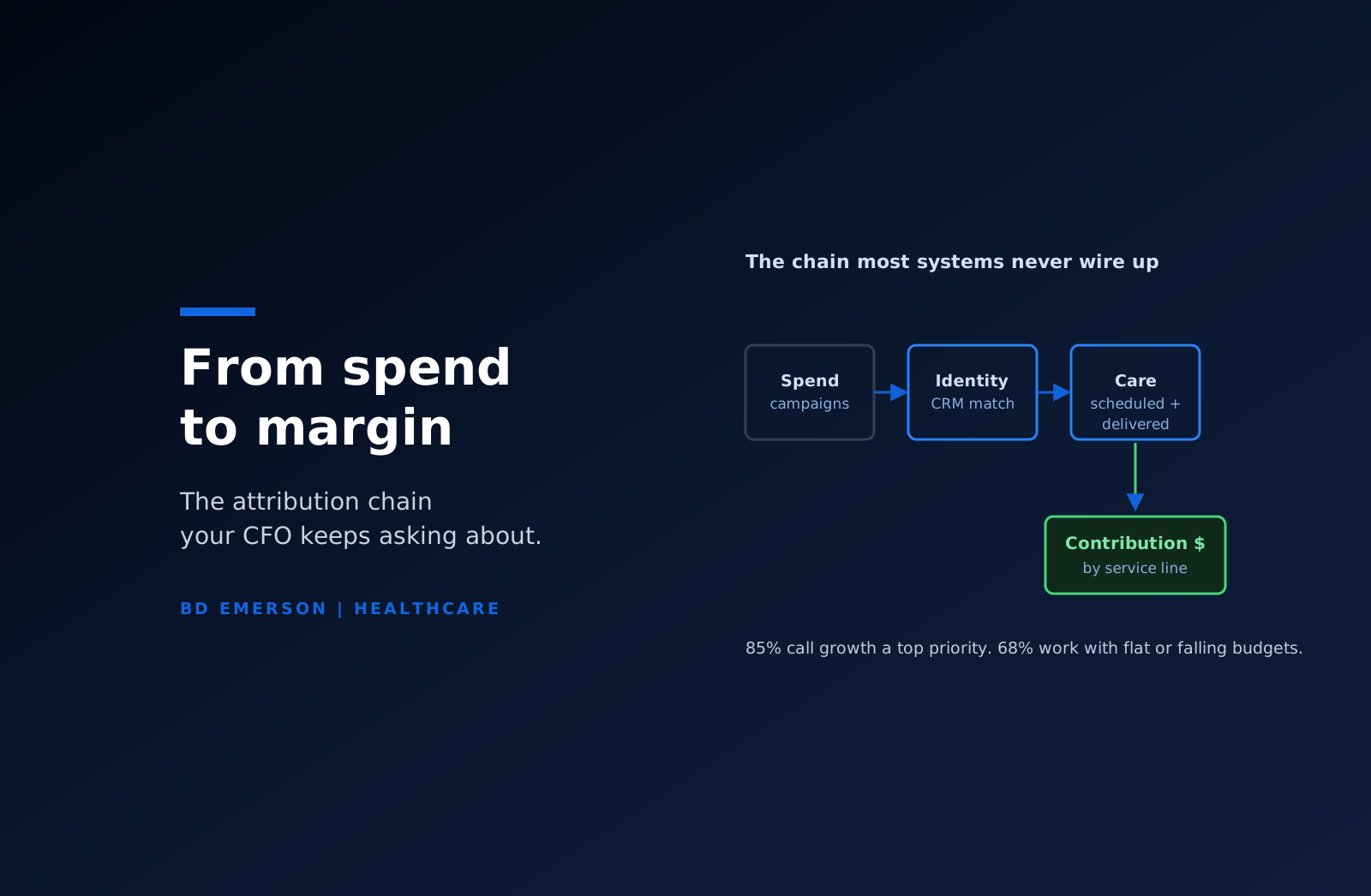
Healthcare marketing ROI is the return a system can attribute to marketing investment, measured in delivered care: scheduled visits, completed procedures, and the contribution margin they carry, netted against the spend that produced them. Most health systems cannot compute it, and the obstacle is a missing measurement chain between campaign activity and the billing system rather than any shortage of talent or effort. In Endeavor Management's growth investment benchmark, 85 percent of participating leaders named growth a top marketing priority while 68 percent reported budgets flat or shrinking year over year, a squeeze that falls hardest on the function least able to prove its contribution. The teams that escape the squeeze do it with attribution infrastructure, and the infrastructure costs less than the budget cuts it prevents.
The units problem
Marketing reports in the units its tools produce: impressions, clicks, engagement, awareness lift. Health system leadership manages in admissions, surgical volume, payer mix, and margin. When the CFO asks what the campaign returned and receives reach as an answer, both people leave the meeting confirmed in their suspicion, the CFO that marketing is a cost center wearing a growth costume, the CMO that finance refuses to understand the discipline. Neither is right. The two are reading instruments that were never wired together, and the gap between those instruments is where marketing budgets go to shrink.
The structural version of this problem, and why it keeps consuming healthcare CMOs personally, is that accountability for growth gets assigned without the tooling to demonstrate it. The assignment survives each leadership change. The tooling gap does too.
What the measurement chain requires
Attribution in healthcare is harder than in retail because the conversion event lives in clinical and financial systems, weeks or months downstream, wrapped in privacy constraints. Harder, and buildable. The chain has four links. Identity: campaign responses land in a CRM that can match a person across web forms, call center interactions, and scheduling, handled under HIPAA rather than around it, which in practice means consented first-party data and business associate agreements rather than adtech pixels scraping clinical pages. Conversion: scheduling and EHR events tie back to the identified inquiry, so a booked cardiology consult remembers the search that produced the call. Value: finance supplies contribution by service line, converting volume into dollars leadership can rank against spend. Time: the chain reports on a lag structure that respects clinical reality, because a joint replacement attributed in March may have entered the funnel in October, and monthly snapshots that ignore the lag punish exactly the service lines with the longest, most valuable funnels.
None of the links requires exotic technology. Most systems already own the CRM, the call center platform, and the warehouse involved. What is missing is the connective work and a decision about who owns the number once it exists.
A worked example, in round numbers
Concreteness helps, so take a cardiology campaign in deliberately round figures. A system spends $250,000 across search, paid social, and streaming audio against a target of new cardiology consults. The chain identifies 1,100 attributable inquiries, of which 460 schedule, 390 complete a consult, and 140 convert onward to a procedure within the attribution window. Finance prices the consults and downstream procedures at an average contribution of $2,400 and $9,800 respectively. The attributable return is roughly $2.3 million in contribution against $250,000 of spend, before the argument about halo effects even starts. The point of the example is its shape rather than its specific multiples: every number in it is knowable with the chain in place, and none of it is knowable without. A system that cannot produce this paragraph about its own flagship campaign is budgeting by anecdote.
Measure the referrer channel, not just the consumer one
Consumer campaigns are the visible marketing spend, and in most systems they are the smaller volume driver. Referring physicians move more admissions than any media plan, which means ROI computed only on consumer channels understates marketing's contribution and misdirects its budget. Outreach to referring practices, run through a physician liaison program with claims-based targeting, produces attribution that is cleaner than consumer attribution, because the referral either arrived from that practice or it did not. Systems serious about the ROI question measure both channels in one framework and usually find the reallocation argument writes itself.
The mistakes that discredit measurement programs
Four errors recur often enough to name. Claiming everything: attribution models that credit marketing with every patient who ever saw an ad convert the CFO from skeptic to enemy, so start with conservative windows and expand with evidence. Measuring only what is easy: digital channels report natively while referral outreach and traditional media take work, and a chain that covers only the easy channels will systematically shift budget toward what is measurable rather than what performs. Ignoring the lag: cutting a service line campaign at month three that converts at month seven creates the illusion that marketing failed when the calendar did. And burying bad news: the first honest report reliably shows celebrated campaigns producing nothing, which is why the program needs sponsorship above the CMO before the first report circulates, and why the correct institutional response is reallocation rather than embarrassment.
The five numbers that belong on the executive dashboard
Executive reporting works when it is small and consistent, and five measures cover the discipline. Attributable scheduled volume by service line, the headline count of care the chain can trace to marketing. Cost per delivered case by service line, which exposes the channels that generate inquiries that never become patients. Referrer channel movement, meaning referral volume change among targeted practices against baseline. Marketing-sourced contribution, the dollarized rollup finance co-signs. And reallocation rate, the share of budget that moved this quarter based on evidence, which measures whether the organization uses the instrument or merely admires it. Impressions and engagement stay in the working-level reports where they belong, as diagnostics rather than results.
What changes when the number exists
Within two or three cycles of honest attribution, the compounding starts. Budget flows toward measured winners. The CFO conversation shifts from defending spend to sizing it, because a channel returning demonstrated contribution invites the question of what doubling it would return. Marketing enters the capital and strategic planning conversations holding volume evidence instead of brand sentiment, and budget defense stops being an annual performance and becomes arithmetic. The 68 percent of teams working with flat or falling budgets will not argue their way out of the squeeze with better decks. The exit is a provable number, produced by infrastructure, read in a quarterly forum where marketing answers for volume like every other growth function. Building that chain, and connecting it to referral capture and service line strategy, is part of our healthcare growth strategy practice. The question your CFO keeps asking has an answer. It has simply never been wired up.

About the author