The Corporate Divestiture Process: Seven Phases from Decision to Separation
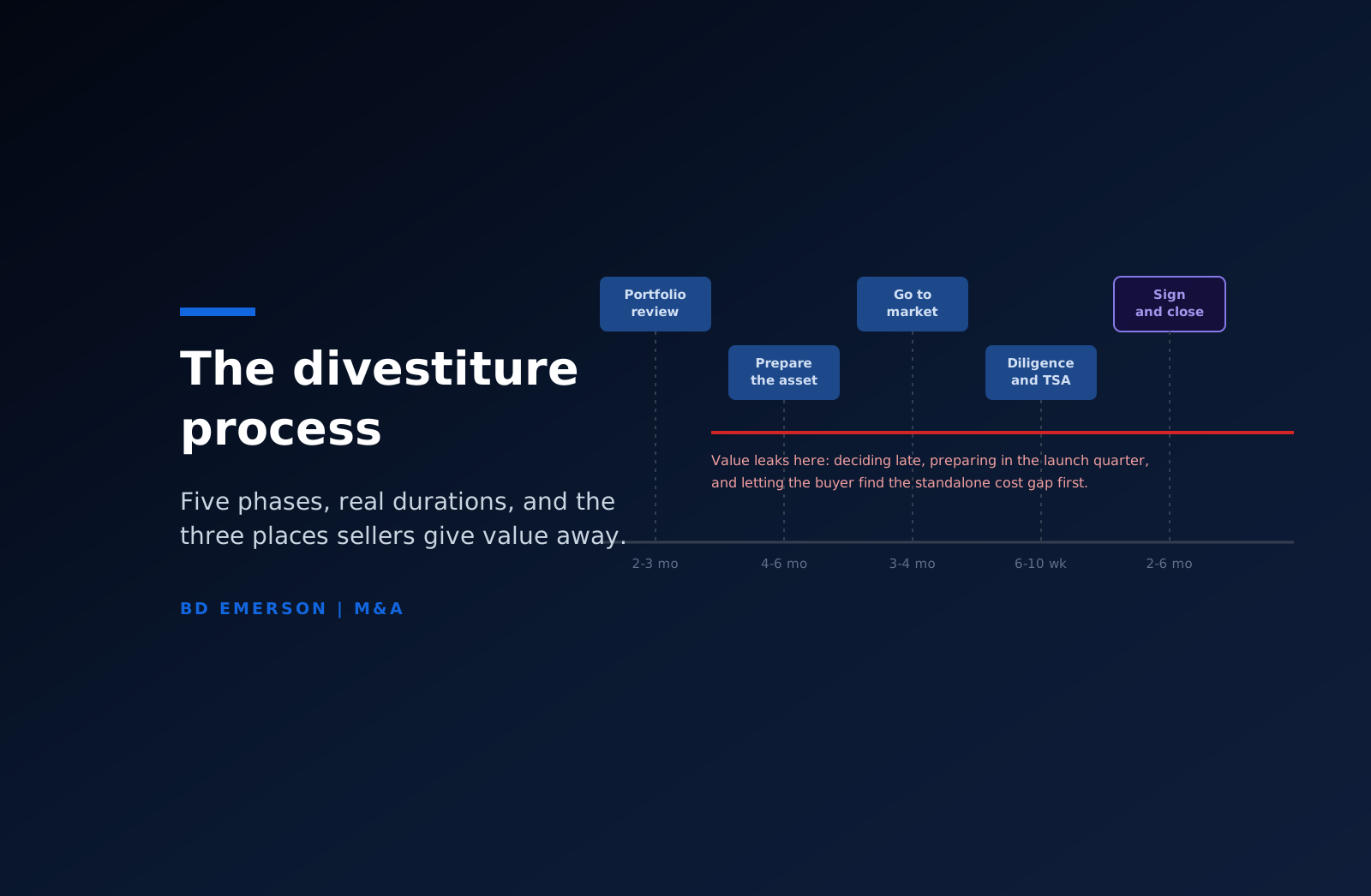
A corporate divestiture runs in seven phases: portfolio review and the decision to sell, preparation, perimeter definition, going to market, diligence and the TSA negotiation, signing to close, and post-close separation. For a business unit that has never reported on its own, the sequence takes 12 to 18 months from decision to closing, and the separation runs 6 to 24 months beyond that. The price the seller finally keeps is set less by the auction than by the sequencing: deals that start preparation four to six months before launch defend their number, and deals that compress those phases hand the discount to the buyer. Our overview of what a divestiture is covers structures and definitions. This article is the operating sequence, written for the corporate development lead who has just been told to sell a business unit.
Phase one: portfolio review and the decision to sell
Divestiture strategy starts before any single deal does, in a portfolio review that asks one question of every business unit: is this company the best owner of this asset? The test is concrete. If another owner would invest more in the business, run it with more attention, or pay more than it contributes to your plan, the unit belongs on the exit list even while its numbers look fine. The reviews that work run annually, score units on capital returns against alternatives and on strategic fit, and force a decision rather than a discussion.
Once a unit is nominated, the decision itself takes 2 to 3 months: a valuation range, a perimeter hypothesis, a first cut at separation cost, and a board resolution. The timing discipline matters more than the analysis. Boards that hold a deteriorating business through several bad quarters hoping for a turn end up selling into weakness, with a declining trend visible in the numbers and no time left to fix it. The gap between exiting a stable business and exiting a visibly declining one is usually larger than anything the process itself can recover, which is why the decision is best made a year before the numbers would force it.
Phase two: preparation, the phase that sets the price
Preparation takes 4 to 6 months done properly, and it can start before the board vote because every deliverable is useful even if the deal dies. Three workstreams run in parallel.
The first is the financial package. A unit that has never reported separately needs three years of history restated as though it had stood alone, a workstream with its own traps that we cover in our guide to carve-out financial statements. The second is the standalone cost model, built bottom-up from what the business will actually spend to run itself rather than from the corporate allocation, because allocations built for management reporting understate standalone cost by 15 to 30 percent. The third is the data room and the management presentation, populated before the banker sends the first teaser rather than during exclusivity.
The standalone cost model deserves the most senior attention of the three, because it decides who controls the hardest conversation in the deal. A division carrying corporate allocation at 4 percent of revenue commonly needs 6 to 9 percent to operate alone. If the seller presents that gap itself, with a bridge from allocated to standalone cost and a plan behind each line, the number gets negotiated once. If the buyer discovers it in diligence, the buyer sets the number, prices the uncertainty on top of it, and every point comes out of EBITDA and then out of the multiple.
Phase three: perimeter definition
The perimeter is the decision about what goes and what stays: legal entities, contracts, customers served by both businesses, employees who work across the line, intellectual property, facilities, and data. Drawing it takes 6 to 10 weeks and runs alongside preparation, since the financials describe whatever perimeter is chosen.
Two rules keep the perimeter from becoming the deal's most expensive problem. Draw it around what the business needs to operate, then test every shared item with a named disposition: transfers, stays with a license back, or stays with a transition service attached. And close it before buyers arrive. Reopening the perimeter after a bidder is in diligence reprices the deal, because every moved contract changes the financials the bids were built on.
Phase four: going to market and buyer selection
The marketed process takes 3 to 4 months: a teaser to a screened buyer list, confidentiality agreements, an information memorandum, first-round bids, management presentations for the short list, and a second round with data room access. The design choice is breadth. A broad auction maximizes price tension and leakage risk at the same time, while a targeted process with four to eight logical buyers usually finds the same clearing price with less disruption to customers and employees who will hear about the deal before it signs.
Buyer type shapes the rest of the deal. A strategic buyer can pay for synergies a fund cannot model, folds the business into its own systems, and wants a short transition services period. A financial buyer scrutinizes the standalone cost model harder than anyone else, because it has to fund every line of it, and needs a longer service period since it has no systems to migrate into. Sellers who tailor the transition services menu to each finalist, rather than offering one generic term sheet, keep both types in the process to the end.
Phase five: diligence and the TSA negotiation
Exclusivity with the chosen buyer runs 6 to 10 weeks, covering confirmatory diligence, the purchase agreement, and the transition services agreement. The mistake sellers repeat is treating the TSA as post-signing paperwork. The service schedules, the pricing, the exit dates, and the acceptance tests belong in the negotiation alongside the purchase agreement, because they allocate real money: a TSA priced at cost with no escalators subsidizes the buyer's slow migration, and one with no exit mechanics leaves the seller running systems for a business it sold a year after closing. Our transition services agreement advisory practice negotiates these terms against the actual separation plan rather than a preferred close date.
Diligence itself goes fastest for sellers who prepared in phase two. The buyer will rebuild the standalone cost model, test the carve-out financials against the perimeter, and probe every shared contract. Questions answered from documents that existed before launch read as competence. Questions answered from spreadsheets built overnight read as risk, and buyers price risk.
Phase six: signing to close
Signing to closing runs 2 to 6 months, driven by antitrust review, foreign investment screening where it applies, and works council consultation in Europe, which is sequenced, mandatory, and not compressible with money. The seller's controllable work in this window is Day 1 readiness: legal entities stood up, employees transferred with payroll that runs, systems accessible under interim arrangements, and customers notified in the right order. A missed payroll in the first month costs more goodwill than any negotiated term recovered.
Phase seven: post-close separation and stranded cost elimination
Closing ends the transaction and starts the separation. The transition services agreement typically runs 6 to 24 months while the buyer migrates onto its own systems, and the discipline of ending it service by service is covered in our guide to TSA exit planning. The seller's parallel program is stranded cost elimination: the divested unit's share of shared infrastructure, licenses, facilities, and support headcount stays behind at closing, commonly 20 to 40 percent of what was allocated to the business, and it has to be taken out on the same calendar as the TSA exits rather than after them. That program is its own subject, covered in our article on stranded costs after a divestiture. A divestiture is finished when the last service has exited and the seller's run rate reflects the company it now is, not the one it used to be.
Where deals lose value
Three decisions account for most of the money left on the table, and all three happen early. Deciding late means selling a declining trend, and no process quality recovers what the trend line costs. Preparing in the same quarter as launch means spending exclusivity producing documents instead of negotiating, while the buyer's diligence team sets the agenda. Letting the buyer discover the standalone cost gap means the hardest number in the deal gets set by the side with the incentive to inflate it. Each has the same fix: start the phase before the calendar says you must.
Where BD Emerson fits
Our divestiture services run the sequence end to end: the portfolio screen, carve-out financial statements, the bottom-up standalone cost model, perimeter support, transition services scoping and negotiation, Day 1 readiness, and the stranded cost takeout after close. Because one firm handles the financial, tax, technology, and cyber workstreams, the findings reconcile into a single model instead of four vendors' reports that disagree. If the board has just put a unit on the exit list, the first two moves are the perimeter and the financial package, and our divestiture consulting practice starts there.

About the author