How Much Does AuditBoard Cost?
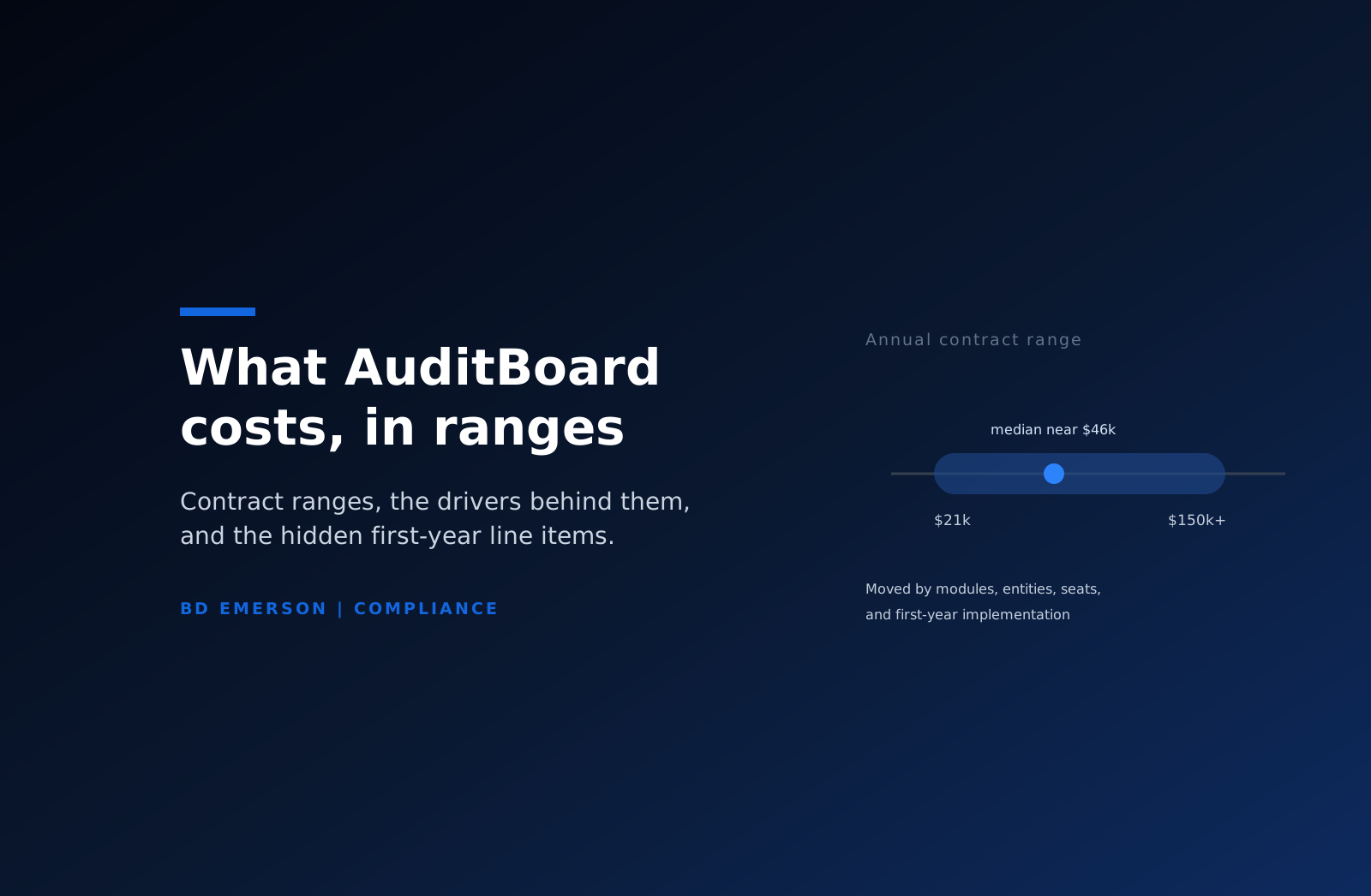
AuditBoard is sold as a module-based annual subscription with no published price list. Independent purchasing data puts the median contract near $46,000 per year, with most contracts landing between roughly $21,000 and $150,000. A small internal audit team licensing one module sits at the low end; a multi-entity SOX program with several modules sits at the top, and large multi-module enterprise deals go higher. First-year cost runs above renewal because implementation services typically add 10 to 25 percent. The four drivers that set your number are modules licensed, named user count, entity structure, and contract term. One naming note: AuditBoard rebranded to Optro in March 2026, with products and contracts unchanged, so pricing conversations still happen under the AuditBoard name.
How AuditBoard pricing works
There are no self-serve tiers. Every quote is custom, assembled from the modules you license: audit management, SOX compliance, risk management, IT and infosec compliance, third-party risk, and ESG, most available in a standard or professional tier. On top of module selection, the quote moves with named users (auditors, compliance staff, and administrators, with control owners usually counted differently), the number of legal entities or business units you run programs across, and term length. Small teams of 5 to 15 users pay the highest per-user rates; volume pricing starts to appear above roughly 20 users.
Because quotes are custom, two similar companies can sign meaningfully different deals for the same software. The spread between a well-negotiated contract and a list-price one commonly reaches 15 to 20 percent, which is why the negotiation levers at the end of this article matter as much as the sticker ranges.
Realistic first-year ranges by program size
A single-team internal audit or SOX program, one module, one entity, under 15 users, typically lands between $25,000 and $60,000 per year in subscription, plus implementation. The driver at this scale is per-user pricing, since small seat counts get the worst rates.
A mid-size SOX or combined audit program, two or three modules, a handful of entities, 15 to 40 users, typically runs $60,000 to $120,000 per year. Module count is the driver here: each addition raises the subscription, though bundled modules price 10 to 20 percent below buying them separately later.
A multi-module enterprise program, four or more modules across many entities, runs $120,000 to $250,000 or more per year. At this scale entity count and tier selection drive the number, and reported first years around $150,000 that renew near $120,000 are consistent with what buyers describe publicly.
Add implementation to each of those. Vendor onboarding or partner-led implementation typically costs 10 to 25 percent of the first-year subscription, with the high end reflecting heavy workpaper migration and integrations. An independent partner is priced against scope; we cover when that beats vendor onboarding on our AuditBoard consulting page.
The hidden costs
Sandbox and non-production environments. Programs that want a test environment for workflow changes or integration development sometimes find it priced separately. If your SOX program cannot tolerate configuration changes landing directly in production, ask for the sandbox in the initial quote rather than as a year-two surprise.
Workpaper and RCM migration. Moving ten years of audit files and a control matrix out of spreadsheets is the single most underestimated line. Done properly, with control language normalized and mappings rebuilt, it consumes weeks of effort from whoever does it, internal or external. Skipping it does not save the money; it moves the cost into every future audit cycle.
Integrations. Connections to your ERP, HRIS, identity provider, and ticketing system make evidence collection real. Each integration costs configuration time, and some need middleware or IT involvement that never appears in the vendor quote.
Training and administration. Someone inside the company becomes the platform administrator, at a real fraction of their time. Role-based training for control owners is what determines whether evidence requests get answered inside the tool or by email, and it is worth budgeting properly.
Add-ons and escalators. Newer AI features are frequently priced as paid add-ons rather than included. Renewal escalators of 3 to 7 percent per year compound quietly, and mid-term user additions are pro-rated at rates that may not carry your volume discount.
Internal time. Plan for 100 to 250 hours of internal effort in an implementation quarter: migration decisions nobody else can make, control language reviews, integration approvals from IT, and user acceptance testing. At loaded cost that is $10,000 to $30,000 of payroll pointed at the rollout. It never appears on a vendor invoice, and pretending it does not exist is how go-live dates slip.
What year two looks like
Renewal is the subscription plus the escalator, minus everything that made year one expensive. Implementation fees disappear, migration is done, and training drops to onboarding new hires. A program that spent $130,000 all-in during year one commonly renews between $90,000 and $110,000, which is why evaluating the platform on year-one cost alone overstates it. The renewal risks run the other way: user counts creep as adjacent teams join, modules added mid-term price worse than bundled ones, and the escalator compounds. Treat the year-three number, at your realistic module and user count, as the true cost of ownership, and get it modeled before you sign rather than after.
AuditBoard versus Workiva versus spreadsheets
Against Workiva, the comparison depends on who is buying. For a private company running internal audit and SOX, AuditBoard is usually the cheaper platform for equivalent scope, since Workiva's pricing anchors on public-company reporting and multi-solution enterprise contracts reach the mid six figures. For a public company already paying for Workiva's SEC reporting, adding its SOX solution is incremental and can undercut a new AuditBoard contract. The functional trade-offs are covered in our AuditBoard vs Workiva comparison.
Against staying in spreadsheets, the honest answer is that Excel is cheaper until it is not. A two-person audit team with 60 controls does not need a $50,000 platform. The crossover comes with scale and scrutiny: multiple entities, hundreds of controls, an external auditor sampling your evidence, and a quarter that runs on email. At that point the platform cost competes against audit hours lost to formatting, version confusion, and evidence chase, and against the fee pressure that comes when your external auditor cannot rely on your testing.
There is also a timing effect worth knowing. Quotes issued against a fiscal quarter or year-end close consistently price better than mid-quarter ones, and a buyer who starts the evaluation 90 days before budget approval, rather than two weeks before, walks into the negotiation with alternatives still live. None of this is unique to AuditBoard, but the absence of public list pricing makes preparation worth more here than with transparently priced tools.
Negotiation levers that actually move the number
Four levers show up consistently in real contract data. Multi-year commitments take 10 to 20 percent off annual pricing, in exchange for lock-in you should price consciously. Bundling modules at signing costs less than adding them mid-term, typically 10 to 20 percent on the incremental modules. A live competitive alternative, such as Workiva or another GRC platform actually under evaluation, is reliably worth another 10 to 15 percent, and buyers average about 16 percent in total savings against initial quotes. Finally, cap the renewal escalator in writing at signing, because the default 3 to 7 percent annual increase costs more over a three-year hold than most upfront discounts save.
How to budget it
Take the subscription range for your size, add 10 to 25 percent for first-year implementation, and add internal time for migration decisions, integration approvals, and training that no invoice will show. A realistic first-year all-in for a mid-size SOX program is $75,000 to $150,000, settling 20 to 30 percent lower in steady state. BD Emerson scopes and implements AuditBoard as an independent partner, with fixed-fee implementation quoted against your actual RCM, entity count, and integration list rather than a rate card. If you are pricing a rollout, the scoping conversation is free and the ranges above will narrow to a number.

About the author