Hospital Branding Is a Growth Decision, Then a Creative One
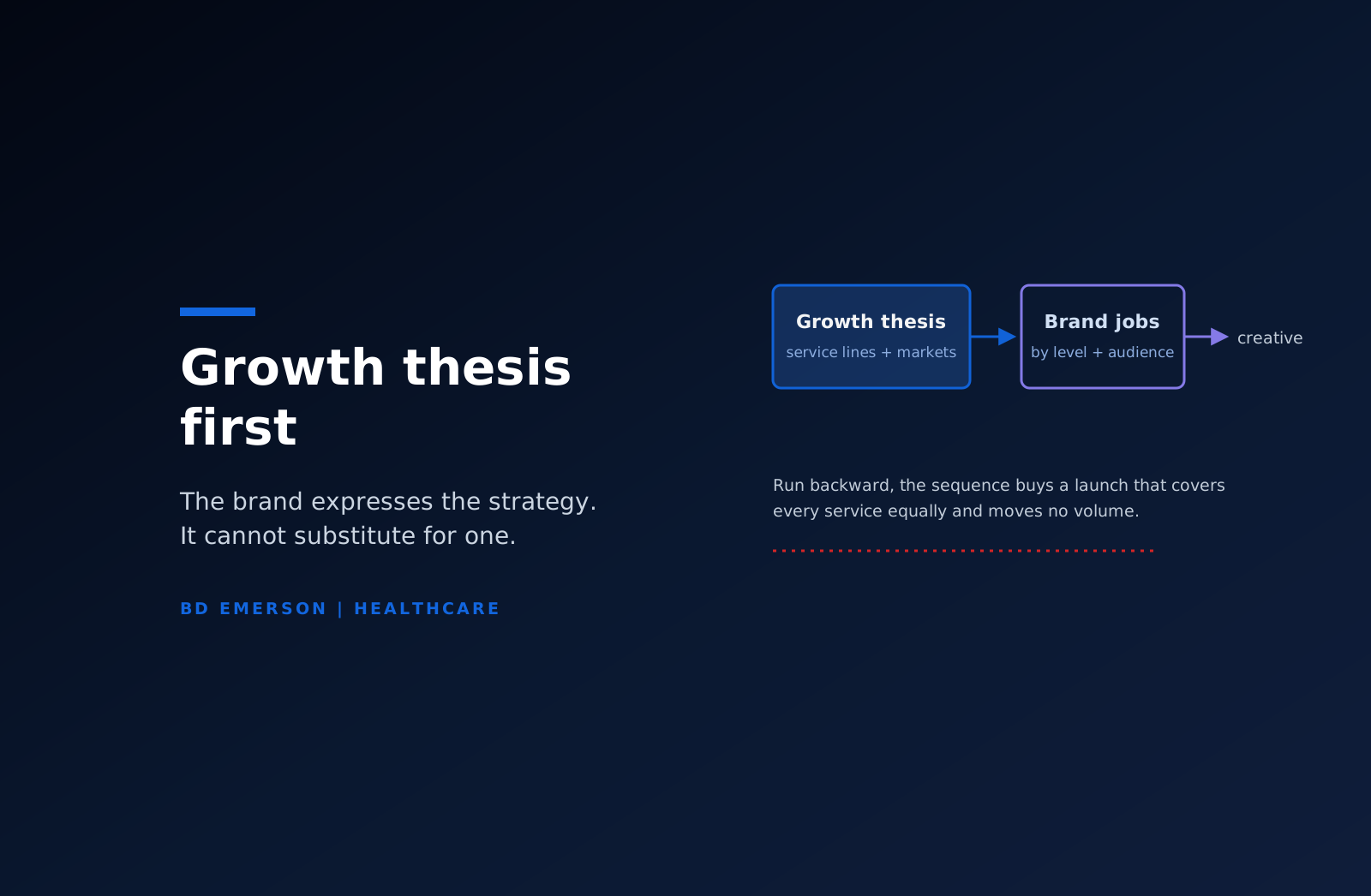
Hospital branding is a growth allocation decision before it is a creative one. A brand tells the market which care to seek from you, which is another way of saying it commits the organization to a demand pattern. Decide the growth thesis first, meaning which service lines, markets, and referral channels the next three years depend on, and the brand has a job it can be built and budgeted to do. Run the sequence backward, brand first and growth thesis later, and the result is familiar across the industry: a launch that covers every service equally, offends no stakeholder, and changes no volume. In the post-mortem, the sequencing deserves the blame far more often than the creative.
Two leadership chairs, one unowned outcome
In most systems, brand belongs to marketing while growth belongs to strategy, each with its own budget, plan, and definition of success. The separation produces three recurring failures. Brand promises outrun capacity, as when a system advertises destination-level cardiac care while the next-available cardiology slot sits five weeks out, converting each impression into a small broken promise. Growth investments launch into silence, as when a service line receives capital but no awareness budget, then gets judged on volume it was never introduced to the market to earn. And leadership reads the mismatch as a messaging problem, commissioning new creative to fix what is an allocation gap between two departments that plan on different calendars.
Healthcare branding beyond the system logo
Healthcare branding operates on at least three levels, and conflating them is its own failure mode. The system brand carries trust, quality signal, and payer negotiating presence. Service line brands, in orthopedics, oncology, cardiology, and women's health, do the specific work of demand generation, because patients shop conditions rather than corporations. Physician and program brands matter most in referral channels, where a named surgeon or a destination program travels between clinicians in a way no system tagline does. A brand strategy worth funding states which level each dollar serves and what volume it is expected to influence. Awareness for the system, preference for the service lines, and referrals for the programs are three different jobs, measured three different ways, and the measurement discipline in our healthcare marketing ROI guide applies to all three.
Mergers are where the gap gets expensive
Nothing exposes the brand-growth divide like consolidation. Post-merger brand decisions, which names survive, which get retired, how the architecture nests, are routinely handled as identity questions, negotiated through legacy loyalty and board sentiment. They are growth questions. Which brand holds referral equity with which physician communities? Which name commands preference in which service lines and geographies? What patient volume moves, or leaves, under each naming option? Systems that answer with data make brand consolidation an asset transfer. Systems that answer with sentiment discover, four quarters later, that they retired the name their referral base trusted most, a loss that shows up as unexplained referral leakage long after the launch party.
The architecture choice itself deserves growth logic. A branded house, one master name across every facility, buys efficiency and systemness at the cost of local equity built over decades. A house of brands preserves local trust and referral patterns at the cost of duplicated marketing spend and a diluted payer story. Most systems land on a hybrid, and the right hybrid is discoverable rather than debatable: equity research in the affected markets, referral pattern analysis by legacy name, and volume modeling under each option. That work costs a fraction of a signage budget and routinely contradicts the room's initial instincts, which is the point of doing it before the vote rather than after.
What a rebrand costs, and when the spend is defensible
System rebrands run from the low millions for a regional single-market system to well into eight figures for multi-market consolidations, once research, naming, identity, signage, digital migration, and sustained relaunch media are all counted. Signage and facility conversion alone frequently exceed the creative budget, and the digital migration, meaning domains, listings, review profiles, and search equity, is the piece most often underscoped, with organic traffic losses that take quarters to rebuild. None of that spend is inherently wasteful. It becomes wasteful when it purchases a new identity for an unchanged growth position. The defensible rebrand follows a merger, a service line repositioning, or a demonstrated equity problem in priority markets, and it can state, in advance, the volume and preference movement it is buying. A rebrand that cannot name its expected return in those terms is an expensive way to change the letterhead.
The sequence that makes branding fundable
Getting the order right takes four steps. State the growth thesis, ranked service lines and markets with volume math, which is the output of real strategic planning. Audit current brand equity against that thesis, measuring awareness and preference in the segments the thesis needs rather than in general population polls. Assign the brand its specific jobs, by level and by audience, including the referring-physician audience most brand briefs forget. Then build creative, naming, and media against those jobs, with budget allocated in proportion to the volume each job protects or creates. The step most systems skip is the second, and it is the cheap one: equity research scoped to the growth thesis costs a rounding error against a rebrand aimed at nothing in particular.
Measuring brand in volume terms
Brand investment resists direct attribution, and resists is different from escapes. The workable scoreboard tracks aided and unaided awareness in priority segments, preference for named service lines against named competitors, referral volume from the physician communities each program brand serves, and share of shoppable procedures in the geographies the thesis names. Reviewed alongside campaign attribution, those measures let a system distinguish a brand problem from an access problem from a capacity problem, which matters because the three failures produce identical-looking soft volume and demand entirely different money. Brand tracking without volume context produces reassurance. Volume context without brand tracking produces mystery. Together they produce decisions.
Questions that test a brand plan
Put the current brand strategy through four questions. Which three-year growth thesis does this brand express, stated in service lines and markets rather than values language? Can operations deliver the experience the brand promises at current access levels? Which brand level, system, service line, or program, does each major campaign serve? And who reconciles the brand plan with the growth plan, as a standing role rather than a launch-week courtesy? Weak answers do not mean the creative team failed. They mean the brand was asked to substitute for a growth strategy, and brands cannot do that job.
Sequencing brand behind the growth thesis, then holding both to volume outcomes, is part of our healthcare growth strategy practice. If a rebrand is on the table, settle the growth thesis first. It is the cheapest brand decision you will make.

About the author