Why Mergers and Acquisitions Fail: The People Side of Broken Deals
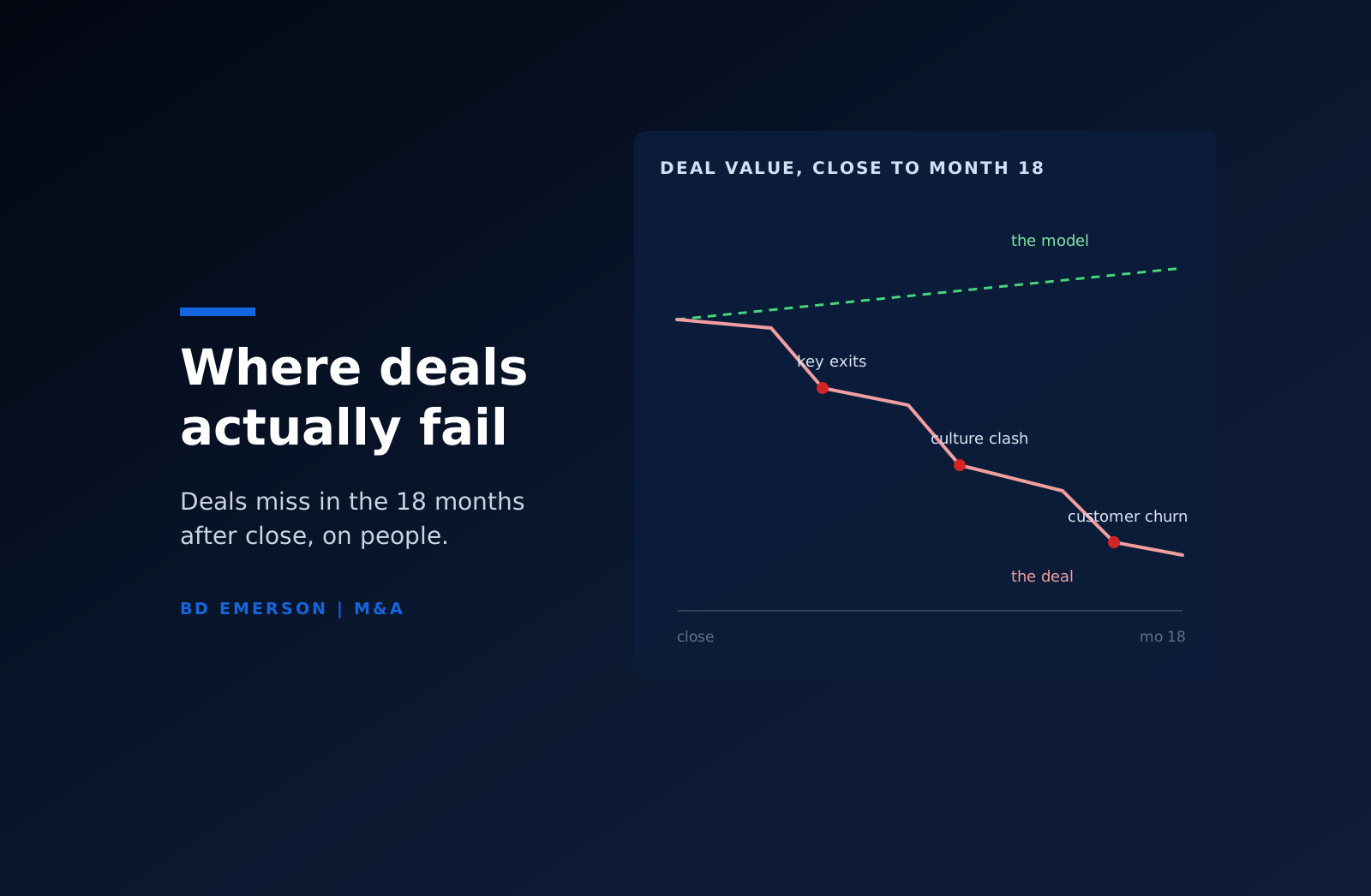
Mergers and acquisitions fail for five repeating reasons: buyers overpay on synergy math built in deal fever, integration planning starts after signing instead of during diligence, culture clash goes unmanaged, the people who carry the value walk out in the first year, and customers wobble while the combined company looks inward. Quoted failure rates range from 50 to 90 percent depending on how failure is defined; Harvard Business Review has put it at 70 to 90 percent for deals judged against their original objectives. The pattern inside those numbers is consistent: deals rarely die on the spreadsheet, they die in the eighteen months after close, and mostly on the people side.
What the studies actually measure
Failure means different things across the research. Some studies count shareholder value destroyed relative to peers, others count deals that miss their stated synergy targets, others count divestitures of the acquired business within a decade. The honest summary is that most acquisitions underperform the case that justified their price, and the distribution has a long tail of outright destruction. What matters for an acquirer is not the exact rate but where the misses concentrate, because that is the part you can manage.
The five causes that repeat
Overpaying is decided early. Synergy models built during competitive processes inherit the pressure of the process. Revenue synergies get booked at full value with no adoption curve, cost synergies ignore the expense of achieving them, and the walk-away price drifts upward with each round. Everything after close then has to outperform just to reach even.
Integration planning starts too late. When planning begins after signing, the first 100 days get spent discovering what should have been mapped in diligence: which systems overlap, which roles are duplicated, which customers touch both companies. Disciplined acquirers write the integration thesis during diligence, so day one executes a plan instead of starting one. Our 100-day integration framework covers that sequencing.
Culture clash goes unmanaged. Culture is concrete: how decisions get made, what risk is acceptable, how performance is rewarded, whether conflict happens in the meeting or after it. When two operating systems for behavior collide without a plan, the acquired company's people spend their energy decoding the new rules, and the strongest of them stop decoding and leave. This is the single most cited soft reason deals miss, and it is diagnosable before close through cultural integration work.
Key people leave with the value. In most acquisitions, some named set of engineers, sellers, operators, and leaders is a large share of what was bought. First-year attrition among acquired employees runs far above normal turnover, and it concentrates in exactly that set, because they are the most employable. Retention is a design problem: named-person plans, real roles in the combined company, and leaders who can answer what happens to me in week one rather than month four.
Customers feel the seam. While the combined company reorganizes itself, competitors call its customers. Billing hiccups, changed account teams, and slower support during cutover give those calls something to work with. Revenue attrition of even a few points across the base quietly outweighs a year of hard-won cost synergies.
The people mechanics underneath
Three mechanisms turn soft issues into hard misses. Decision paralysis first: in the vacuum between announce and integrate, nobody is sure who can approve what, so everything slows, and the operating metrics the deal model assumed keep degrading while everyone waits. Attrition math second: replacing a senior engineer or a top seller costs a large fraction of a year's compensation and months of ramp, so a few dozen regrettable exits can consume an entire synergy line. Trust decay third: every gap between what leadership says and what employees see gets logged, and once the acquired team decides communications are spin, the channel is gone for the rest of the integration.
None of this is soft in its effects. It shows up as missed synergy targets, slipped system cutovers, and revenue attrition, which is why the people workstream deserves the same rigor as the financial one. That workstream has a name: M&A change management, the day-one communications, leadership alignment, retention execution, and adoption tracking that the deal model silently assumes will happen on its own.
What disciplined acquirers do differently
They price the people risk into diligence, running a culture and retention read alongside the financial and technical work, and they let it move the price or the plan. They write the integration thesis before signing: what gets absorbed, what stays separate, who runs what, decided while there is still leverage. They name the critical people and treat each one as a workstream, not a line in a retention budget. They put a full-time integration leader on the job with authority, rather than asking two exhausted management teams to integrate in their spare time. And they measure adoption weekly through the first 100 days: attrition in named populations, decision cycle time, system cutover progress, customer health on shared accounts, so drift shows up in a dashboard rather than in the year-one results.
Where to start
If you are pre-close, put culture and retention into the diligence scope now, while findings can still shape the price and the plan. If you are post-close and the integration is wobbling, the fastest diagnostic is the people data you already have: regrettable exits by team, offer-acceptance rates, decision backlog, and pulse trends tell you where the value is leaking. Our post-merger integration practice runs the program end to end, with change management and cultural integration as the workstreams that decide whether the model you paid for ever shows up.

About the author