The Healthcare CMO Problem Is Structural, Not Personal
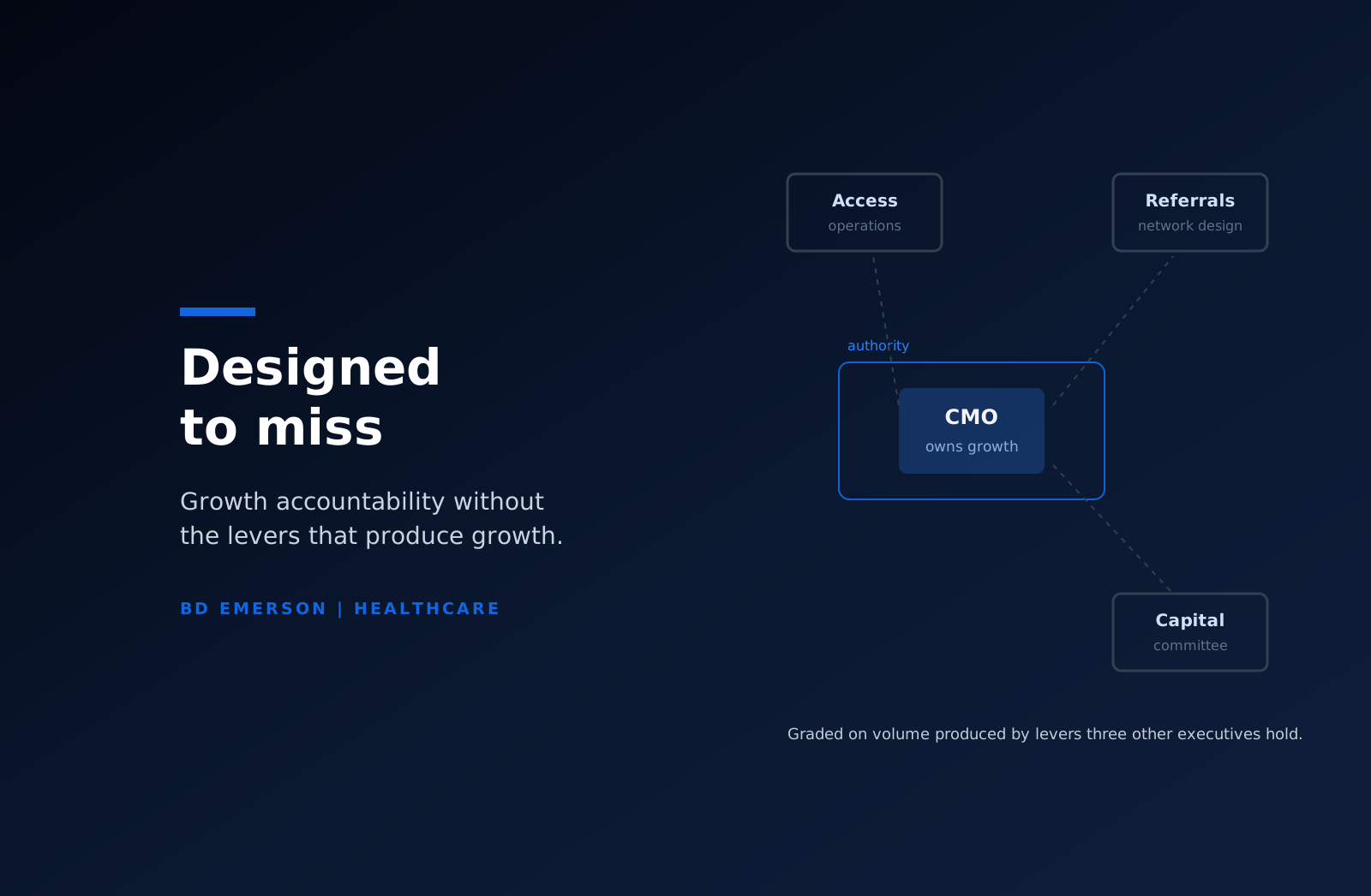
Healthcare CMO tenures end early at rates the rest of the C-suite does not experience, and the standard explanation, wrong hire, gets retold every cycle because it flatters the org design that produced the outcome. The structural read fits the evidence better: most health system CMO roles carry accountability for growth without authority over the levers that produce it, a mandate nobody has defined in volume terms, and a vendor ecosystem contracted to produce activity. Swap the person and keep the design, and the design wins every time. Boards and CEOs who keep buying talent to fix a structure problem are paying executive search fees to avoid an organizational conversation.
Three defects that travel between systems
The first defect is a mandate without a definition. The CMO owns growth, but growth of what, measured how, against which service lines, on what timeline? Absent a defined scoreboard, every quarterly review becomes a negotiation about what the job was, and the incumbent eventually loses that negotiation by default. The second defect is an inherited vendor web: agencies and platforms accumulated across predecessors, each contracted for deliverables rather than outcomes, a dynamic we take apart in our comparison of healthcare marketing consultants and agencies. The new CMO spends year one auditing the web, year two renegotiating it, and rarely sees year three. The third defect is fragmented accountability for the patient's decision path. In American Hospital Association survey data, 71 percent of respondents named access a top factor in selecting a provider, and access belongs to operations. The CMO is graded on volume that scheduling capacity, referral behavior, and network design determine, three levers held by three other executives.
The mechanism that manufactures the failure
Watch how the cycle runs. Marketing produces campaigns and reports engagement, because engagement is what its instruments measure. Leadership expects volume, because volume is what the growth plan promised. The gap between the two languages goes unbridged for the reasons detailed in our healthcare marketing ROI analysis: the attribution chain from campaign to scheduled care was never built, and building it appeared in nobody's job description. After enough quarters of untranslatable results, confidence erodes, the budget gets trimmed, results weaken further on less money, and the search firm gets a call. The successor inherits the same instruments, the same undefined mandate, and a board now primed to be disappointed faster. Each iteration runs shorter than the last.
The personal cost lands on capable people. Health system CMOs arrive from consumer industries with real records, or rise from within with real institutional knowledge, and both types exit with the same post-mortem: results we could not see, vendors we could not control, levers we did not hold. When three consecutive incumbents produce the same exit interview, the exit interview is describing the chair.
What the role looks like when it is designed to succeed
Systems that break the cycle change the design before the nameplate. The mandate gets written in volume terms: named service lines, referral capture targets, and contribution goals set jointly with strategy and finance, so the scoreboard exists before the incumbent does. The tooling gets funded, meaning CRM, attribution, and claims-based referral visibility, because assigning growth accountability without measurement instruments is a setup. Authority gets rewired to match accountability, either by giving the growth leader real standing in access and referral decisions or by making growth a CEO-owned outcome that marketing, operations, and strategy answer for together in one forum. And the vendor web gets converted from activity contracts to outcome commitments, which some incumbent vendors will decline, usefully identifying themselves on the way out.
The mandate document, in one page
The redesign becomes real when it is written down, and the writing fits on a page. Scope: the three to five service lines the role exists to grow, with baseline volumes and targets. Instruments: the attribution stack, referral analytics, and budget authority the role controls outright. Dependencies: the access, network, and capacity decisions the role influences through a named forum, with the forum's cadence and decision rights specified. Scoreboard: the volume, capture, and contribution metrics the role reports quarterly, agreed with finance in advance. Escalation: what happens when a dependency blocks a target, so the miss surfaces as a system issue in month two rather than a performance issue in month eleven. A candidate handed that page can evaluate the job on its real terms, and the ones who lean in are the ones worth hiring.
The first 90 days, for the CMO who inherits the old design
An incumbent cannot rebuild the org chart, and can still shift the ground. Establish the baseline first: current volume by service line, referral capture, and what the data can and cannot attribute, presented to the executive team as the starting scoreboard, flaws disclosed. Convert one flagship campaign to full attribution as proof of method, even if the result embarrasses the campaign. Audit the vendor web against outcomes and bring the findings to the CFO as found money rather than as a defense. And negotiate the mandate document above, in writing, while the honeymoon lasts. None of this guarantees the design changes, and it converts the conversation from impressions to volume, which is the ground a growth leader can win on.
The board's part in the fix
Boards keep approving CMO searches without asking what happened to the last three, and that pattern makes the board a participant in the cycle rather than a spectator. The board-level questions are short. Show us the growth mandate in writing before the search opens. Show us the measurement budget alongside the compensation package, because approving the salary while declining the instruments guarantees the outcome. And ask the CEO directly who owns growth, because a system where the answer is the CMO alone has just described the design defect out loud. Boards that hold those three lines change the design in one search cycle, and the search itself gets easier, since strong candidates read a defined mandate as the signal that this system is serious.
Before the next search begins
A short diagnostic protects the next hire and the fee. Can anyone in the room state the CMO mandate in service lines and volumes? Does the attribution exist to know whether the departing CMO underperformed at all? How many of the last three exits shared the same complaints in their post-mortems? Is the system prepared to give the role authority proportional to its accountability? If those answers embarrass, run the redesign first. It costs less than the search, and it is the difference between hiring a CMO and hiring the next explanation.
Mandate design, measurement infrastructure, and the accountability forum that makes growth a shared outcome are standing components of our healthcare growth strategy practice. Fix the chair before you fill it.

About the author