SOC 2 for Startups: When and How to Get It
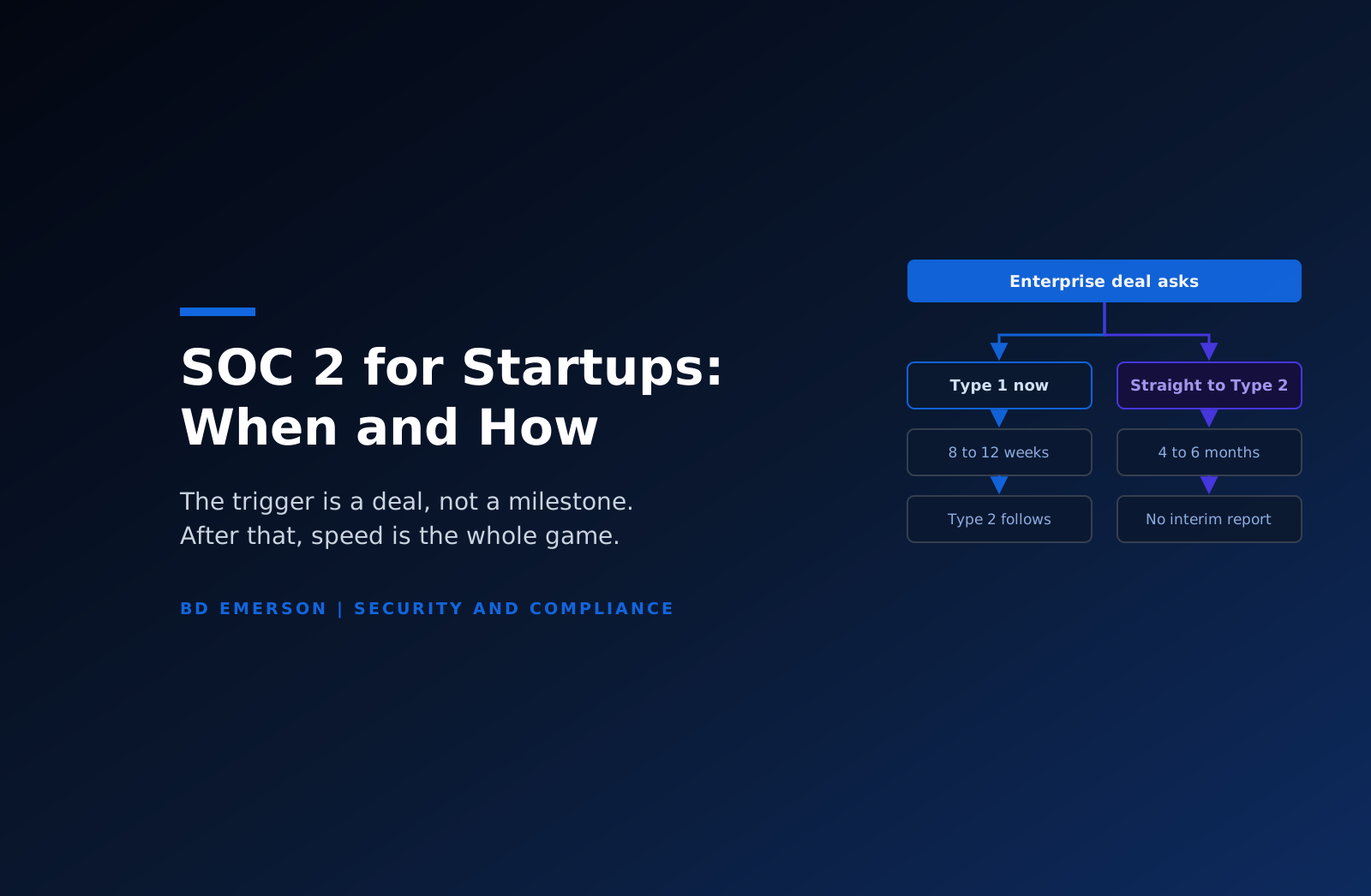
Get SOC 2 when enterprise deals enter the pipeline, and not before. The trigger is concrete: a security questionnaire lands, a procurement portal asks for a report, or a buyer's counsel adds a security addendum to a contract worth $50,000 or more a year. From that signal, a seed or Series A company using a compliance automation platform can reach a Type 1 report in roughly eight to twelve weeks, or a first Type 2 report in four to six months, for $25,000 to $60,000 all-in during year one. Everything below is about compressing that path without buying anything you do not need yet, and about keeping the deal that triggered all of this alive while the report is in flight.
The trigger is a deal, not a milestone
SOC 2 produces zero revenue on its own; it removes a blocker from revenue that already wants to close. Before enterprise pipeline exists, the money is better spent on the underlying security work, which is cheaper without an audit attached. The mistake in the other direction costs more: waiting until a signed-but-stalled deal demands the report, then discovering that the fastest honest path to a Type 2 is five months. Enterprise buyers rarely walk away over a pending report, but they do slip quarters, and a slipped quarter on an enterprise contract is usually worth more than the entire compliance budget. Watch for the early signals: security sections appearing in RFPs, prospects asking where their data would live, a champion warning you about their vendor review before the paperwork starts.
Type 1 first, or straight to Type 2
A Type 1 tests control design at a point in time and can exist within three months of starting. A Type 2 tests operation over a window, usually three months for a first report, and is what enterprise security teams actually want. The decision comes down to what your blocked deal will accept. If the buyer will take a Type 1 plus a dated commitment to a Type 2, do that: it produces an artifact fast, and the Type 2 window runs behind it. If the buyer's policy requires a Type 2 outright, skip the Type 1 and open the window immediately, because the Type 1 would only delay the report that matters. Ask the buyer directly. Their vendor risk team has a written policy, most will share what it accepts, and that answer outranks any general advice, including this paragraph.
What it costs at startup scale
At 10 to 50 people with a single product on one cloud, the numbers are smaller than the horror stories suggest. A Type 1 audit runs $7,000 to $15,000 and a three-month Type 2 runs $12,000 to $25,000 from a boutique or mid-tier CPA firm. A compliance automation platform costs $8,000 to $15,000 a year at startup headcount. A penetration test, if your buyers ask for one, adds $8,000 to $15,000. Readiness consulting is optional at this scale: $5,000 to $20,000 buys speed and fewer wrong turns if nobody on the team has run this before. Year one lands between $25,000 and $60,000 for most startups, plus 100 to 200 internal hours concentrated in whoever owns engineering and IT, which at a ten-person company means a founder. Budget the hours as honestly as the invoices, because they come out of the roadmap.
What Vanta does, and what it does not replace
Compliance automation platforms like Vanta connect to your cloud, identity provider, HR system, and repositories, then monitor controls and collect evidence continuously: access lists, configuration checks, policy acceptance tracking, vendor inventory. For a startup this is the difference between compliance as a background process and compliance as a founder's lost quarter, and auditors quote lower against a well-run platform because fieldwork moves faster.
What the platform does not do is decide anything. It will not scope your criteria, fix your offboarding process, write policies that describe your actual company, or sit in auditor interviews on your behalf. A platform bought and left half-configured, full of failing tests and unscoped connections, reads worse in an audit than no platform at all. Getting it configured correctly is a few focused weeks of work, which is exactly the gap our Vanta implementation service exists to close for teams that want it done once and done right.
The timeline from zero
- Weeks 1 to 2: scope the system, choose Security plus only the criteria customers demand, connect the platform
- Weeks 3 to 6: remediate the gaps that matter, MFA and SSO everywhere, an offboarding SLA, access reviews, change management evidence
- Weeks 4 to 8: adopt policies written to match reality, and track acceptance across the team
- Weeks 6 to 10: run a readiness pass and fix what an auditor would find
- Weeks 10 to 12: Type 1 audit, if you are doing one, with the report following within weeks
- Months 3 to 6: the Type 2 observation window runs, fieldwork follows, and the first Type 2 report lands around month five or six
The calendar assumes someone owns the program for a few hours a day. Startups that assign it to nobody discover that every week of the plan takes two, and that auditor calendars do not hold slots for the undecided.
Keeping the deal alive while the report is pending
Enterprise buyers have seen pending SOC 2s before; what they want is evidence that you are close and not bluffing. The package that works: the signed auditor engagement letter with dates, a completed security questionnaire, the policy set shared under NDA, recent penetration test results, and a live trust page from your platform showing control status. A Type 1 report strengthens every item on that list. Offer a contractual commitment to deliver the Type 2 by a named date, and many buyers will close against it with a security exhibit. What does not work is vagueness. A buyer who hears that you are SOC 2 compliant and later learns there is no report will re-examine every other claim you made. Say the true sentence instead: Type 2 window closes in August, report expected in October, engagement letter attached.
Mistakes that cost startups real money
Four patterns account for most wasted budget. Overscoping, adding Availability, Confidentiality, and a second product because it felt thorough, which inflates the audit every year afterward. Buying the platform and ignoring it until the week before fieldwork. Choosing the cheapest auditor available, whose report a sophisticated buyer then questions, which reopens the very review you were trying to close. And treating the whole exercise as one-time: SOC 2 renews annually, so a control set your team cannot operate year-round is a debt, not an asset. The underlying security program matters more than the report that describes it, which is where right-sized security for small companies earns its keep whether or not an audit is on the calendar.
Where BD Emerson fits
We work both sides of this, never for the same client at the same time. Our SOC 2 practice handles readiness, platform configuration, and program build for startups being audited elsewhere, and our attest arm, BD Emerson CPA, performs Type 1 and Type 2 examinations for companies that arrive ready, because the firm that builds your controls cannot credibly audit them. Bring us the blocked deal and its dates, and the first conversation is scope and sequencing, which is where a startup's SOC 2 is actually won.

About the author