Red Team vs Penetration Testing: Two Different Questions
Buyers use the terms interchangeably and vendors are happy to let them, because the words are worth different amounts of money. The distinction is real and it matters, because the two engagements answer different questions and a company that buys the wrong one gets a genuine deliverable that does not address its actual problem.
The one-sentence version
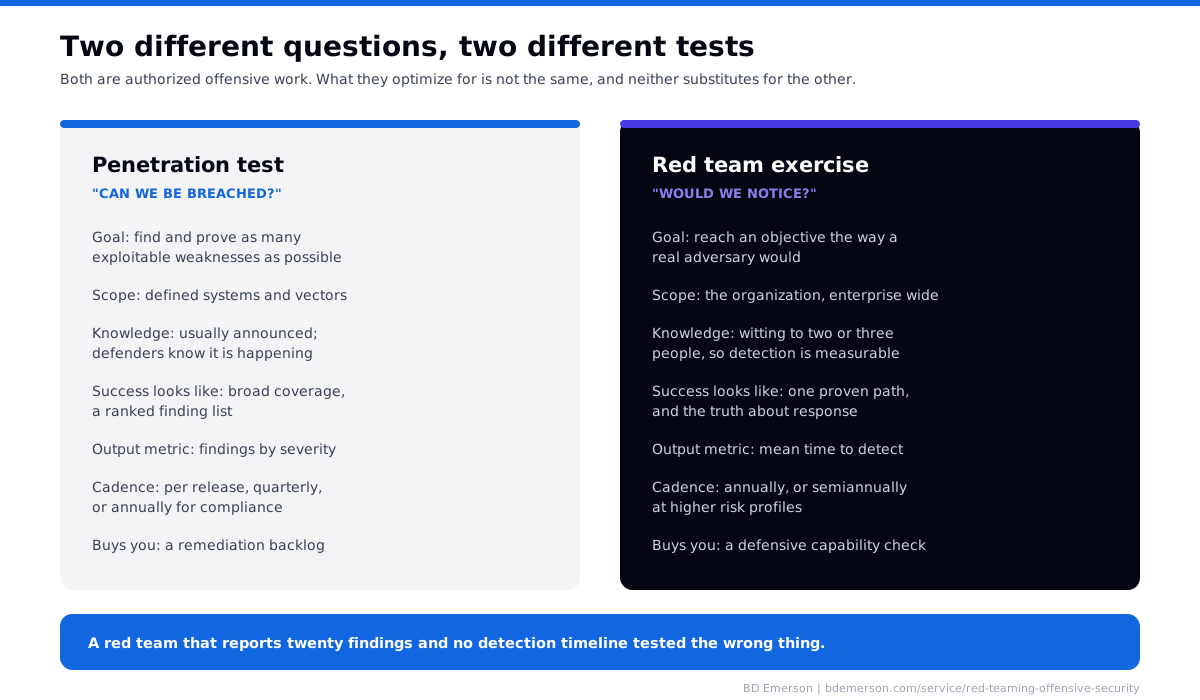
A penetration test asks: can we be breached? A red team exercise asks: would we notice?
What a penetration test optimizes for
Coverage. The goal is to find and prove as many exploitable weaknesses as possible across a defined scope inside a defined window. Defenders usually know it is happening. Success looks like a thorough, ranked list of findings with evidence and remediation guidance, and the natural metric is findings by severity.
This is the right purchase when you need to know your exposure, when you are shipping something new, when a customer or auditor requires a report, or when you want a remediation backlog you can work through. Most organizations need penetration testing continuously and often, which is why we run it as an ongoing program rather than an annual event.
What a red team exercise optimizes for
Truth about your response. The goal is to reach an objective the way a real adversary would, using current tactics, techniques, and procedures, while only two or three people on your side know it is happening. That secrecy is not theater; it is the only way the detection measurement means anything. Success looks like one proven path to something that matters, plus an honest timeline of what your team saw and when.
The natural metric is mean time to detect at each stage: initial access, execution, persistence, privilege escalation, lateral movement, exfiltration. A red team engagement that reports twenty findings and no detection timeline tested the wrong thing.
The maturity test
Here is the practical rule we give clients. If a penetration test would still find critical, easily exploitable issues, you are not ready for a red team. Pay for coverage first. A red team engagement against an environment with unpatched perimeter services proves nothing you did not already know, and it wastes the one advantage a red team has, which is that it only works properly once.
Conversely, if your last few penetration tests came back thin and your real anxiety is whether your security operations function would catch a determined attacker, more penetration testing will not answer that. That is the moment to run a red team. Our guide to what red teaming is and how a red team assessment runs covers rules of engagement, phases, duration, and cost.
Purple teaming is where the value compounds
The tier most programs skip. After a red team exercise, replay the successful techniques with the defensive team watching, build or tune the detection together, and re-measure time to detect. This converts a narrative report into durable capability. Without it, a red team exercise is an expensive way to feel bad once a year. Our red team vs blue team vs purple team guide walks through that loop step by step.
The metric worth tracking across cycles is your self-detection rate: the share of the offensive activity your own tooling caught first. It should rise every cycle, and it predicts real incident outcomes better than any finding count.
What compliance actually asks for
Frameworks are not consistent here, so read the control text rather than the vendor summary. SOC 2 and ISO 27001 generally expect penetration testing, and a solid annual report plus evidence of remediation satisfies them. FedRAMP is more prescriptive: it requires an annual penetration test covering six mandatory attack vectors and, at the Moderate and High baselines, a separate red team exercise under control CA-8(2), with a test plan and report that your 3PAO validates. We break that down in the FedRAMP red team requirement.
Questions that separate a real red team from a relabeled pen test
Ask a prospective vendor four things. How many of our people will know the exercise is running? What objective are you trying to reach, and who agreed it? How will you report time to detect by stage? And will you run a purple team session afterward? A firm that answers the first question with "your whole security team" is selling you a penetration test with a premium name.
Where BD Emerson fits
We run both, under one methodology, so the sequencing advice does not depend on which engagement we would rather sell. Our offensive security practice covers full-scope red teaming and purple team follow-through, continuous penetration testing covers coverage across every asset class, and FedRAMP testing handles the federal path. If you are not sure which you need, the honest answer usually falls out of your last test report in about fifteen minutes.

About the author