SOC 2 Type 1 vs Type 2: What Each Proves and Which One You Need
Every company selling software to enterprises eventually meets the same security questionnaire line item: provide your SOC 2 report. The follow-up question decides your next several months. Type 1 or Type 2? The reports audit the same controls against the same AICPA Trust Services Criteria, and buyers treat them very differently.
The short answer
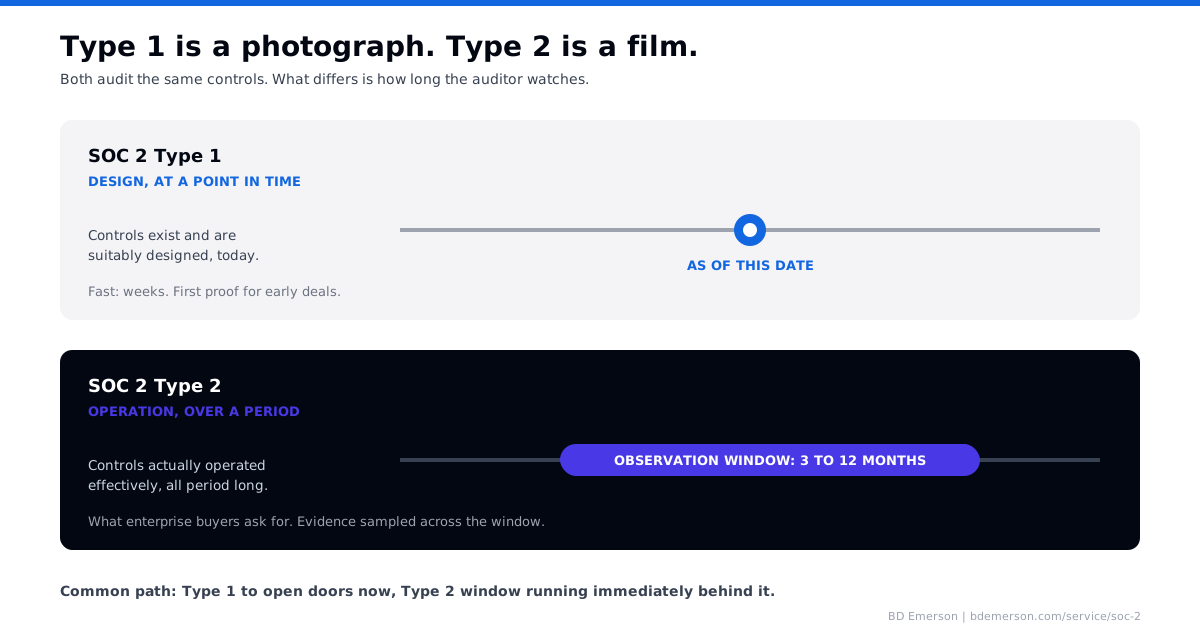
A SOC 2 Type 1 report is an auditor's opinion that your controls exist and are suitably designed as of a single date. A Type 2 report is an opinion that those controls actually operated effectively across an observation window, typically three to twelve months. Type 1 is a photograph. Type 2 is a film. Sophisticated buyers ask for the film.
What each report actually proves
In a Type 1 examination, the auditor evaluates whether each control is designed to meet its criterion and confirms it exists on the as-of date. Evidence is a snapshot: the access review policy, one completed review, the configuration as it stands today.
In a Type 2 examination, the auditor samples across the whole window. If access reviews run quarterly, the auditor tests each one that fell inside the period. A control that lapsed for two months shows up as an exception in the report, visible to every customer who reads it. That is precisely why Type 2 carries weight: it is hard to stage.
Which one buyers actually accept
Early-stage deals and mid-market buyers often accept a Type 1 plus a commitment date for the Type 2. Enterprise security teams, banks, and healthcare organizations usually require a current Type 2 and read the exceptions page before anything else. If a specific deal is gating your revenue, ask that buyer which report unblocks procurement. The answer sets your calendar better than any generic advice. If the answer is a SOC 1 rather than a SOC 2, our SOC 1 vs SOC 2 comparison explains how the two reports differ and gives a decision rule for choosing between them.
The sequencing that wins deals
The pattern we recommend for most first-timers: remediate, take a short readiness assessment, earn the Type 1, and open the Type 2 observation window the same week. The Type 1 gives sales something to hand buyers now. The Type 2 window runs behind it, and a three-month first window converts to the full report while the Type 1 is still fresh. Companies that skip straight to a twelve-month Type 2 window save one audit fee and spend a year with nothing to show procurement.
One nuance: a Type 1 is optional. Companies with mature controls and no immediate deal pressure sometimes skip it and run straight into a Type 2 window. That trade is about deal timing, not audit rules.
Common misconceptions
Three come up constantly. First, Type 2 is not a harder standard. Same criteria, longer proof. Second, certification is the wrong word. SOC 2 is an attestation report with an auditor's opinion, not a certificate, which is why buyers read the report rather than checking a logo. Third, automation platforms do not remove the audit. Tools compress evidence collection dramatically, and a licensed CPA firm still has to examine and opine.
The private equity angle
For PE-backed companies, a clean Type 2 is more than a sales unblock. It is diligence-ready proof that the control environment works, and it removes a recurring red flag from exit processes. We cover the value mechanics in SOC 2 and ISO 27001 as portfolio value levers.
Where BD Emerson fits
BD Emerson runs both sides of this path with separate teams: readiness and remediation through our SOC 2 practice, and independent examination through our licensed CPA audit arm for Type 1 and Type 2 engagements. If you are six months from a deal that needs a report, the sequencing conversation takes thirty minutes and saves a quarter.

About the author