What Is a Quality of Earnings Report? A Plain-English Guide
Buyers walk away from deals over earnings quality more often than they walk away over price. The number on the seller's P&L says $4.2 million of EBITDA. The number that survives diligence says $3.6 million. At a 6x multiple, that gap just repriced the deal by $3.6 million, and the buyer found it before you did.
A quality of earnings report exists to answer one question before money moves: how much of this company's reported profit is real, recurring, and likely to continue under a new owner?
What a quality of earnings report is
A quality of earnings report, usually shortened to QoE, is a financial analysis prepared during a transaction. An independent accounting team examines a company's revenue, expenses, and cash flow, then adjusts reported EBITDA for anything that will not repeat: one-time windfalls, owner perks, accounting quirks, below-market salaries, expired contracts.
The output is a normalized EBITDA figure with documented support behind every adjustment, plus analysis of revenue durability, working capital, and debt-like items. Buyers commission QoE reports before acquiring a company. Sellers commission them before going to market, so they can find the problems while the problems are still fixable.
Lenders read them too. If your acquisition needs debt financing, expect the lender to ask for the QoE before term sheets firm up.
A QoE is not an audit
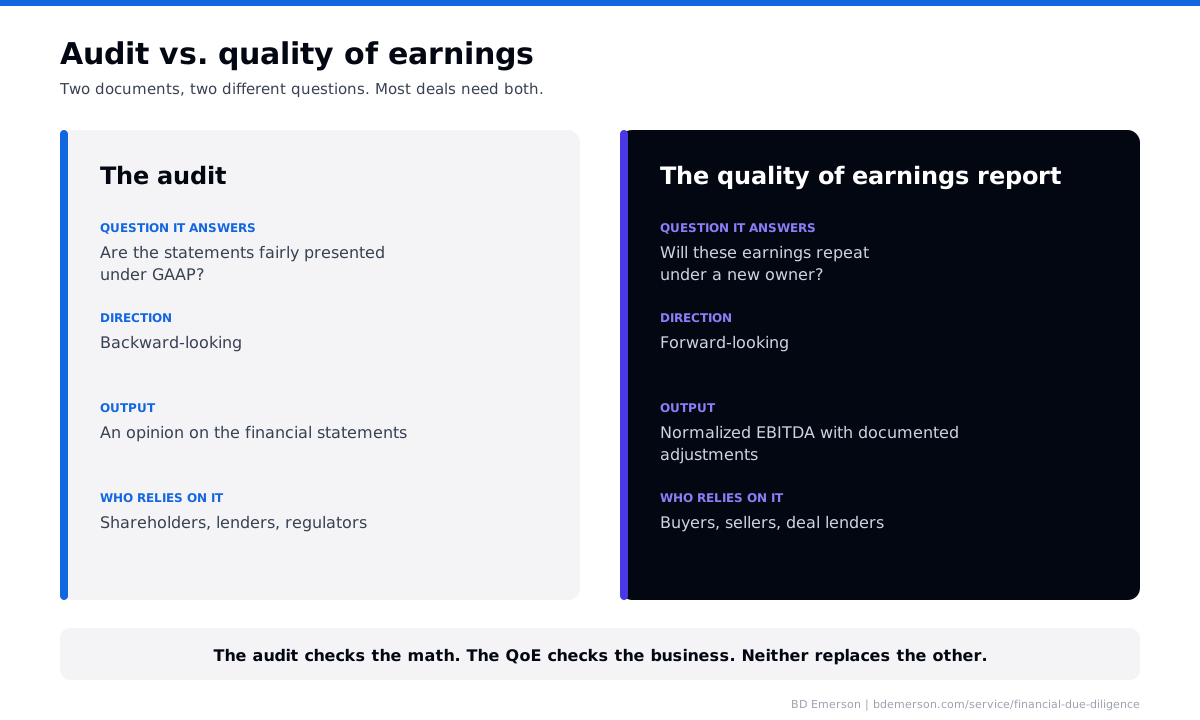
Sellers hear that they already have audited financials and assume they're covered. The two documents answer different questions.
An audit tests whether financial statements fairly present results under GAAP. It looks backward, follows accounting rules, and produces an opinion. A QoE asks whether the earnings will repeat, which is a forward-looking economic question GAAP never asks. Revenue can be recognized correctly under GAAP and still evaporate next year because a third of it came from one customer whose contract expires in March.
The audit checks the math. The QoE checks the business. Most middle-market deals rely on both, and neither substitutes for the other.
What's inside the report
The scope flexes by deal, but four sections show up in nearly every QoE.
Normalized EBITDA. The core of the report. The team starts with reported EBITDA and walks through adjustments, each one documented and supported. Common examples: an owner paying herself $150,000 below market rate (adjustment down, since a new owner must pay a real salary), a $300,000 legal settlement from a one-time dispute (adjustment up, it will not repeat), rent paid to a related party at half the market rate (adjustment down), a large customer prepayment recognized in the wrong period (timing adjustment).
Revenue quality. Concentration, retention, pricing power, and contract terms. A company with 40% of revenue in one account carries different risk than one whose largest customer is 6%, even at identical EBITDA.
Working capital. The analysis establishes a normal level of working capital by month, which becomes the basis for the working capital target in the purchase agreement. Get this wrong and you pay for the business twice: once at closing and again when you fund the receivables the seller drained. Our net working capital guide shows how that normal level becomes the peg and how the closing true-up is calculated.
Net debt and debt-like items. Loans are obvious. Unpaid bonuses, customer deposits, deferred revenue obligations, above-market leases, and pending tax exposures act like debt without appearing on the debt schedule. The QoE surfaces them so the purchase price reflects them. After closing, that price also has to be split across the assets acquired, a process our purchase price allocation guide walks through under ASC 805.
The EBITDA bridge
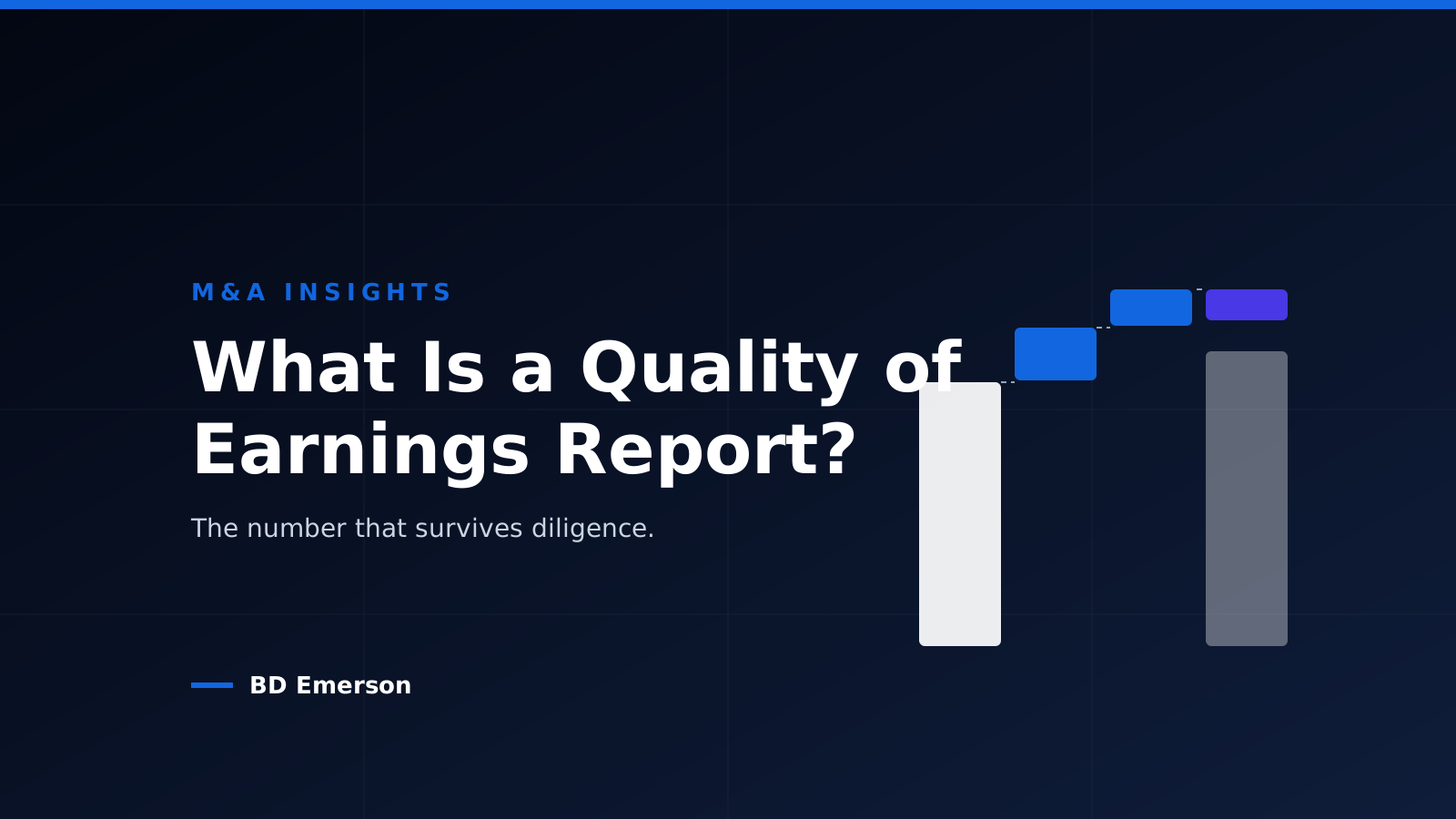
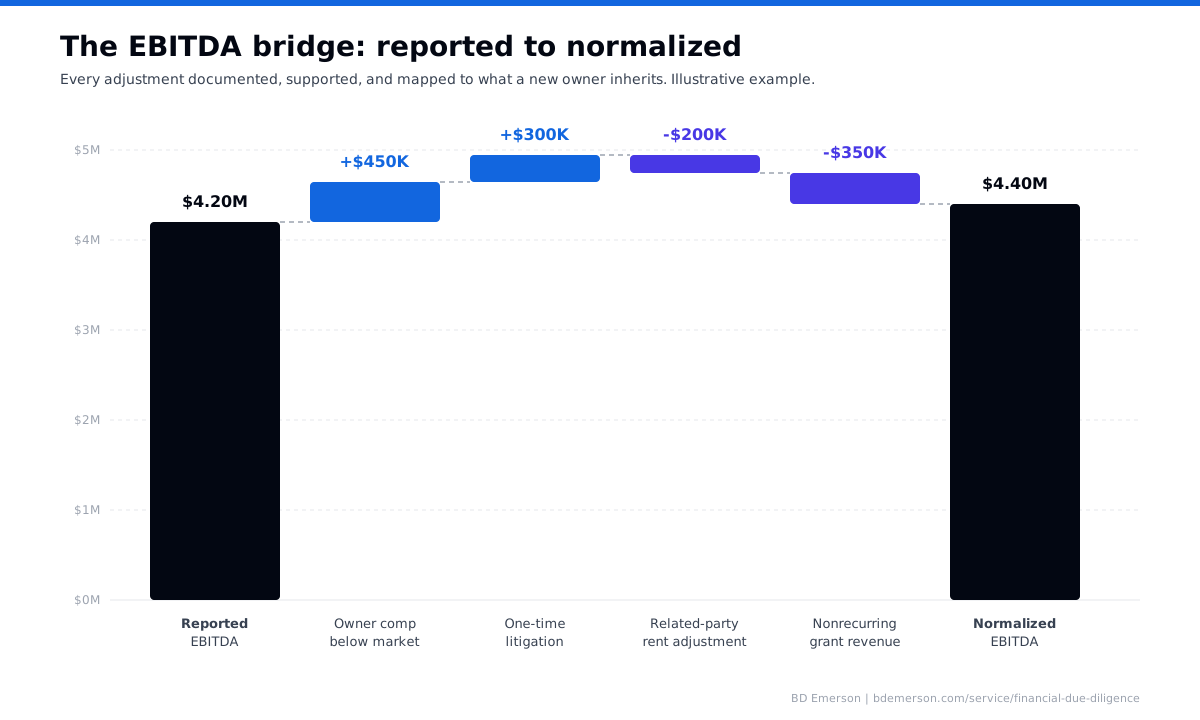
Every QoE builds a bridge from the number the seller reports to the number a buyer can rely on. A simplified example for a $4.2 million EBITDA company:
Reported EBITDA starts at $4,200,000. Add back $450,000 because the founder pays himself a below-market salary and the adjustment reflects replacement cost. Add back $300,000 for a nonrecurring litigation settlement. Subtract $200,000 because the company rents its facility from the founder's LLC at below-market rent. Subtract $350,000 of revenue from a one-time government grant. Normalized EBITDA lands at $4,400,000.
In this example the seller comes out ahead. It cuts both ways. The point of the exercise is that neither side negotiates off a number nobody has tested.
When you need one, and when you don't
Buy-side, the QoE typically starts after a letter of intent is signed, during the exclusivity window. On smaller deals, a compressed red-flag version sometimes runs before the LOI to test the thesis cheaply.
Sell-side, the calculus is about timing. A sell-side QoE done six months before going to market gives you time to fix what it finds: clean up the related-party transactions, document the add-backs, resolve the sales tax exposure in a state where you never registered. The same finding surfaced by the buyer's diligence team three weeks before closing becomes a price reduction, an escrow, or a dead deal.
You can skip the QoE when buying assets with no earnings history, or in deals small enough that the fee outweighs the risk. Most transactions above a few million dollars in enterprise value justify one, and lenders often remove the choice.
What it costs and how long it takes
Fees track scope. A focused red-flag review on a single-entity business runs meaningfully less than full-scope work across multiple entities with messy books. For middle-market deals, budget somewhere between $25,000 and $150,000, with most landing in the middle of that range. Timeline runs three to six weeks once the data arrives, and data quality drives the schedule more than analyst effort does.
Those ranges are wide because businesses are. A company with monthly closes, clean revenue recognition, and one entity moves fast. A company with three entities, cash-basis books, and a shared services tangle with a sister company does not.
Five things a QoE catches that a P&L hides
- Revenue pulled forward. Q4 looks great because January shipments got invoiced in December.
- The customer cliff. Reported growth masks a top account that gave notice in the spring.
- Expense capitalization. Costs that belong in EBITDA sit on the balance sheet as software development.
- The working capital drain. The seller stopped paying vendors 90 days out to fatten cash before the sale.
- Owner economics. Family members on payroll who do not work there, and market-rate replacements who will need to.
Every one of these changes the price, the structure, or the decision. None of them shows up in the number at the bottom of the P&L.
Where to go from here
If you're evaluating an acquisition or preparing to sell, the QoE sits inside a broader diligence picture: financial due diligence and quality of earnings coordinated with tax diligence and the rest of the transaction advisory workstream. BD Emerson runs these as one engagement inside our M&A advisory practice, so the tax findings inform the EBITDA adjustments and the working capital analysis lands in the purchase agreement, where it belongs.
Talk to us before the letter of intent if you can. The QoE you commission on your own schedule costs the same as the one you commission in a panic, and it buys you options the panic version cannot.

About the author