Exit Readiness: How to Prepare Your Company for Sale
Every owner knows roughly when they want to sell. Very few know what a buyer will find when they look. Exit readiness is the gap between those two things, and closing it is the highest-return project most sellers will ever run.
The math is simple. A problem found by your team eighteen months before a sale costs whatever it costs to fix. The same problem found by a buyer's diligence team inside exclusivity costs a price reduction, an escrow, or the deal. Nothing about the problem changed. Only who found it, and when.
What exit readiness actually means
Exit readiness means your company can survive professional scrutiny without surprises. Not that it is perfect. Buyers do not expect perfect. They expect the story you told in the management presentation to hold up when their advisors pull the thread.
Readiness gets tested in four places: the financials, the operations behind them, the contracts and people the business depends on, and the paper trail that proves all of it. A sell-side advisor looks at each one the way a buyer will, then works the list backward from your target close date.
Start with the financial house
Buyers price businesses off adjusted EBITDA, and they will not take your adjustments on faith. Before anything else, get three things in order.
First, monthly close discipline. If your books close six weeks after month end, a buyer reads that as risk. Second, revenue recognition. Deferred revenue, milestone billing, and channel arrangements are where quality of earnings reports find their biggest adjustments. Third, customer-level economics. When a buyer asks for margin by customer and the answer takes three weeks, the multiple moves against you.
The single most useful exercise is a QoE dry run on your own numbers. Sellers who commission one before going to market learn what a buyer's accountants will conclude, while there is still time to change the answer.
Contracts, people, and the paper trail
Diligence teams read contracts the way lawyers do, because they are lawyers. Change-of-control clauses, missing assignments, unsigned amendments, and expired MSAs all surface in week two of any serious process. So do handshake arrangements with your three largest customers.
People risk reads the same way. If the founder holds every key relationship and none of it is documented, the buyer prices that in. Employment agreements, IP assignments, and a bench below the owner all move value.
None of this is glamorous work. All of it is cheaper now than under a letter of intent, and our financial due diligence checklist shows exactly what a buyer will request.
The 18-month runway
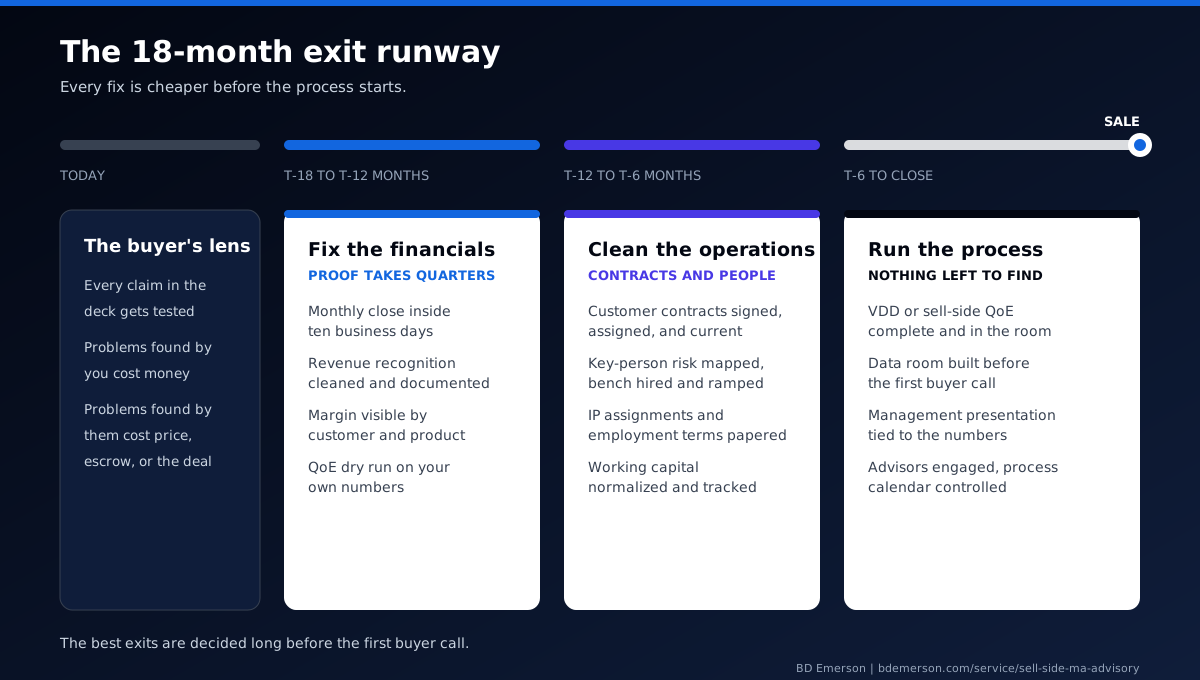
Eighteen months is not a magic number, but it is an honest one. Fixing revenue recognition takes two audited quarters to prove. Customer contracts renew on their own schedule, not yours. A key hire needs a year in seat before a buyer gives you credit for the bench.
Compress the runway and you do not skip the work. You just do it during the process, at the worst possible price.
Where sellers lose money
Retrades follow a pattern. The buyer finds something in diligence, quantifies it aggressively, and reopens price late in the process when the seller's alternatives have gone quiet. Working capital pegs, unrecorded liabilities, and customer concentration are the usual suspects.
Sellers running a divestiture or carve-out face an extra layer, because carve-out financials have to be built before they can be defended.
Run your own diligence first
The strongest position a seller can hold is knowing everything the buyer will find before the buyer finds it. That is the whole logic of exit readiness, and it is why prepared sellers close faster, keep more of the headline price, and spend less of the process on defense.
BD Emerson runs exit readiness assessments as the front end of our sell-side M&A advisory work, alongside the rest of our M&A advisory services. If a sale is anywhere on your horizon, the best day to start was last quarter. The second best is now.

About the author