The Value Creation Plan: How PE Firms Turn a Thesis into an Exit

Every deal memo contains a value creation story. Far fewer holds contain a value creation plan: the document that turns the thesis into initiatives, owners, baselines, and dates, and reconciles them quarterly against the model the deal was priced on. The difference between the two is usually the difference between the base case and the upside case at exit.
What a real plan contains
A working value creation plan is an EBITDA bridge with names attached. Each bar is an initiative: the pricing work, the operational fixes, the technology moves, the compliance unlocks, and the add-on program, each carrying a baseline, a target, an owner, and a quarter. It is written from diligence, not after it, because the cheapest moment to design the ownership agenda is while the findings are fresh and the data room is open.
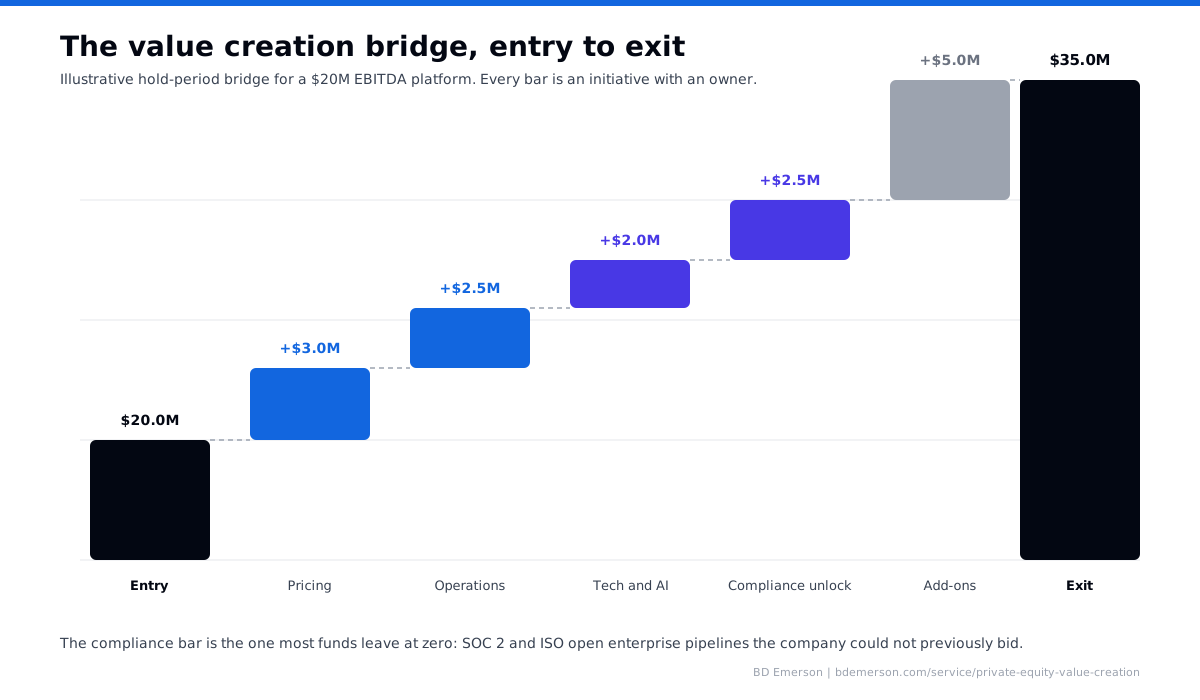
The bridge above is illustrative, but the shape is the point: no single bar carries the hold. Value compounds across five or six initiatives that each looked modest in isolation.
The 100-day plan sets the slope
The first hundred days are not about transformation. They are about slope. Stabilize the people and customers the thesis depends on, stand up reporting the fund can actually read, and start executing the priced fix list from diligence with weekly cadence. A company visibly improving by day 100 keeps improving, because the operating rhythm that produced the first wins is the same one that produces the rest. We covered the operational mechanics in our 100-day integration piece; the value creation version simply adds the bridge as scoreboard.
The levers most funds leave on the table
Two initiatives appear in almost none of the value creation plans we review, and both move the bridge.
Compliance as a revenue unlock. Mid-market companies routinely lose enterprise deals they never see, filtered out by procurement for lacking SOC 2 or ISO 27001. A certification program costs a rounding error against the enterprise pipeline it opens, and the same evidence deletes an entire category of buyer findings at exit. The full argument is in SOC 2 as a Private Equity Value Lever.
Technology that lands in the bridge. Not a replatforming program, but targeted moves: data foundations that make the company legible, automation on the two or three workflows that dominate unit costs, and increasingly the AI playbook scoped for a mid-market company. The test for every technology dollar is payback inside the hold.
Quarterly reviews that read like diligence
The plan survives contact with reality only if someone reconciles it. The quarterly value review reads the bridge against the underwriting case, initiative by initiative, in writing: what landed, what slipped, what changed, and what the exit model now says. Funds that run this discipline enter the sale process with a story the numbers already tell. Funds that do not, discover their bridge for the first time in the buyer's QoE.
Where BD Emerson fits
We build and run value creation programs through our private equity value creation practice: the plan from diligence, the 100-day execution, the compliance and technology levers, and the quarterly reviews, inside our broader private equity consulting work. The thesis was priced. The plan is how it gets paid.

About the author