What Is Vendor Due Diligence? The Sell-Side Report Explained

Vendor due diligence is due diligence in reverse. Instead of waiting for a buyer to investigate your company, you commission an independent firm to do it first, then share the report with every serious bidder. The seller is the vendor. The diligence is on you, paid for by you, and controlled by you.
That last part is the point.
What a VDD report covers
A financial VDD report reads like the quality of earnings report a buyer would commission, because it answers the same questions. Sustainable EBITDA and the adjustments behind it. Revenue quality, customer concentration, and cohort behavior. Working capital patterns and the peg a buyer should expect. Net debt and the debt-like items that hide off the balance sheet.
Broader VDD packages extend into tax exposure, operations, and technology, mirroring the full financial due diligence scope a buyer would run. The report is written by an independent firm, not your management team, which is exactly why bidders read it.
VDD versus buyer due diligence
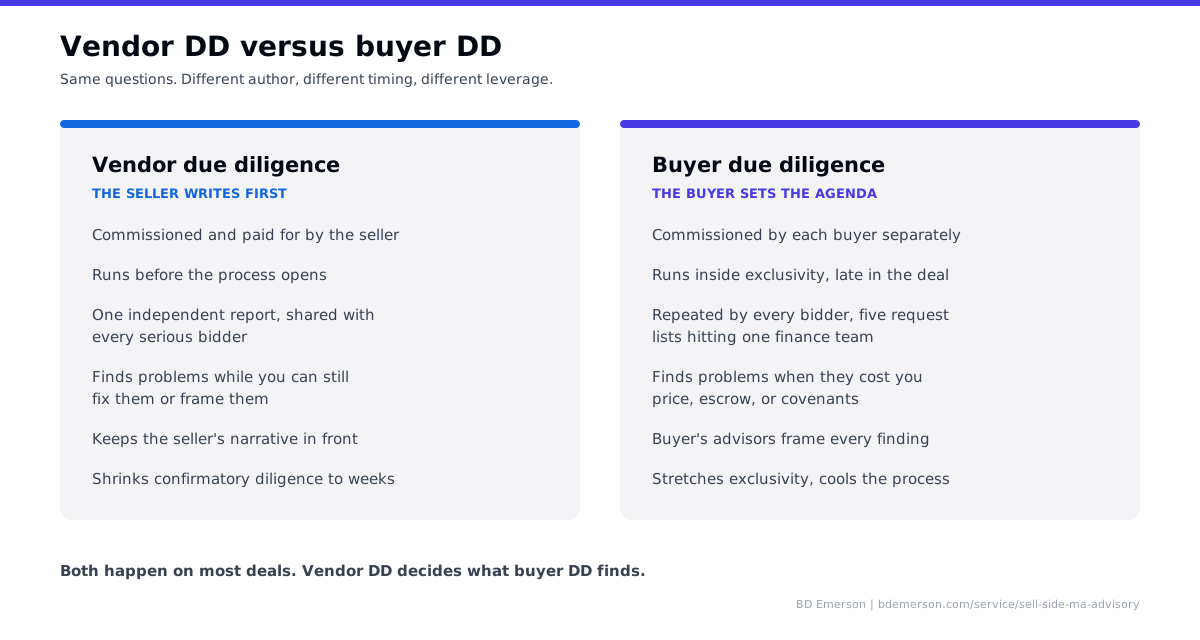
Both happen on most competitive deals. The difference is sequence and control. VDD runs before the process opens, so findings surface while you can still fix them or frame them. Buyer diligence runs inside exclusivity, when your leverage is at its lowest and your alternatives have cooled.
There is also a multiplication problem. In a process with five bidders and no VDD, your finance team answers five overlapping request lists. With a VDD report in the data room, bidders start from a shared fact base and their confirmatory work shrinks.
Why sellers pay for their own diligence
Four reasons come up on every deal.
Control of the narrative. The first professional analysis of your numbers should not be written by the buyer's accountants. Whoever writes first frames every discussion that follows.
Fewer retrades. Late price cuts feed on surprise. A VDD report removes the surprise, which removes the pretext.
Process speed. Deals die in long exclusivity windows. VDD compresses confirmatory diligence from months to weeks, which keeps competitive tension alive.
Credibility with committees. Institutional buyers need paper for their investment committees. An independent report gives them something to underwrite.
VDD or sell-side QoE?
The terms get used loosely. A sell-side QoE is typically prepared for the seller's own use and shared selectively. A full VDD report is built from the start to be relied on by bidders, sometimes with formal reliance letters. Same analytical engine, different audience and different legal posture. Which one fits depends on deal size, buyer universe, and how contested the process will be. This is a scoping conversation, not a product menu.
When to commission one
VDD belongs at the end of your exit readiness work, not the beginning. Fix what you can fix first. Then let the independent report document a business that has already been cleaned up, three to six months before launch.
BD Emerson prepares vendor due diligence and sell-side QoE reports as part of our sell-side M&A advisory practice, within our broader M&A advisory services. If buyers will be reading about your company soon, decide who writes the first draft.

About the author