AI Readiness Assessment: The Six Dimensions That Decide Whether AI Scales
Most enterprise AI programs that stall in year one share a diagnosis: the organization started building before it knew what it was building on. An AI readiness assessment is the corrective. Done properly, it is a short, structured evaluation of whether your company can select, ship, govern, and sustain AI workloads, and it produces a scored gap map that becomes the program roadmap.
What an AI readiness assessment actually is
It is not a survey, and it is not a maturity theater exercise that awards everyone a three out of five. A useful assessment inspects artifacts and interviews the people who do the work: the data engineer who knows which tables lie, the counsel who has to sign off on vendor terms, the operator whose workflow the AI is supposed to change. The output is a defensible score on each dimension, evidence for the score, and a sequenced plan to close the gaps that block the first workloads.
The six dimensions
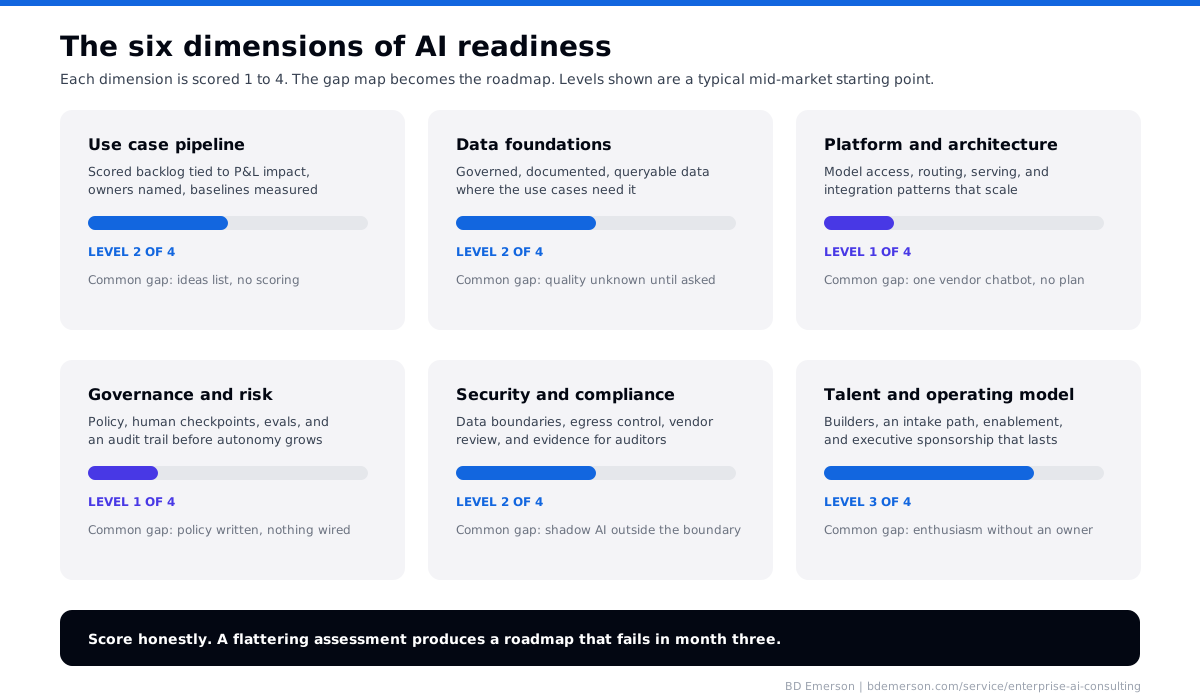
Use case pipeline
The single strongest predictor of program success. Ready organizations keep a scored backlog of candidate workloads tied to profit and loss impact, each with a named owner and a measured baseline. Unready organizations keep an ideas list. If you cannot state what a use case is worth and how you would know it worked, you are not ready to build it. Our approach to picking first workloads runs through the enterprise AI practice.
Data foundations
The question is narrower than data teams expect. You do not need a perfect estate. You need governed, documented, queryable data where your top use cases live. The assessment traces each priority workload to its actual sources and grades them. Companies that need estate work before AI work usually land in a lakehouse build first, scoped to the workloads that justify it.
Platform and architecture
One vendor chatbot subscription is not an architecture. The assessment looks for deliberate answers on model access, routing between frontier and efficient models, serving, integration patterns, and cost visibility per workload. The pattern we implement most often is described in our piece on smart model routing, and hosting-sensitive workloads route through private model hosting.
Governance and risk
The most common failure mode: a written AI policy and nothing wired beneath it. Readiness means human checkpoints where autonomy is not yet earned, evaluation gates before production, an audit trail of what models did, and a policy that maps to a recognized frame. We build these programs through AI governance consulting, with ISO/IEC 42001 as the anchor standard for organizations that want certifiable proof, covered in our 42001 implementation guide.
Security and compliance
AI adoption creates a new data boundary problem: where prompts go, where outputs land, what vendors retain, and what auditors will ask in twelve months. The assessment inventories shadow AI use, reviews vendor terms, and checks that egress and retention match your obligations. Regulated companies usually need this dimension green before anything else ships.
Talent and operating model
Enthusiasm without an owner produces pilots without a program. Readiness means a named executive sponsor, a small builder group, an intake path for the rest of the company, and enablement that turns the loudest skeptics into competent users. This dimension is often the strongest score and the least trusted one, because sponsorship evaporates when the first workload misses.
How the assessment runs
Our version takes two to three weeks: document and artifact review, interviews across the six dimensions, hands-on inspection of the data and platform claims, then a scoring workshop where leadership argues with the draft scores before they are final. The argument is the point. A score leadership fought over is a score they will fund against.
What comes out the other side
Three artifacts: the scored gap map with evidence, a sequenced remediation plan where each gap is tied to the workload it blocks, and a first-workload recommendation with a measured baseline so value has a denominator. For private equity operating teams running this across a portfolio, the same structure scales, and we cover that variant in the portfolio company AI playbook.
Where BD Emerson fits
We run readiness assessments as a fixed-scope engagement through our enterprise AI practice, and we are deliberately platform-agnostic: no resale margin, no model allegiance, and a security and compliance bench that scores those dimensions like the auditors they are. If the assessment says you are not ready, we will say so, along with exactly what it takes to change the answer.

About the author