Replacing Guidewire: The Five-Year Business Case for an Agentic Core
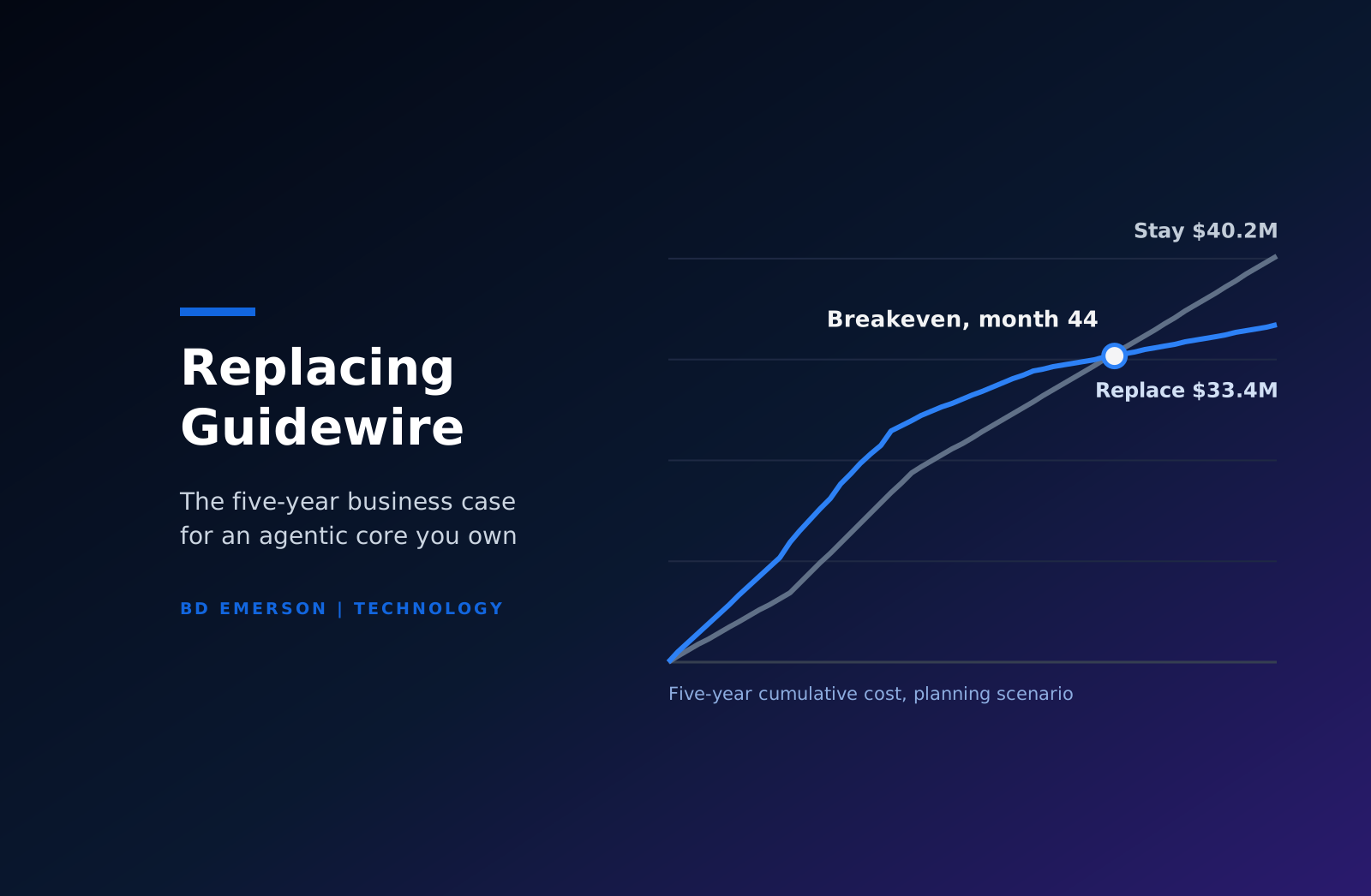
Replacing Guidewire pays off when the five-year cost of staying is higher than the cost of building and running a core system you own, and when the last line of business can leave before the Guidewire term renews. Staying means a subscription priced on direct written premium, systems integrator fees, internal platform staff, and the next upgrade or cloud migration. In our planning model for a mid-size P&C carrier with three lines of business, staying costs $40.2 million over five years and replacing costs $33.4 million. Breakeven arrives in month 44, and the annual run rate falls from $7.3 million to $2.3 million once Guidewire is gone. Four numbers decide the case for your carrier: the years left on your term, the number of lines you write, what you pay to keep the platform running, and whether an upgrade is due.
This article walks through the business case the way we build it with a carrier: what you are replacing, the five-year model and every assumption in it, the numbers that swing the answer, how new products reach market faster on an agentic core, how the migration runs without a big-bang cutover, and when you should keep Guidewire. You can run the same model with your own numbers in the five-year Guidewire cost model on our service page.
Why carriers are running this math now
Three facts about how Guidewire is sold shape every replacement conversation. First, Guidewire prices subscriptions for its core products on the amount of direct written premium (DWP) managed on its platform, according to its fiscal 2026 annual report. The fee follows your premium, so a carrier that grows pays more even if it uses the software the same way. Second, initial subscription agreements generally run five years, with annual renewals after that and some contracts at seven years or longer. Third, Guidewire's own filing says implementation and testing "typically lasts six to 24 months or longer."
The scale is large. Guidewire reported annual recurring revenue (ARR) of $1,242 million at July 31, 2026 across about 550 customers, which works out to roughly $2.3 million per customer per year on average. It also reported fully ramped ARR of $1,578 million, which counts the price increases already written into existing contracts within their first five years, per its fiscal 2026 earnings release. Contracted fees on the installed base are scheduled to rise by about 27 percent before any new sale.
What changed is the cost of the alternative. Guidewire's fiscal 2026 annual report lists "customers' internally developed proprietary solutions, which may be accelerated by evolving AI technologies" first among its competitors, ahead of Duck Creek, Majesco, and Sapiens. McKinsey's April 2026 analysis, "Can agentic AI (finally) modernize core technologies in insurance?", puts agentic AI's productivity improvement on core modernization work at 10 to 90 percent depending on the step, with 20 to 60 percent on data mapping and quality and 15 to 90 percent on testing and reconciliation. Those are the steps that made core replacement a five-year, career-ending bet. When they shrink, a carrier-owned core becomes a financial decision you can model rather than a leap of faith.
What you are replacing
A Guidewire estate is more than three applications. PolicyCenter holds the policy of record, BillingCenter invoices and collects premium, and ClaimCenter runs claims from first notice of loss to settlement. Around them sit the product model and rating configuration, the Gosu code that customizes behavior, integrations to rating bureaus, payment processors, document generation, and agency portals, the data platform, and the operating model that keeps it all running: a systems integrator release team, scarce Gosu developers, and regression testing every time the platform ships a release. On Guidewire Cloud, Guidewire runs a single-tenant InsuranceSuite core for each customer on AWS, with shared multi-tenant services for functions such as rating and rules, as Guidewire describes in its explanation of its hybrid tenancy model.
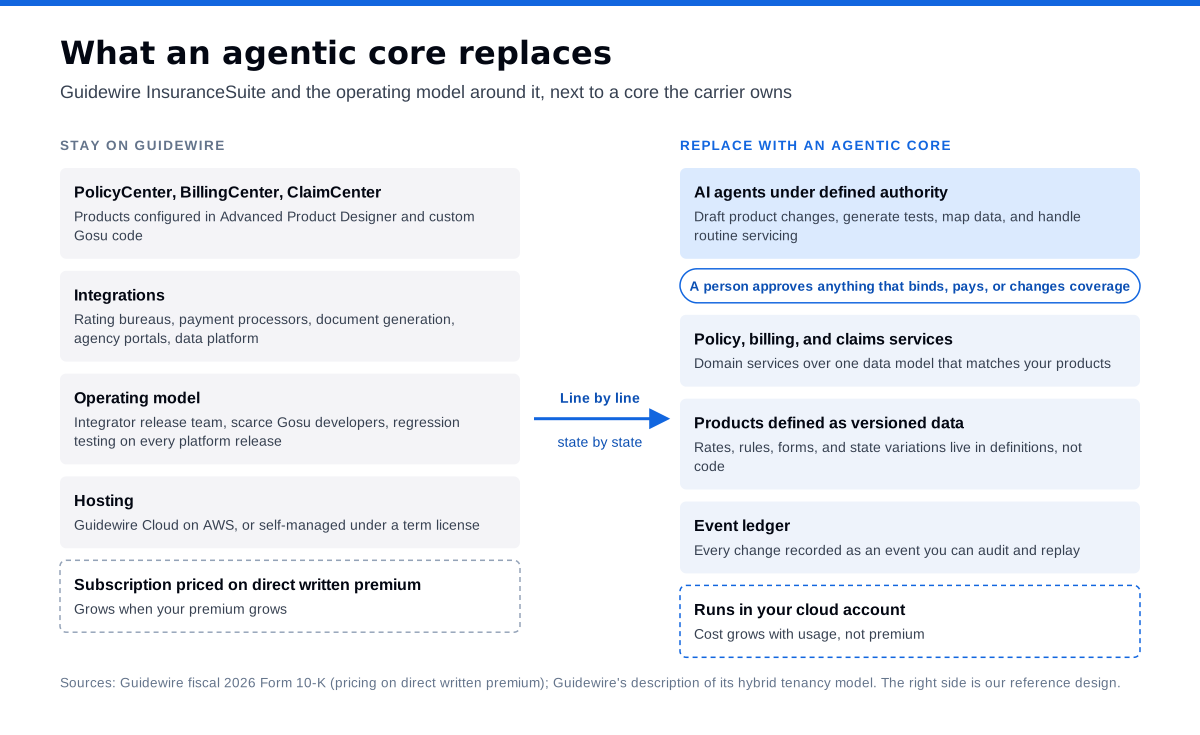
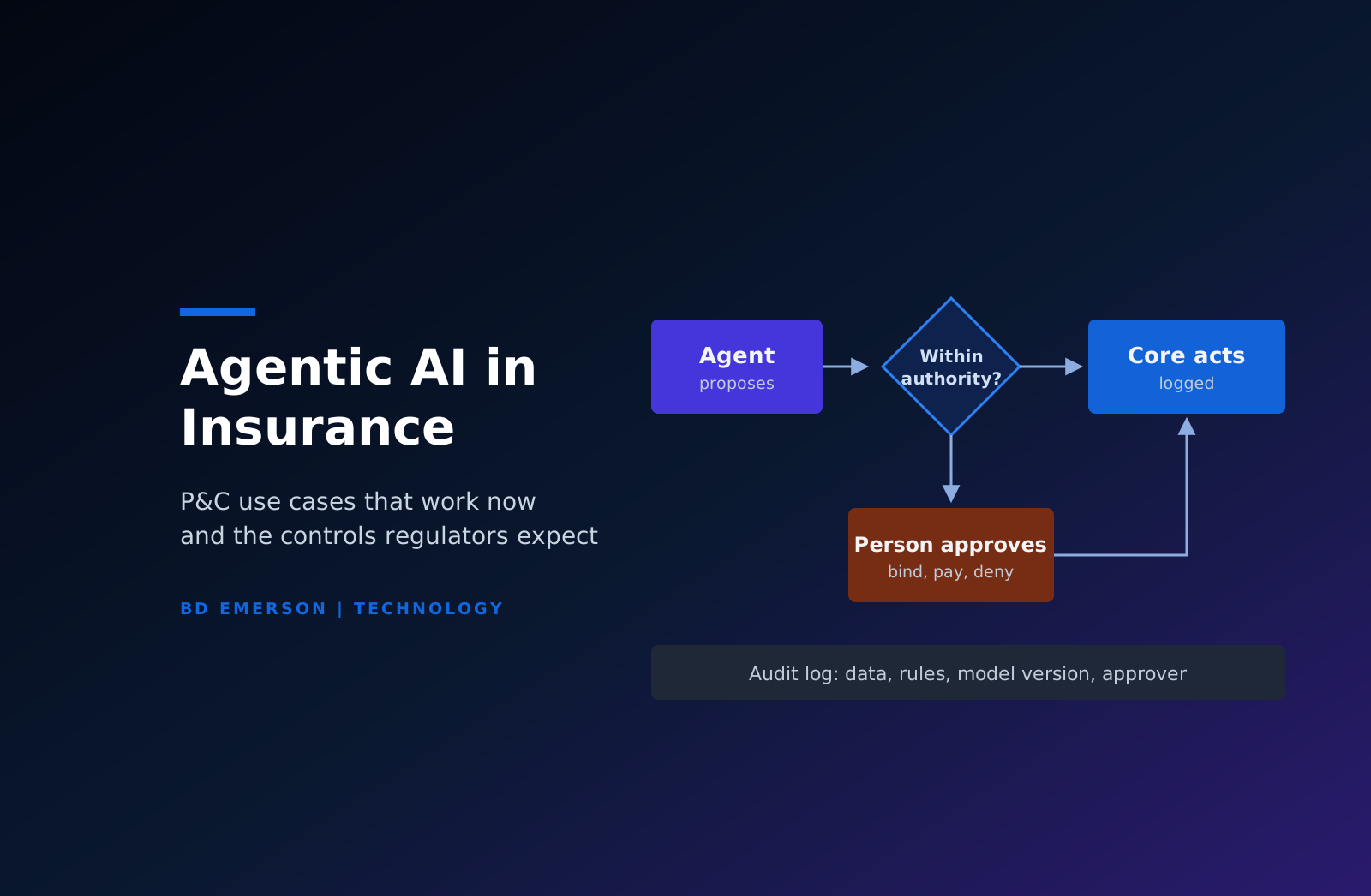
An agentic core replaces that stack with a system the carrier owns. Policy, billing, and claims run as domain services over one data model that matches how you sell and service your products. Products are defined as data, so rates, rules, forms, and state variations live in versioned definitions instead of configuration buried in code. Every change is an event in a ledger you can audit and replay. AI agents do the work that consumes configuration specialists and testers on a suite: drafting a product change from an approved rate filing, generating and running regression tests, mapping legacy data, and handling routine servicing. A person approves anything that binds coverage, pays money, or changes terms, and every agent action is logged against the rule that allowed it. The core runs in your cloud account, so cost grows with usage instead of premium.
The five-year model
The model compares two paths over 60 months. Staying on Guidewire includes the subscription, growing with premium; hosting if you run InsuranceSuite yourself; systems integrator and managed services; the internal staff who run the platform; and one upgrade or cloud migration program in year two. Replacing includes the build, data conversion and cutover for each line, the Guidewire costs you keep paying while each line runs in parallel, the subscription through the end of the contract term, and the run cost of the new core once lines go live.
For the planning scenario, we used a carrier with three lines of business and three years left on its Guidewire term. Every value below is a planning assumption except the subscription, which is the public average, and you should replace each one with your own invoices and staffing before you rely on the answer.
| Input | Planning value | Basis |
|---|---|---|
| Guidewire subscription and support | $2.3 million a year | Fiscal 2026 ARR of $1,242 million divided by about 550 customers |
| Premium growth | 5 percent a year | Raises the subscription, because core products are priced on DWP |
| Hosting and infrastructure | $0.6 million a year | Self-managed estate; enter zero on Guidewire Cloud |
| Systems integrator and managed services | $1.8 million a year | Release work, defect fixes, and application support |
| Internal platform staff | 12 people at $175,000 loaded | Developers, testers, analysts, and operations |
| Upgrade or cloud migration | $5.0 million in year two | One program inside the five-year window |
| Years left on the Guidewire term | 3 | Initial terms generally run five years |
| Build team | 14 people at $165 an hour blended | Engineers, product and actuarial analysts, testers |
| Build duration | 12 months for the first line, 5 for each additional line | Product-by-product delivery |
| Data conversion and cutover | $0.5 million per line | Policies in force, billing history, open claims |
| Parallel run | 3 months per line | Both systems run until reconciliation passes |
| Run team after go-live | 9 people at $175,000 loaded | Platform engineering, product changes, support |
| Cloud hosting and model inference | $0.7 million a year at full scale | Scales with lines live and transaction volume |
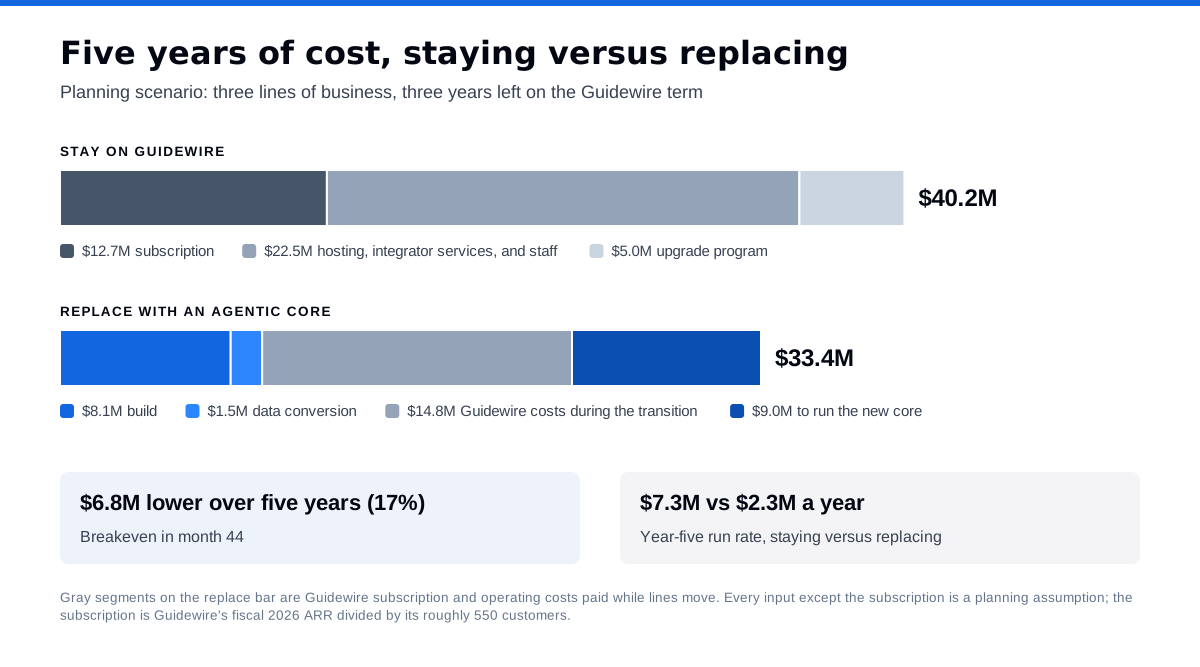
Staying costs $40.2 million over five years: $12.7 million in subscription, $22.5 million in hosting, integrator services, and staff, and $5.0 million for the upgrade. Replacing costs $33.4 million: $8.1 million to build, $1.5 million to convert data, $14.8 million in Guidewire costs during the transition, and $9.0 million to run the new core. The transition cost surprises most carriers. In this scenario the last line leaves Guidewire in month 25, but the term runs to month 36, so the carrier pays 11 months of subscription for software it no longer uses. Contract timing is the first lever in the whole model.
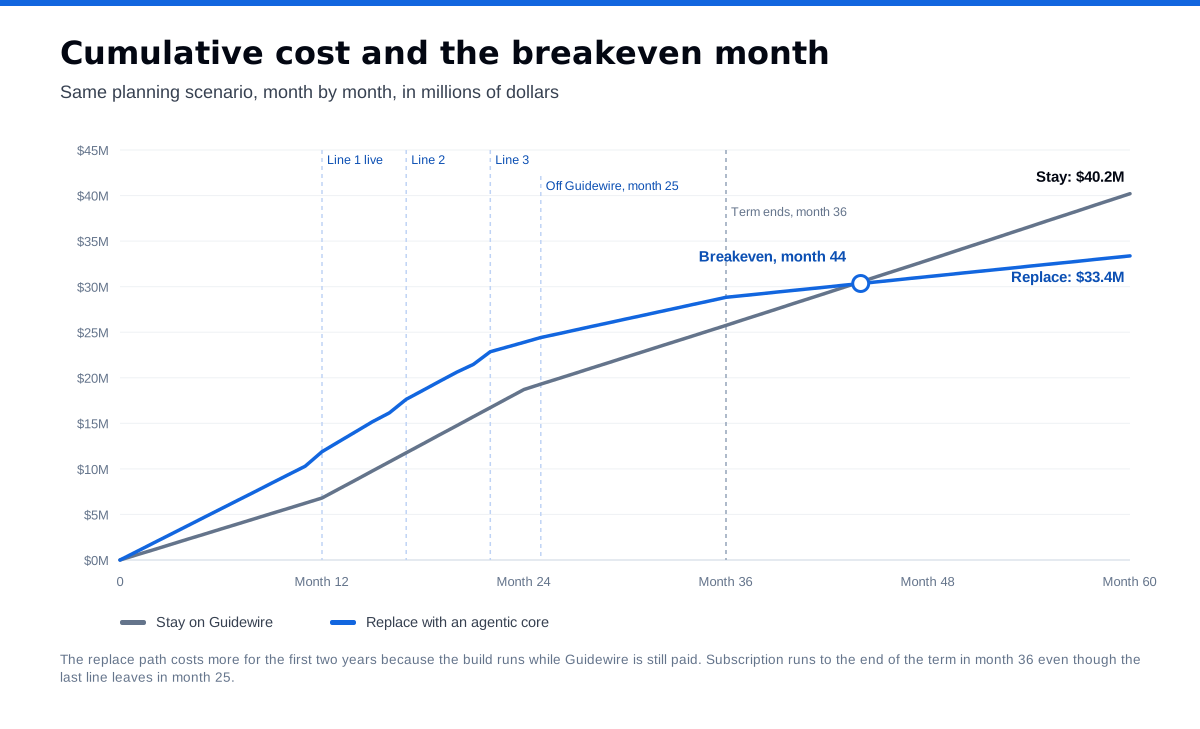
The replacement path costs more for the first two years, because you fund the build while paying for Guidewire. The lines cross in month 44. After the transition, staying costs $7.3 million a year by year five while the new core costs $2.3 million, which is why a seven-year view of the same scenario shows $17.3 million in savings, or 31 percent. A five-year window understates the case for most carriers, because the gap compounds every year after it.
The four numbers that decide the case
We ran the same model with one input changed at a time. The answer moves most with four inputs, and each one is a fact you can look up in an afternoon.
| Change from the planning scenario | Five-year savings | Breakeven |
|---|---|---|
| Planning scenario: three lines, three years left on the term | $6.8 million (17%) | Month 44 |
| Four years left on the term | $4.2 million (10%) | Month 51 |
| One line of business instead of three | $13.1 million (33%) | Month 23 |
| Five lines of business instead of three | $0.6 million (1%) | Month 59 |
| No upgrade or cloud migration planned | $1.8 million (5%) | Month 56 |
| Subscription of $4.5 million instead of $2.3 million | $12.1 million (23%) | Month 41 |
| 20 internal platform staff instead of 12 | $11.5 million (24%) | Month 39 |
| Build team of 20 instead of 14 | $3.3 million (8%) | Month 53 |
The term date matters because you cannot stop paying Guidewire until the contract allows it, and renewals after the initial term run a year at a time. The number of lines matters because every additional line adds build months while Guidewire costs keep running, so carriers with many lines usually replace in waves and start with the line where the platform hurts most. Run cost matters because integrator fees and platform staff are the largest cost of staying, larger than the subscription in this scenario. A pending upgrade or cloud migration matters because replacing avoids spending millions to move a platform you plan to leave. Five lines of business with no upgrade planned does not pay back inside five years in this model, and only reaches breakeven in month 71, so we say so when a carrier's numbers land there.
New products reach market faster
Speed to market is the most common complaint we hear about suites, and vendor research reflects it. In BriteCore's 2025 P&C core systems research, 75 percent of insurers said the ability to introduce new products, lines, or regions is highly important, and 42 percent were satisfied with their current systems. On a configured suite, a product change travels from the product team to configuration specialists, through a change request to the integrator, into a regression cycle sized to the whole platform, and onto the next release train. Each handoff adds weeks, and the queue is shared with every other change the carrier wants.
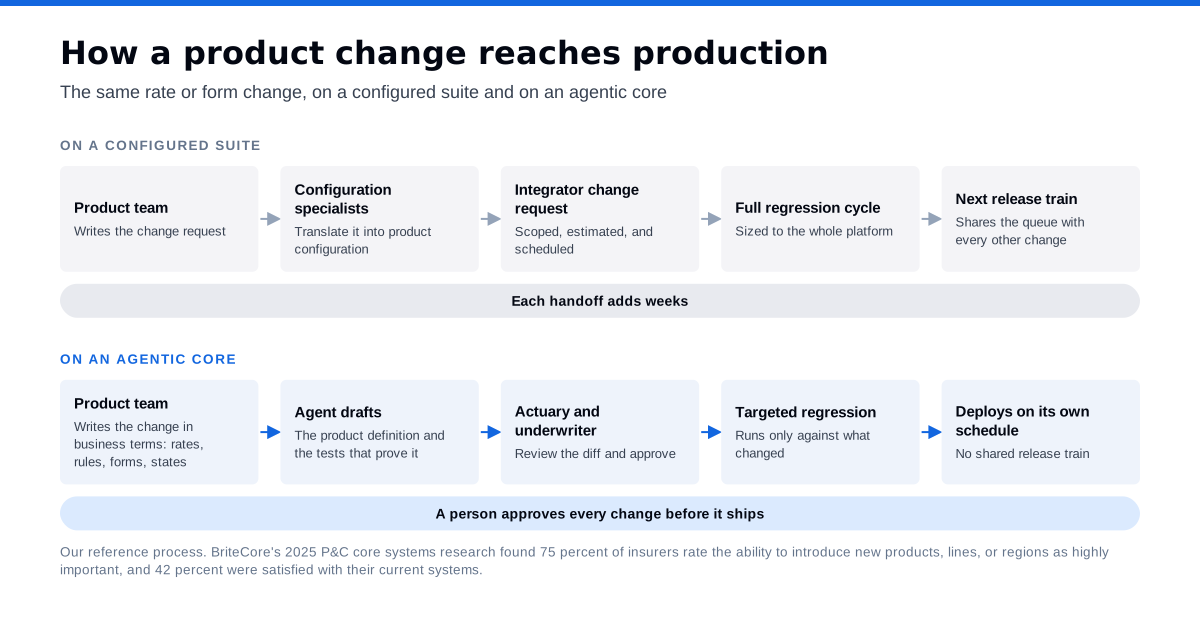
On an agentic core, the product team writes the change in business terms: the rates from the approved filing, the rules, the forms, the states. An agent drafts the product definition and the tests that prove it, an actuary and an underwriter review the diff, automated regression runs only against what changed, and the change deploys on its own schedule. Andersen Consulting's recent insurance work includes platforms that enabled the launch of two new insurance companies in less than a year each, and the same pattern applies to a new product at an existing carrier.
Your product, the way you designed it
A suite gives every customer the same data model, the same screens, and the same workflow, and you configure inside those limits. That works when your products look like everyone else's. It breaks down when the product is the differentiator: a usage-based auto program, a program business with unusual commission structures, or a commercial package whose underwriting rules your best underwriters carry in their heads. Customizing a suite to fit costs money twice, once to build the customization and again at every upgrade that has to carry it forward.
A core you own starts from your product. The quote flow, the underwriting workbench, the agent portal, and the claims intake screens follow how your people and your distribution partners work, because nothing forces them into a vendor's layout. The same domain model serves the agents, so an agent that drafts an endorsement works from your definition of the policy, not a generic one.
How the migration runs without a big-bang cutover
A replacement runs line by line, and within a line, state by state. New business for the first line moves to the new core on its go-live date. Existing policies convert at renewal, so each policy moves once, at a natural point, with the customer receiving a renewal they would have received anyway. Open claims stay in ClaimCenter until they close or until reconciliation proves the converted records match, and billing histories move with the policy. Both systems run in parallel for each line until the numbers reconcile.
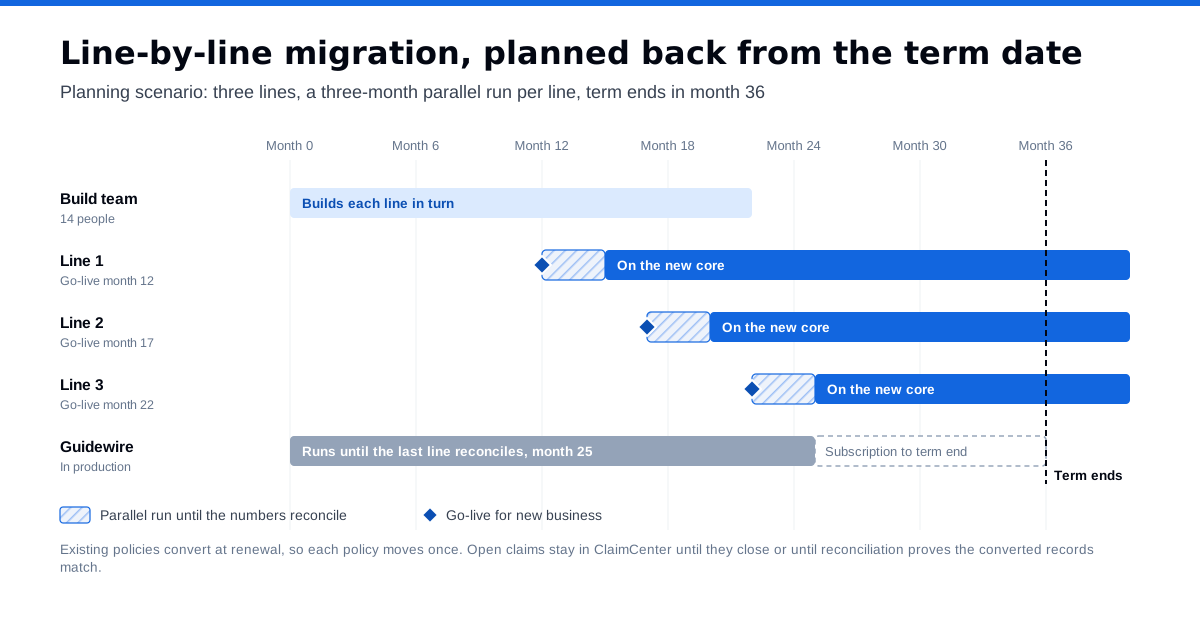
In the planning scenario, the first line goes live in month 12, the second in month 17, and the third in month 22, and each runs in parallel for three months. Guidewire is out of production in month 25. The schedule aims at the contract date from the first day of the program: if your term ends in month 24, a one-month slip costs you a full annual renewal, so we plan the cutover backward from the term date and build in margin. McKinsey calls the period of paying for both systems the "double bubble," and shortening it is where agentic tooling earns its keep, because data mapping, reconciliation, and testing are the steps that stretch it.
See it working before you commit
A business case on paper does not move a board that has already lived through one core replacement. Before a carrier commits to a program, we build a working version of one of its own products on the new core: one line of business in one state, with the carrier's rates, rules, and forms, running quote, bind, issue, an endorsement, and first notice of loss. Underwriters and claims staff use it on their own scenarios. The prototype proves fit and speed on the carrier's real product, and the five-year model gets rebuilt from the carrier's invoices, contracts, and staffing at the same time, so the decision rests on both.
When you should keep Guidewire
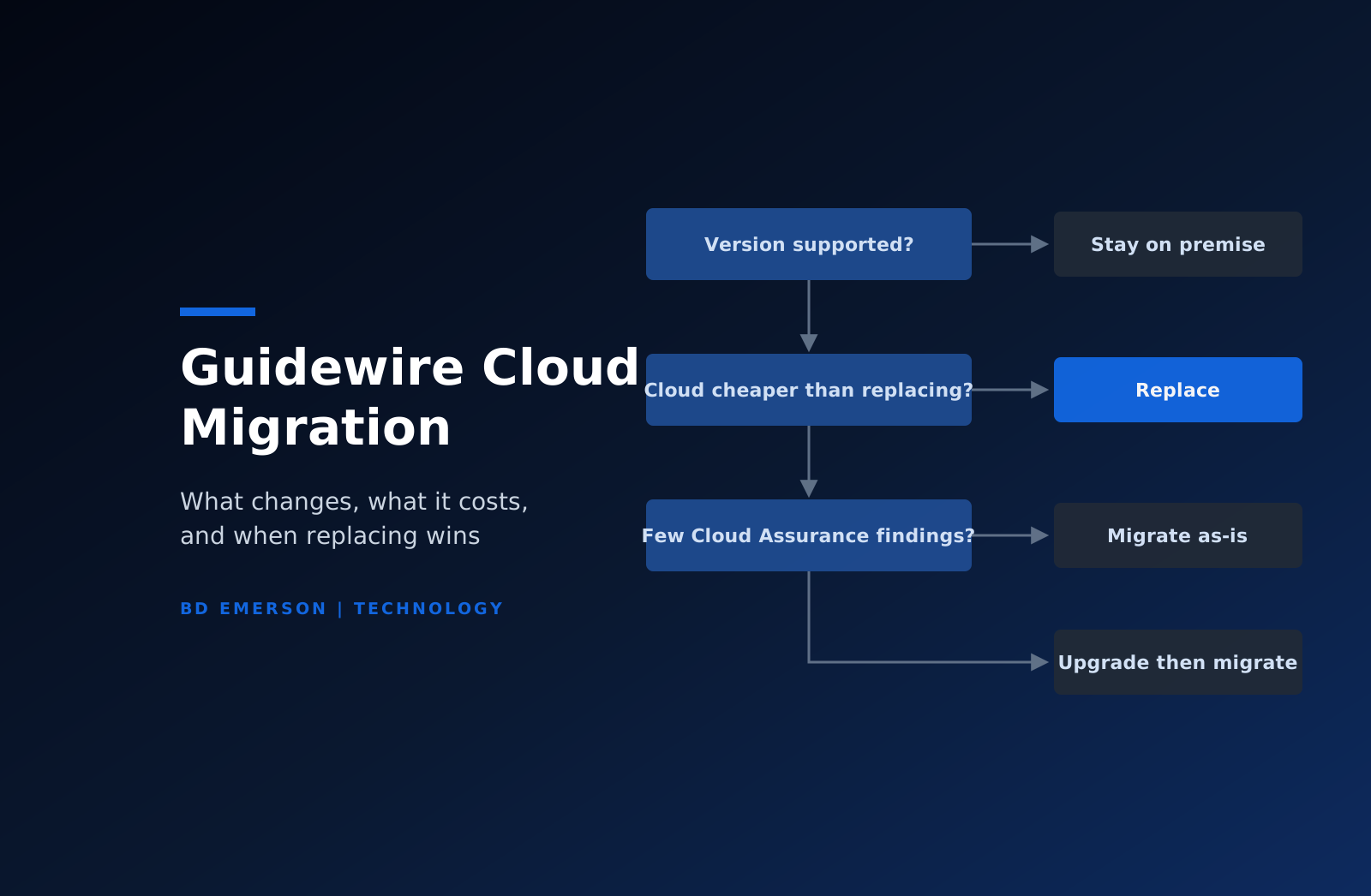
We do not implement Guidewire, and we have no license to protect, so we can say plainly when replacing is the wrong call. Keep Guidewire when you have four or more years left on a term you cannot renegotiate, when you have just finished a Guidewire Cloud migration and the customizations stayed close to the base product, when your carrier writes many complex commercial lines with a small technology team that cannot own a platform, or when the five-year model shows staying is cheaper. Guidewire is a mature product with a large partner ecosystem, and its Qusar release added an Agentic Framework in August 2026 for carriers on Guidewire Cloud. A carrier in that position may get more from tightening its Guidewire operation and replacing one line later. For a broader view of the options, see our comparison of Guidewire alternatives, and for the costs of staying, our breakdown of Guidewire pricing.
How agents stay governed inside the core
Regulators already expect governance over the AI systems insurers use. The NAIC adopted its Model Bulletin on the Use of Artificial Intelligence Systems by Insurers on December 4, 2023, and about half the states plus the District of Columbia had adopted it by the NAIC's August 2026 count. An agentic core builds the controls in rather than adding them later: an inventory of every agent and model, an authority check before each action, a person's approval for binding, payment, and coverage decisions, testing for unfair discrimination, and an audit trail that ties every action to the rule that permitted it. Our guide to agentic AI in insurance covers the use cases and the regulatory requirements in detail.
Frequently asked questions
How much does it cost to replace Guidewire? In our planning scenario for a mid-size carrier with three lines of business, the build costs $8.1 million and data conversion costs $1.5 million, and the full five-year cost of replacing, including Guidewire costs during the transition and the run cost of the new core, is $33.4 million against $40.2 million for staying. Your number depends on the lines you write, your contract dates, and what you pay to run Guidewire today.
How long does a Guidewire replacement take? In the planning scenario the first line goes live in month 12 and the third in month 22, with Guidewire out of production in month 25. Carriers with more lines replace in waves, and the schedule is planned backward from the date the Guidewire term ends.
Can you replace Guidewire one line of business at a time? Yes. Each line moves on its own go-live date, existing policies convert at renewal, and open claims stay in ClaimCenter until they close or reconcile. Running line by line keeps each cutover small enough to reverse.
What happens to our Guidewire contract during a replacement? You keep paying the subscription until the term ends, and renewals after the initial term run a year at a time. The program plans the last cutover before a renewal date so the carrier does not pay for a year it does not need.
What is an agentic core system? An agentic core is a policy, billing, and claims system built on the carrier's own domain model, where AI agents do configuration, testing, data mapping, and routine servicing under defined authority. A person approves any action that binds coverage, pays money, or changes terms, and every action is logged.
When does replacing Guidewire not make sense? Replacing rarely pays in five years when four or more years remain on the term, when the carrier writes many complex lines with a small technology team, or when a recent Guidewire Cloud migration kept customizations close to the base product. In those cases we recommend tightening the Guidewire operation and revisiting the case before the next renewal.
If your Guidewire renewal or next upgrade is inside the next three years, the five-year model is worth running now, while the contract date still gives you room. Our Guidewire replacement team builds it from your invoices and shows you one of your own products running on the new core before you commit to anything.

About the author