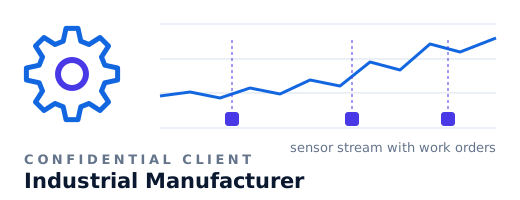



An industrial manufacturer kept two records of its equipment that never met. The work order system knew what had broken and what had been fixed. The sensor feeds knew how each machine was running. Planners scheduled maintenance by interval, and nobody could see an asset's repair record and its current condition in the same place. The company wanted maintenance decisions made from both.
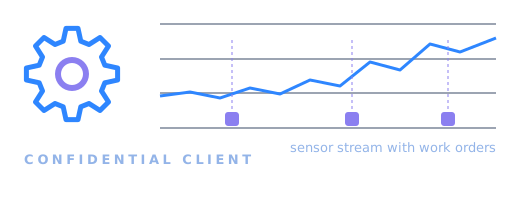
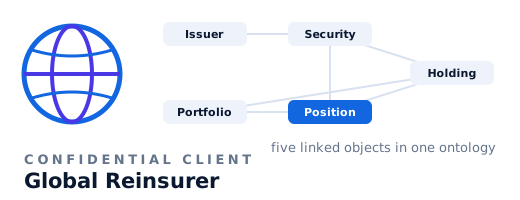
We built the maintenance system on Palantir Foundry around three objects in the ontology: the asset, the work order, and the sensor stream. Each asset carries its work order history and its sensor readings, so a planner opening an asset sees what has been done to it next to how it is running. Applications built on the ontology give planners and technicians the same view of each asset, and the model updates as work orders open and close, so the next decision starts from what the floor found last time.
The first release took eight weeks. The ontology was modeled with the maintenance planners and reliability engineers who would use it before any application work began, which kept the build focused on the decisions they make every week. The team settled how each sensor stream maps to its asset before building on it, because a stream tied to the wrong asset sends people to the wrong machine.
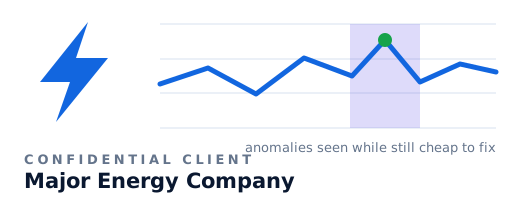
Maintenance planning starts from asset condition and repair history together instead of from a calendar. Reliability engineers can see which assets fail repeatedly and what their sensors showed beforehand, which is the evidence base a predictive maintenance program needs before anyone trains a model. The ontology is the foundation for the next maintenance use case, so the manufacturer extends the model instead of rebuilding the data.
Client details in this case study are generalized, and in places combined across engagements, to protect confidentiality. The build reflects how our Palantir Foundry implementation team works in industrial settings, and our guide to what Palantir Foundry is explains the architecture underneath. Teams that need the data layer first can start with our data engineering practice. We are glad to walk through comparable work under NDA.