The EU Battery Passport: What Regulation 2023/1542 Requires
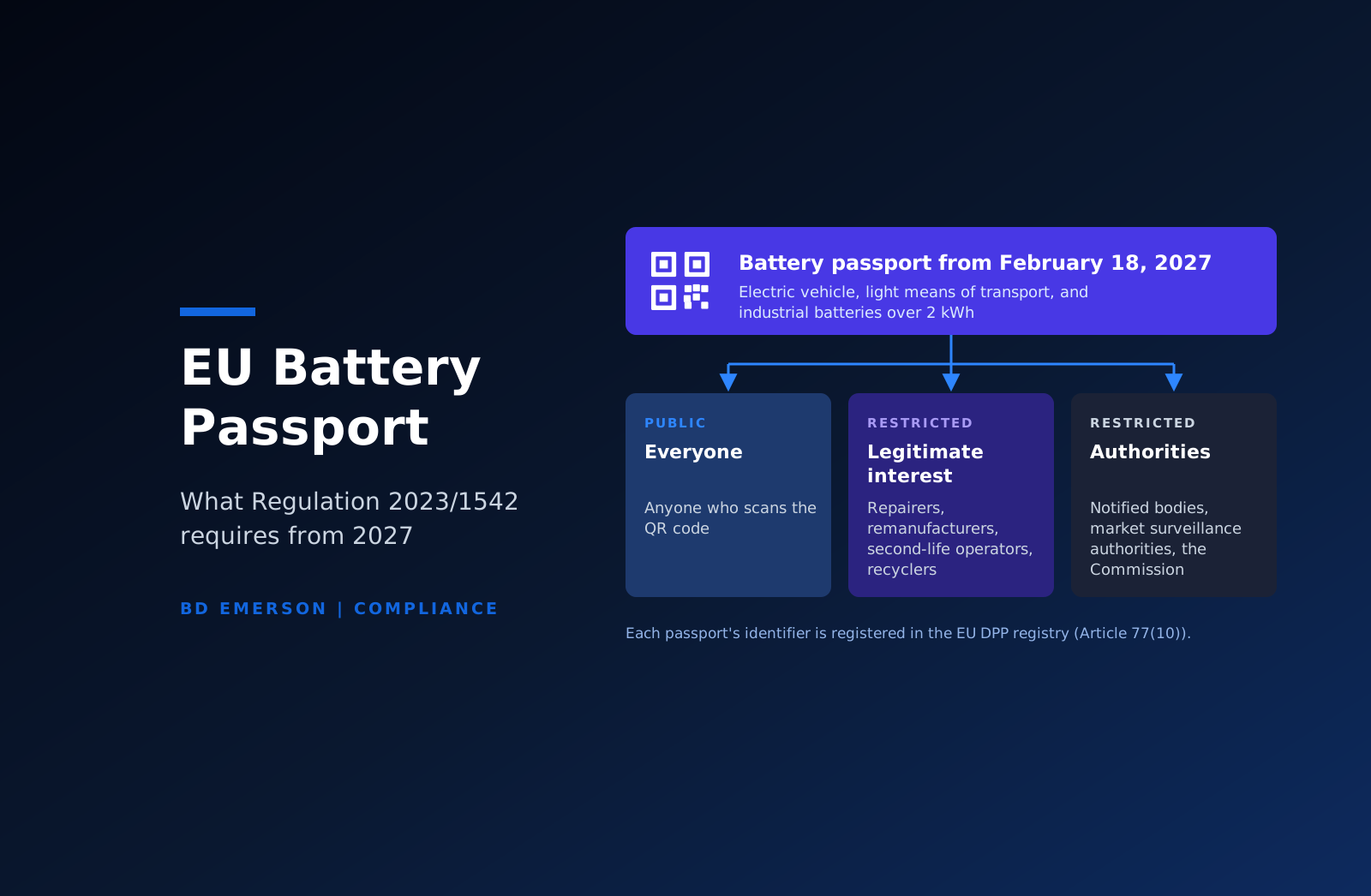
From February 18, 2027, every light means of transport (LMT) battery, every industrial battery with a capacity above 2 kWh, and every electric vehicle battery placed on the market or put into service in the EU must have a battery passport under Article 77 of Regulation (EU) 2023/1542. A QR code on the battery opens the passport, and its unique identifier must be registered in the EU digital product passport registry, which went live on July 20, 2026. The economic operator placing the battery on the market, normally the EU manufacturer or importer, is responsible for its content. The passport holds model data, such as chemistry and hazardous substances, and individual data, such as state of health and status.
The Commission describes batteries as the first product group for which a digital product passport becomes mandatory in the EU. This article covers the passport itself. Our guide to the EU Battery Regulation covers the Regulation's other obligations, and our digital product passport guide explains the ESPR framework whose registry and standards the battery passport shares.
Which batteries need an EU battery passport
Article 77(1) names three categories, and Article 3 defines each one. The Commission's battery passport page puts the scope in plainer terms: electric vehicle batteries, batteries for e-bikes, e-mopeds, and e-scooters, home storage batteries, and industrial batteries.
| Category | Article 3 definition, in short | Passport required |
|---|---|---|
| LMT battery | Sealed, 25 kg or less, powers wheeled vehicles driven by an electric motor alone or with human power | Every LMT battery |
| Electric vehicle battery | Powers hybrid or electric vehicles: category L above 25 kg, or categories M, N, and O | Every EV battery |
| Industrial battery | Built for industrial uses, or any other battery above 5 kg that is not an EV, LMT, or starter battery; includes stationary storage | Capacity above 2 kWh |
The obligation attaches to each battery when it is placed on the market, meaning first made available on the EU market, or put into service, meaning first used in the EU without having been placed on the market. Batteries placed on the market before February 18, 2027 need no passport. A battery first sold earlier and remanufactured after that date needs one when the remanufacturer places it on the market, because Article 45(2) requires that operator to bring the battery into line with the Regulation.
For imports, the Commission's July 7, 2026 webinar slides say the point of compliance is normally presentation to customs for release for free circulation, when the passport must already exist, be filled in, and be registered. Article 1(3) extends the Regulation to batteries built into products, so an EV battery inside an imported vehicle is in scope.
Who is responsible for the passport
Article 77(4) makes the economic operator that places the battery on the market responsible for keeping the passport accurate, complete, and up to date. The Commission's July slides name that operator as normally the EU manufacturer, the importer, or a seller shipping directly from outside the EU. It may authorize another company in writing, such as a cell maker, an OEM, or a passport service provider, but the slides state that it remains fully responsible.
The slides also describe a finished traction battery as typically including the battery management system (BMS) and the components needed for safe operation. When an OEM completes packs supplied without a BMS, the supply agreement should state which party places the finished battery on the market.
Under Article 77(7), when a battery is prepared for reuse or repurposing, repurposed, or remanufactured, the operator that places it on the market or puts it into service takes over, and the battery gets a new passport linked to the original. When a battery becomes waste, responsibility passes to the producer, a producer responsibility organization, or a waste management operator selected under Article 57. Article 77(8) ends the record: the passport ceases to exist once the battery has been recycled.
A repair does not require a new passport unless it amounts to remanufacturing, which Article 3 limits to work that restores at least 90 percent of the original rated capacity, with cell states of health within 3 percent of each other. Article 78(e) also requires the passport to stay available if the operator ceases to exist or stops operating in the EU, which importers and their hosting providers need to plan for.
What a battery passport contains and who can see it
Article 77(2) requires model data and individual battery data, including data from use, as listed in Annex XIII, and sorts it into three access tiers.
Public information (point 1) is open to anyone who scans the QR code. It covers the manufacturer, category, model and serial number, place and date of manufacture, weight, capacity, chemistry, hazardous substances, critical raw materials above 0.1 percent by weight, voltage, power capability, expected lifetime, round trip efficiency, internal resistance, and the EU declaration of conformity.
Persons with a legitimate interest see points 2 and 4. Point 2 gives repairers, remanufacturers, second-life operators, and recyclers the model's detailed composition, part numbers, dismantling information, and safety measures. Point 4 covers the individual battery: changing performance values, state of health, status (original, repurposed, re-used, remanufactured, or waste), charge cycles, negative events such as accidents, temperature, and state of charge. Notified bodies, market surveillance authorities, and the Commission see the results of test reports proving compliance (point 3), plus the point 2 model data.
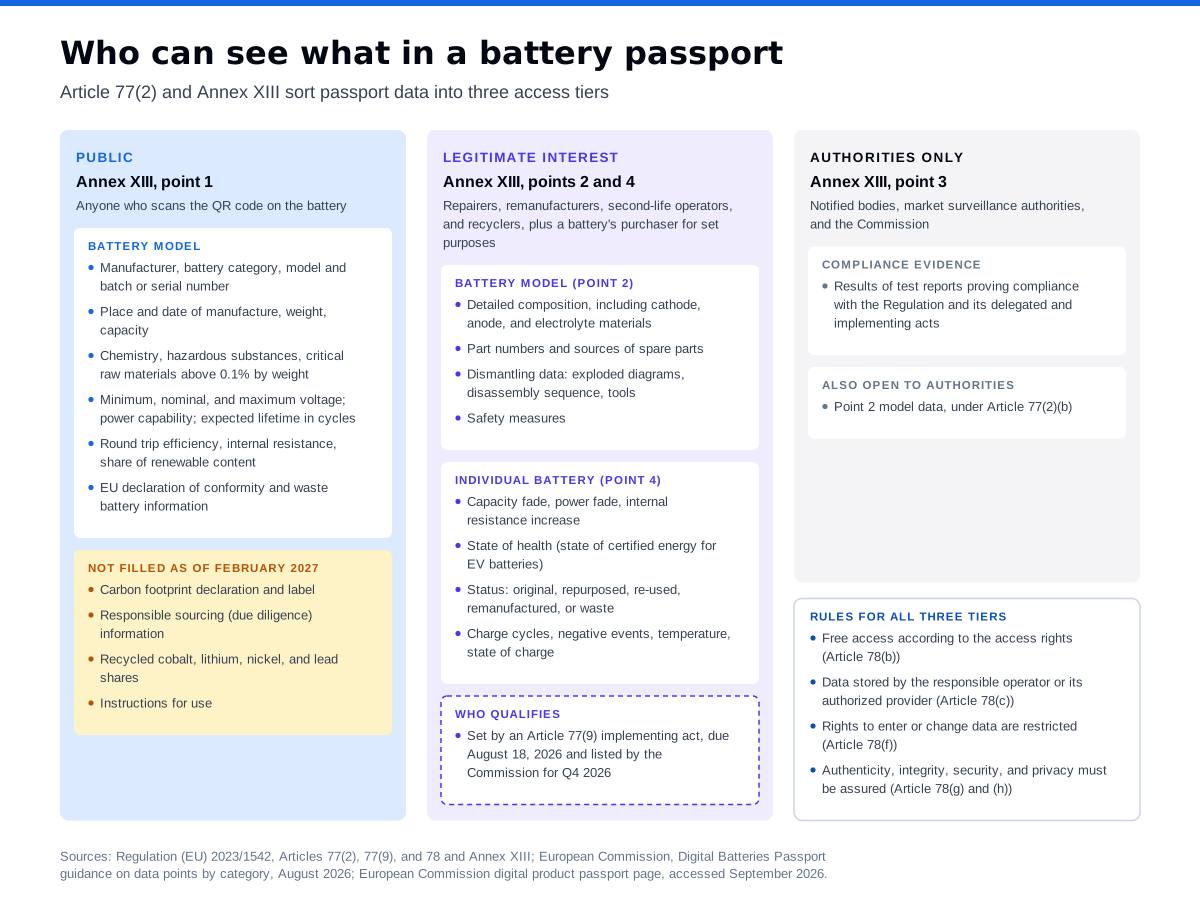
Article 77(9) required the Commission to adopt, by August 18, 2026, an implementing act naming the persons with a legitimate interest and what they may download, share, publish, and reuse. The Commission's DPP page lists that act for Q4 2026, so operators are designing the restricted tier without a final list of its users.
The Commission's updated guidance of August 21, 2026 turns Annex XIII into 71 data points and marks each as mandatory, optional, conditional, or not filled as of February 2027, by battery category. State of health, for example, is the state of certified energy for an EV battery, while an LMT battery reports remaining capacity, power capability, and round trip efficiency, among other values. The July slides add that dynamic data must be updated at least whenever the battery's status changes.
How the passport links to the EU digital product passport system
The Commission's battery passport page states that the passport "relies on the common DPP technical system established under the Ecodesign Regulation (ESPR)." Four elements make that link.
Unique identifier and QR code
The operator assigns each passport a unique identifier that complies with the ISO/IEC 15459 series or an equivalent standard (Article 77(3)), and the QR code that Article 13(6) requires from February 18, 2027 links to it. The code must be printed or engraved visibly, legibly, and indelibly on the battery, and it may go on the packaging and accompanying documents only where the battery's nature and size rule that out (Article 13(7)).
The registry
ESPR Article 78 added Article 77(10) to the Battery Regulation, which requires the operator to upload the unique identifier to the registry created under ESPR Article 13(1). The registry opened on July 20, 2026 with a testing environment, a helpdesk, and registration through an interface or an API. Implementing Regulation (EU) 2026/1778 requires companies to verify their identity with a qualified electronic seal or an electronic attestation of attributes, and verified status lasts up to three years. The registry stores identifiers and registration data, and the July slides state that passport content and restricted data stay with the operator or its authorized provider.
Design rules in Article 78
Article 78 requires full interoperability with other digital product passports under EU ecodesign law, free access according to the access rights, and storage by the operator or an authorized provider that may not sell or reuse the data beyond its service. The passport must remain available after the operator ceases to exist, restrict the rights to enter or change data, assure authenticity and integrity, and provide a high level of security and privacy. Article 77(5) adds open standards, machine-readable and searchable data, and transfer without vendor lock-in.
Standards and data model
The Battery Regulation does not provide for an implementing act on the passport's technical design, because Article 78 sets the design rules, and the only implementing act the passport articles require concerns access rights. The Commission's battery passport page lists Implementing Decision (EU) 2026/1736 among the passport milestones. Published July 15, 2026, it cites EN 18216, EN 18219, EN 18220, EN 18221, EN 18222, and EN 18223, covering data exchange, unique identifiers, data carriers, storage, APIs, and interoperability, as harmonized standards with a presumption of conformity with ESPR Articles 10 and 11. Two further standards, on access rights and security and on data authentication and integrity, complete the set. The registry also offers a free semantic repository of machine-readable data models.
Where battery passport data comes from
No single company holds the full Annex XIII data set, and an importer has to obtain all of it from a manufacturer outside the EU. Each data type also runs on its own legal clock.
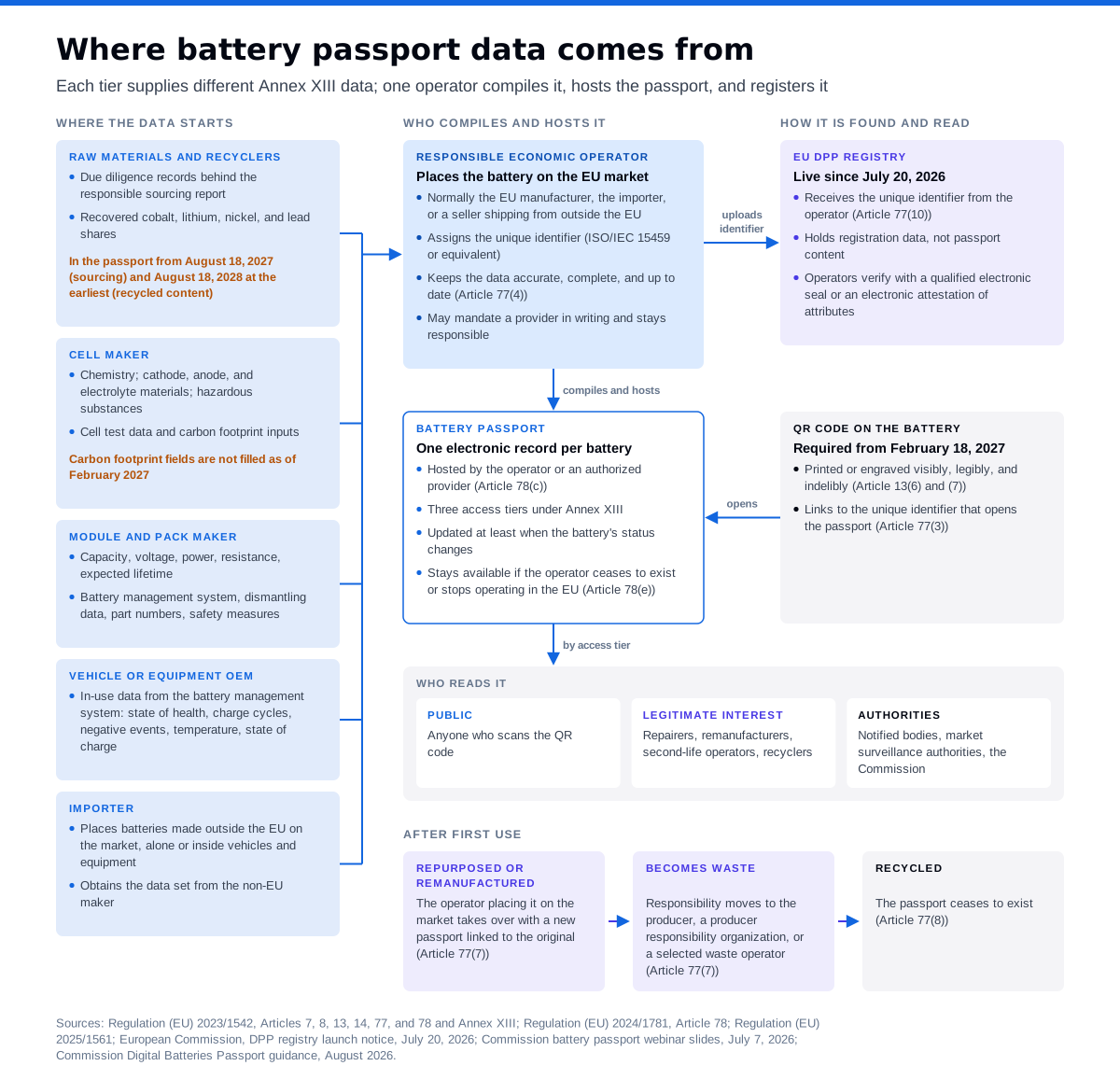
Composition and chemistry data start with the cell maker, and the pack maker adds performance values, dismantling information, part numbers, and safety measures. State of health comes from the battery itself: since August 18, 2024, Article 14 has required the BMS of stationary storage, LMT, and EV batteries to hold up-to-date state of health data, readable by the battery's purchaser or a party acting for them. In a vehicle or machine, that data reaches the passport through the OEM's or the owner's systems, so the responsible operator needs a contractual route to it.
Carbon footprint inputs come from material, cell, and pack production, responsible sourcing records from the raw material supply chain, and recycled content figures from recyclers and material suppliers. All three groups of fields start later. Article 7 applies the EV battery carbon footprint declaration from February 18, 2025 or 12 months after the methodology and format acts enter into force, whichever is latest. The Commission published a draft of the methodology act in April 2024, and its July 2026 slides gave no timing for adoption. Responsible sourcing information follows the due diligence obligations, which Regulation (EU) 2025/1561 moved to August 18, 2027. Recycled content shares follow Article 8, from August 18, 2028 at the earliest for EV and industrial batteries and from August 18, 2033 for LMT batteries. The Commission's data point guidance marks all three as not filled as of February 2027.
How OEMs and importers should prepare
Every in-scope battery placed on the market from February 18, 2027 needs a complete, registered passport. Five workstreams close the gap.
Data ownership in supplier contracts
Map each of the guidance's 71 data points to the company that produces it, and write the delivery duty, format, update trigger, and confidentiality terms into cell, pack, and OEM agreements. Name the party that places the finished battery on the market, put any Article 77(4) mandate in writing, and carry the Article 78(d) limit on data reuse into supplier terms for restricted fields.
Identifier strategy
Every serial number needs an identifier that meets ISO/IEC 15459 or an equivalent standard and a QR code on the battery that lasts as long as the battery does. Decide how the battery identifier links to the vehicle or system identifier, and how a repurposed battery's new passport will reference the original.
Platform selection
Article 78(c) lets the operator store passport data itself or through an authorized provider, which in practice means choosing a DPP platform. Test candidates for ESPR interoperability, separation of the three access tiers, export without lock-in, and continuity if the vendor or the operator exits. Our guide to choosing a digital product passport platform sets out the criteria.
Security
The restricted tiers hold dismantling data and detailed composition that competitors would value. Article 78's requirements on write access, integrity, and fraud prevention translate into signed records, role-based access for each tier, and logs of every read and change, which our article on digital product passport security covers.
Registry registration
Operator verification requires a qualified electronic seal or an electronic attestation of attributes under the EU eIDAS framework, which takes lead time to obtain, and the registry's testing environment has been open since July 2026. Importers should finish registration before goods reach customs.
BD Emerson maps which Annex XIII fields each supplier owns, designs the passport data model and access rights, runs supplier data collection, selects the DPP platform, integrates it with ERP, PLM, and PIM systems, designs passport security, and registers identifiers. We do not calculate carbon footprints: we specify what the Article 7 delegated act requires and manage the data from the provider that does. Our ESPR compliance and digital product passport practice runs battery and ESPR passports as one program.
Industry content guidance
Three industry efforts predate the Commission's guidance. The Battery Pass consortium, a German government-funded project of 11 organizations led by Systemiq, published its Battery Passport Content Guidance in April 2023 and updated it in December 2023. DIN and DKE then published DIN DKE SPEC 99100, "Requirements for data attributes of the battery passport," in January 2025. It defines data attributes from the Regulation plus voluntary additions, is free to download from DIN Media, and is not a harmonized standard. The Global Battery Alliance runs a separate GBA Battery Passport, which it describes as "a global sustainability reporting and certification scheme for batteries," with Battery Benchmarks covering 18 ESG issues. Where these differ from the Commission's data point list, the Regulation decides what the legal passport must contain.
Frequently asked questions
When does the EU battery passport become mandatory? The battery passport applies from February 18, 2027 under Article 77 of Regulation (EU) 2023/1542. From that date, every LMT battery, every industrial battery above 2 kWh, and every electric vehicle battery placed on the market or put into service in the EU needs one. Batteries placed on the market earlier need no passport unless they are later repurposed or remanufactured and placed on the market again.
Who is responsible for creating a battery passport? The economic operator that places the battery on the EU market is responsible, normally the EU manufacturer, the importer, or a seller shipping directly from outside the EU. That operator can authorize another company in writing to create and update the passport, but it keeps responsibility for the content.
Who can see the information in a battery passport? Article 77(2) and Annex XIII set three access tiers. The public sees model data such as chemistry and capacity, persons with a legitimate interest such as repairers and recyclers see dismantling data and individual battery data such as state of health, and authorities see test reports. The Commission lists the implementing act that defines persons with a legitimate interest for Q4 2026.
Does a battery passport need carbon footprint data in February 2027? No. The Commission's August 2026 guidance marks the carbon footprint declaration and label as not filled as of February 2027, because the rules on their format are still pending. Responsible sourcing information is required from August 18, 2027, and recycled content shares from August 18, 2028 at the earliest.
Is the battery passport the same as the ESPR digital product passport? No. The battery passport comes from the Battery Regulation, while ESPR passports come from product-group delegated acts under Regulation (EU) 2024/1781. Both use the same EU registry, and Article 78 of the Battery Regulation requires full interoperability with other digital product passports.
What happens to a battery passport when the battery is recycled? When a battery becomes waste, responsibility for its passport passes to the producer, a producer responsibility organization, or a selected waste management operator. Under Article 77(8), the passport ceases to exist after the battery has been recycled. A repurposed or remanufactured battery instead receives a new passport linked to the original.
If your company places EV, LMT, or industrial batteries on the EU market, our ESPR compliance practice can map your Annex XIII data to suppliers, design the passport's access tiers and security, select the platform, and register your identifiers ahead of February 18, 2027.

About the author