Guidewire Alternatives and Competitors: Duck Creek, Sapiens, Majesco, and a Custom Core
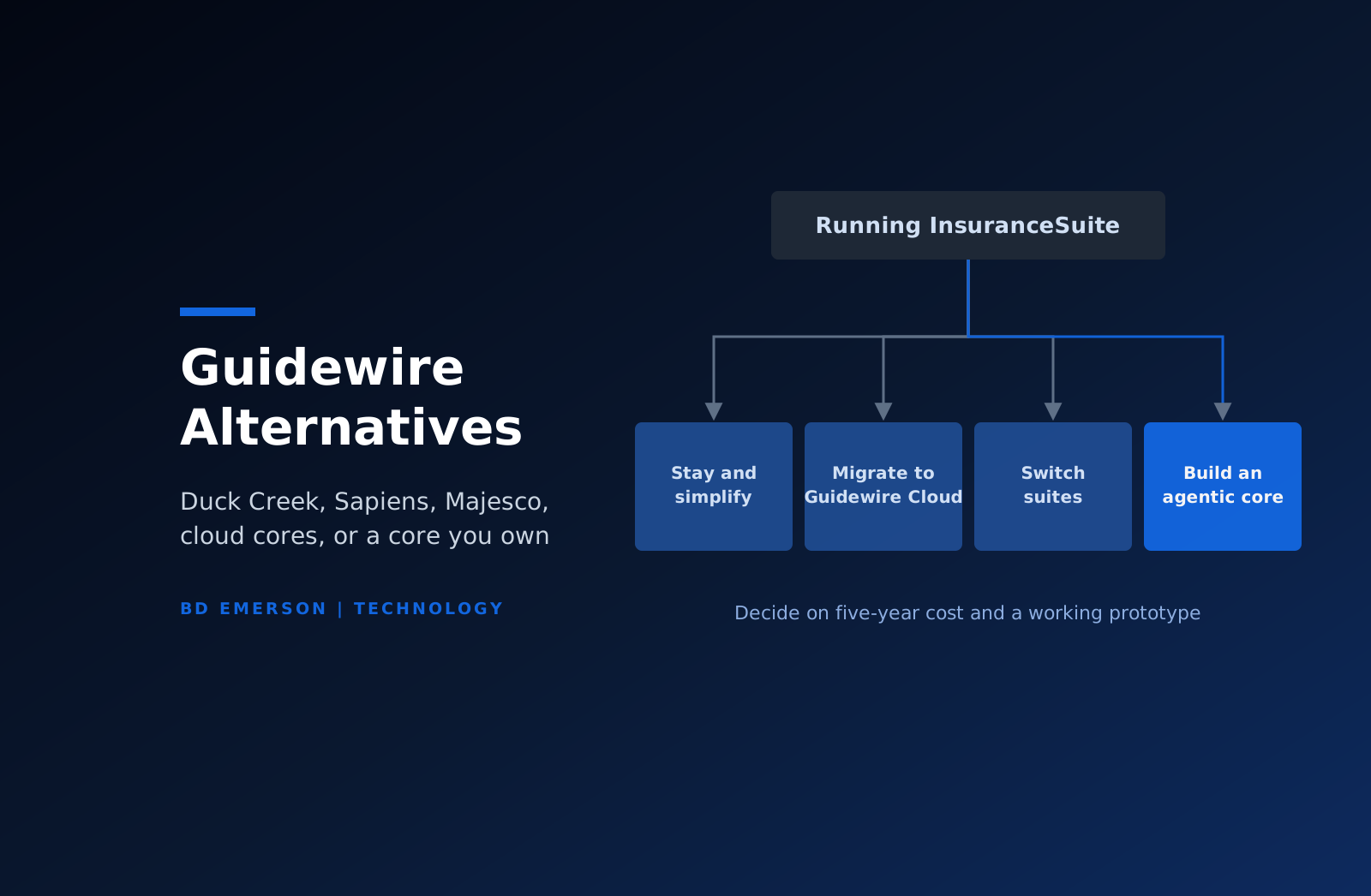
The main alternatives to Guidewire InsuranceSuite are Duck Creek, Sapiens, Majesco, Insurity, and OneShield among established suites, Guidewire's own InsuranceNow for mid-market carriers, and cloud-native cores from EIS, Socotra, and BriteCore. Guidewire's fiscal 2026 Form 10-K names Duck Creek, Majesco, Origami Risk, Sapiens, and DXC Technology as competitors, and it lists carriers' internally built systems first. Those options reduce to three real paths: replace one suite with another, move to a cloud-native core, or build a custom agentic core that the carrier owns. In our experience, the choice turns on three facts: how each option prices premium growth, who controls the code and data, and how fast you can launch your products in your states.
The 10-K's phrase for that first category is "customers' internally developed proprietary solutions, which may be accelerated by evolving AI technologies." Carriers that want to stay with Guidewire have two more choices inside its catalog: a move from self-managed InsuranceSuite to Guidewire Cloud, or InsuranceNow for regional property and casualty (P&C) carriers and managing general agents (MGAs). A disclosure before the comparison: this is our site, our insurance team builds custom agentic cores, and we do not resell any vendor named here or implement Guidewire.
Seven criteria to settle before you compare vendors
Core system demos look alike, so write the criteria down first and hold every option to them. Review sites such as Gartner Peer Insights and G2 help with day-to-day usability, and we find they say little about contract terms or five-year cost.
Product configurability for your lines and states
Ask each vendor to configure one of your real products, in your hardest state, during the evaluation, and time the work. Speed to market is where carriers feel the gap: in BriteCore's 2025 P&C core systems report, 75 percent of insurers called the ability to introduce new products, lines, or regions highly important, and 42 percent said they were satisfied with their current systems. BriteCore sells a core platform, so read those figures as vendor research.
Cost model and how it scales with premium
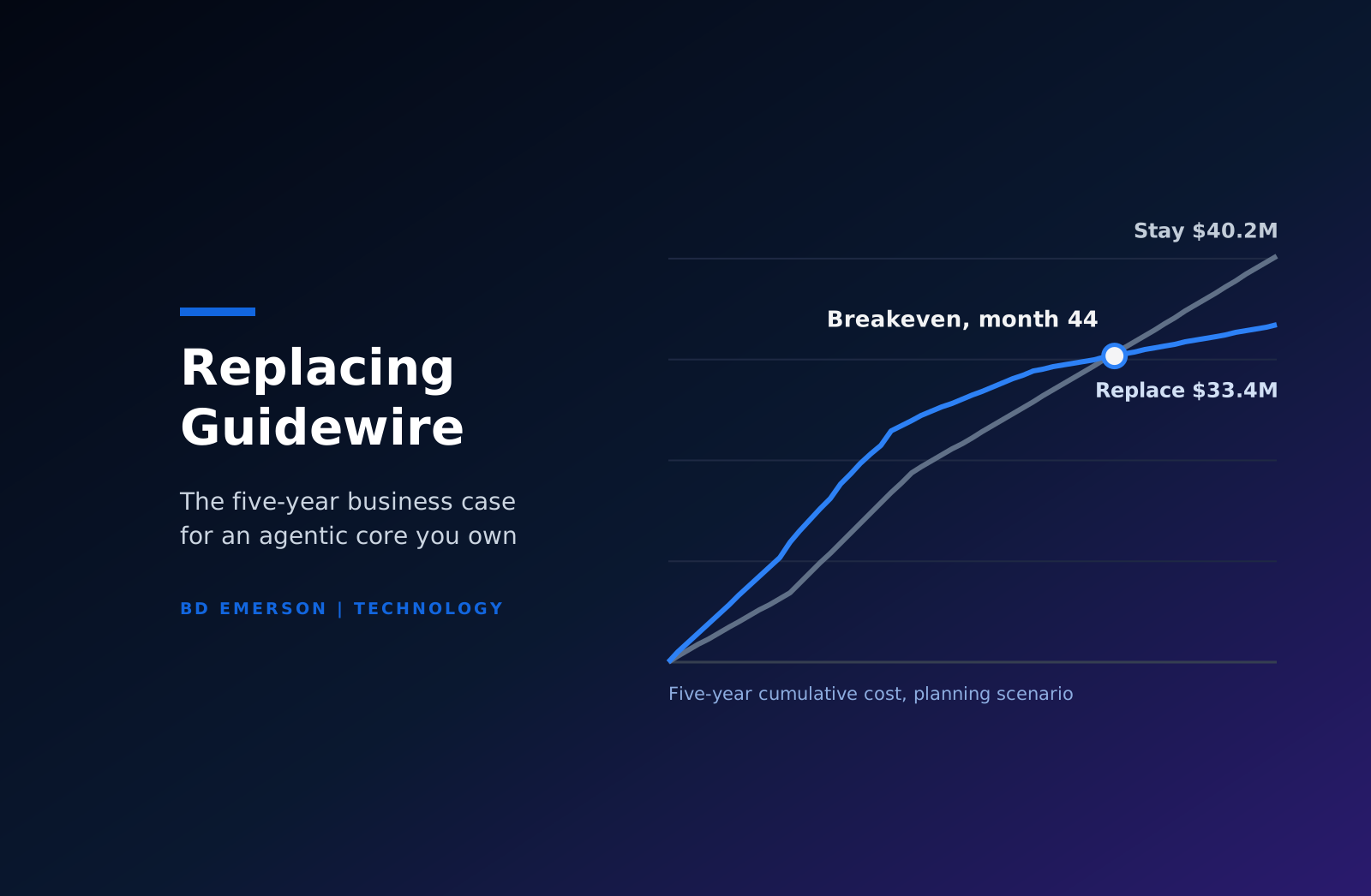
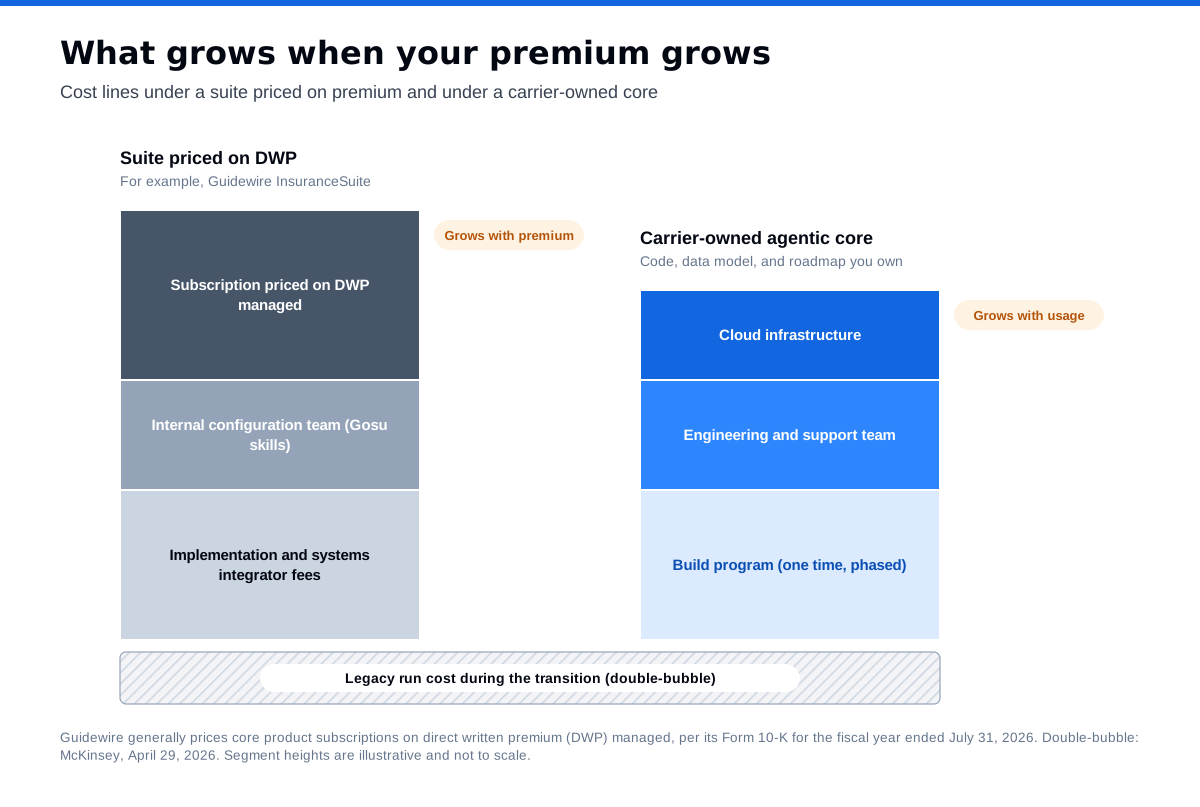
Guidewire's 10-K says it generally prices subscriptions for its core products on the direct written premium (DWP) managed on the platform, with initial terms of five years in most contracts and annual renewals after that. Because the fee follows DWP, the subscription grows as your premium grows, at whatever tiers the contract sets. Guidewire reported $1,242 million of annual recurring revenue (ARR) at July 31, 2026, in its fiscal 2026 results, and the 10-K counts about 550 customers: $1,242 million divided by 550 is about $2.3 million per customer per year on average. Ask every vendor for a five-year cost at today's premium and at plan premium, and see our Guidewire pricing breakdown for the contract mechanics.
Implementation dependency on integrators and scarce skills
Guidewire's 10-K says implementation and testing "typically lasts six to 24 months or longer." InsuranceSuite configuration relies on Gosu, which Guidewire's Qusar announcement describes as its Java-compatible programming language, and in our experience most programs depend on a systems integrator. The partner bench is deep: ISG named nine Guidewire services Leaders in May 2025, including Accenture, Capgemini, Deloitte, and TCS. Ask who will maintain your configuration after go-live and what that talent costs in your market.
Data ownership and exit terms
On Guidewire Cloud, each customer's InsuranceSuite core runs single-tenant, "including business logic and customer data," while shared services such as rating, quoting, rules, and product models run multi-tenant on AWS, according to Guidewire's description of its tenancy model. Tenancy alone does not settle the exit question. Before you sign, get the export format, cost, and timeline for your full policy, billing, and claims history in writing, and confirm you own the product configuration you pay to build.
AI and agent access to the core
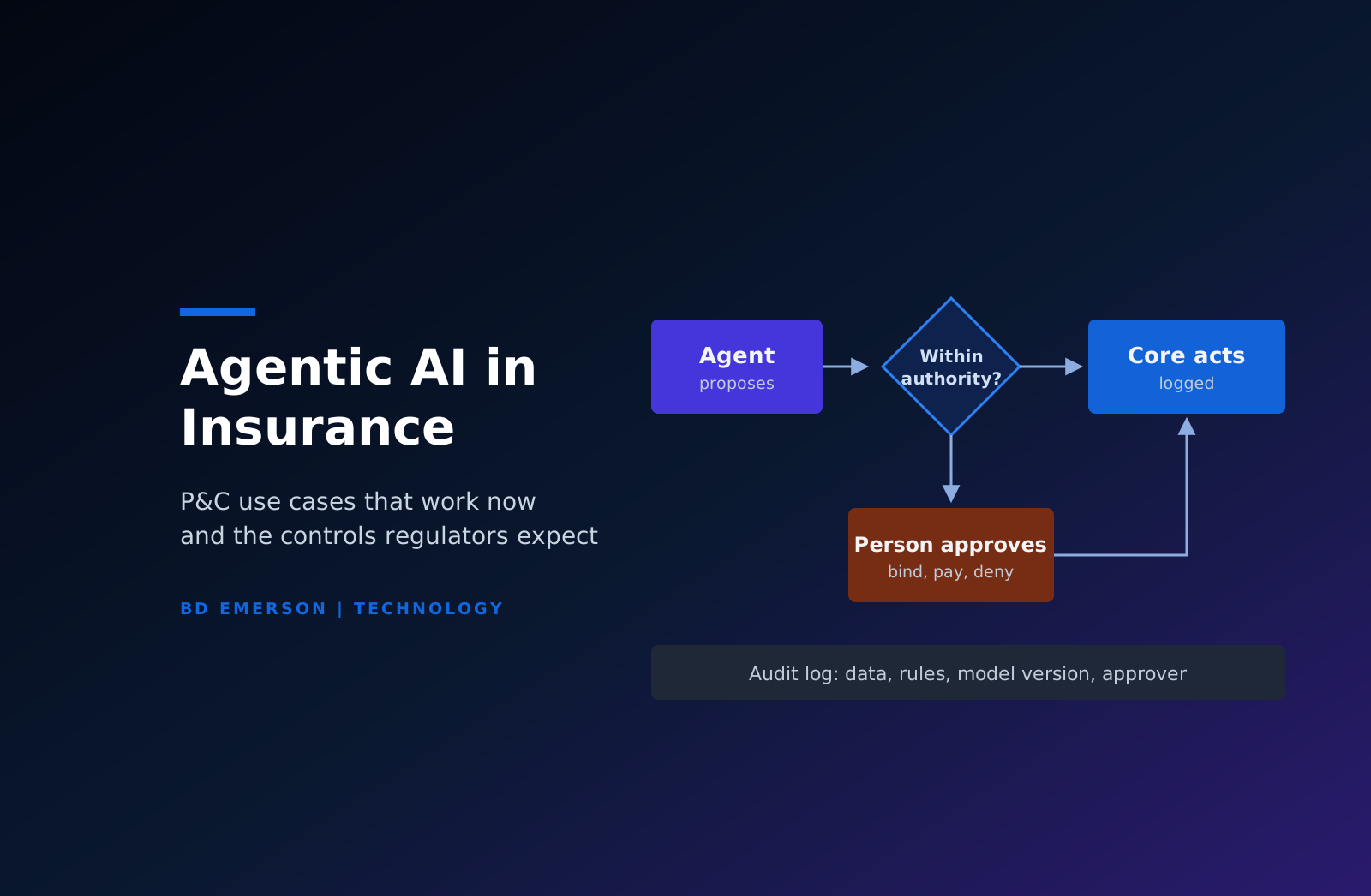
Guidewire, Duck Creek, EIS, Majesco, and Socotra all market agentic features now. Guidewire's Qusar release in August 2026 added an Agentic Framework that lets carriers "choose the right AI model for each task" and gives agents real-time access to policy, claims, and billing data, with some features still in Early Access or Restricted Availability. Ask each vendor the same question: can your own agents, on the models you choose, read and write core data through governed APIs, under permissions and logs your team controls?
Regulatory change handling
Bureau circulars from ISO, AAIS, and NCCI, the advisory organizations behind many P&C forms and loss costs, plus your own state rate and form filings, create a steady queue of product changes. Ask who loads each circular, how many days it takes, whether the fee covers the work, and how the system versions rates and forms by effective date.
Carrier size fit
Each product has a center of gravity. Guidewire's 10-K says InsuranceSuite serves insurers "ranging from global carriers to regional and local providers," while InsuranceNow is "generally suited to mid-market carriers and managing general agents, who are highly cost sensitive." Match each option's center of gravity to your premium, your team, and your launch plans.
Guidewire alternatives compared
Each row draws on the vendor's own site, SEC filings, or press releases. "Not published" means we found no public pricing model, and DWP means direct written premium.
| Option | Ownership | Deployment | Typical carrier fit | Pricing model (where public) | Notes |
|---|---|---|---|---|---|
| Guidewire InsuranceSuite | Public (NYSE: GWRE) | Guidewire Cloud on AWS (single-tenant core, multi-tenant shared services); term licenses for existing on-premise customers | Global carriers to regional and local insurers | DWP-based subscription; initial terms generally five years | 570+ insurers in 44 countries; Qusar agentic release, August 2026 |
| Guidewire InsuranceNow | Guidewire | Bundled cloud service hosted on AWS | Regional and super-regional U.S. P&C insurers and MGAs; U.S. and Canada only | DWP-based subscription | 57 carriers and MGAs with more than $10 billion of DWP |
| Duck Creek | Vista Equity Partners (closed March 30, 2023) | OnDemand SaaS on Microsoft Azure | P&C and general insurers, including 33 of the top 50 North American insurers | Not published | 370+ customers; agentic AI platform, April 2026 |
| Sapiens | Advent International (closed December 17, 2025) | SaaS-based software | P&C, workers' compensation, life, and reinsurance; 600+ customers in 30+ countries | Not published | Sells mainly in Europe and North America |
| Majesco | Thoma Bravo (closed September 21, 2020) | SaaS; 95 percent of customers on its cloud | P&C, life and annuity, and pension; 375+ customers, including 275+ P&C insurers | Not published | Added Vitech pension and benefits administration, January 2026 |
| Insurity | GI Partners and TA Associates | Cloud-based; 400+ cloud deployments | Carriers, MGAs, and brokers; cites 22 of the top 25 U.S. P&C carriers | Not published | Cites 7 of the top 10 U.S. MGAs |
| EIS | Private; TPG growth investment of more than $100 million (2021) | Cloud-native, API-first SaaS (EIS OneSuite) | P&C, life and annuities, group benefits, and other lines | Not published | CoreGentic agentic layer, October 2025 |
| Socotra | Venture-backed; Insight Partners led its 2022 Series C | SaaS on AWS, shared or dedicated environment; weekly updates | Insurers and MGAs; personal, commercial, specialty, and life and health lines | AWS Marketplace: $500,000 annual fee for CorePlus, plus usage | Any developer can configure it; no proprietary language |
| BriteCore | Private; Warburg Pincus led its 2019 growth round | Cloud-native SaaS on AWS | Mid-size P&C carriers and MGAs in North America | Not published | 100+ insurers; policy, billing, and claims in one system |
| OneShield | Private; investors include Pacific Lake Partners and Bain Capital Credit | SaaS; Market Solutions is a managed service | P&C carriers and MGAs in commercial, personal, and specialty lines | Market Solutions subscription bundles implementation, support, and upgrades | Enterprise edition offers direct configuration control |
| Custom agentic core (our approach) | Carrier owns the code, data model, and roadmap | Carrier's own cloud account | Carriers whose five-year cost math favors owning the core | Build plus cloud and support costs; no core license | Starts with five-year math and a working prototype of one product |
Guidewire vs Duck Creek
Guidewire and Duck Creek both sell full P&C suites, and they differ most in ownership, cloud, and pricing disclosure. Guidewire is public and says more than 570 insurers in 44 countries use its products. Duck Creek has been private since Vista Equity Partners completed its acquisition on March 30, 2023, and in April 2026 it reported more than 370 customers and more than $150 billion of premium flowing through its platform each year. Duck Creek's last 10-K as a public company, for fiscal 2022, named Guidewire, Insurity, Majesco, and Sapiens as competitors and opened its competition section with carriers that build their own systems.
Their clouds differ: Guidewire Cloud runs on AWS with a single-tenant core per customer, and Duck Creek runs OnDemand as fully managed SaaS on Microsoft Azure. Guidewire discloses its pricing basis, DWP, in its 10-K, and Duck Creek does not publish a pricing model. Both sell bureau content. Duck Creek's Industry Content covers ISO, AAIS, NCCI, and state workers' compensation bureaus with monthly templates, and Guidewire sells an admitted lines service for PolicyCenter that addresses ISO compliance. On AI, Qusar added Guidewire agents for claim summaries, policy changes, and first notice of loss, and Duck Creek unveiled its agentic AI platform in April 2026.
We recommend deciding between the two on three points: your cloud alignment, the integrator and talent market where you operate, and how each contract prices your premium growth. A move from one to the other is a full core replacement either way, with data conversion, testing, and what McKinsey calls "double-bubble" periods, "in which insurers pay to run the legacy stack while funding the change program."
The alternatives by family
Guidewire's own options: InsuranceNow and Guidewire Cloud
InsuranceNow bundles policy, billing, and claims in one cloud service for regional and super-regional U.S. P&C insurers and MGAs, and Guidewire sells it only in the U.S. and Canada. Carriers on self-managed InsuranceSuite can move to Guidewire Cloud instead, which keeps the product and hands infrastructure and upgrades to Guidewire. Our explainer on what Guidewire is covers the full product line.
Established suites: Duck Creek, Sapiens, Majesco, Insurity, and OneShield
Private capital owns or backs all five, so ask each vendor what its roadmap commits to under current ownership. Sapiens and Majesco also sell life and annuity systems for carriers that write both, and Majesco added pension and benefits administration with Vitech in January 2026. Insurity and OneShield concentrate on P&C carriers and MGAs. A move to any of them resets the implementation clock, so price a full program, including conversion and parallel running.
Cloud-native cores: EIS, Socotra, and BriteCore
EIS, Socotra, and BriteCore built their platforms as SaaS from the start. EIS spans P&C, life, and group benefits, Socotra stresses developer configuration and weekly updates, and BriteCore focuses on mid-size carriers and MGAs. We find these cores shorten product configuration, and the carrier still owns the data conversion, integration, and testing, which fits McKinsey's finding that configuring the target platform "is only a small portion of the work."
A custom agentic core
The third path is the category Guidewire's 10-K lists first: a core the carrier builds and owns. We define an agentic core as one designed so AI agents can read and act on policy, billing, and claims data through governed APIs, with every agent action permissioned and logged. The carrier owns the code, data model, and roadmap for policy administration, billing, and claims, runs the system in its own cloud account, and pays for the build and the run instead of a license tied to premium. McKinsey reports agentic AI productivity gains of 10 to 90 percent depending on the step, with 15 to 90 percent in testing and reconciliation. In our view, those gains change the build side of the build versus buy decision. We do not implement Guidewire. We replace it when the five-year numbers favor replacement, and our first deliverable is that math plus a working prototype of one of the carrier's own products on the new core.
When staying on Guidewire is the right call
Most Guidewire customers stay. In its fiscal 2026 results, Guidewire reported its lowest ARR gross attrition rate since it began measuring ARR. Our insurance team includes people who helped lead a Guidewire implementation practice of thousands of professionals at a Big Four firm. In our experience, the carriers that get the most from InsuranceSuite keep customizations close to the base product and keep a trained Gosu team in house.
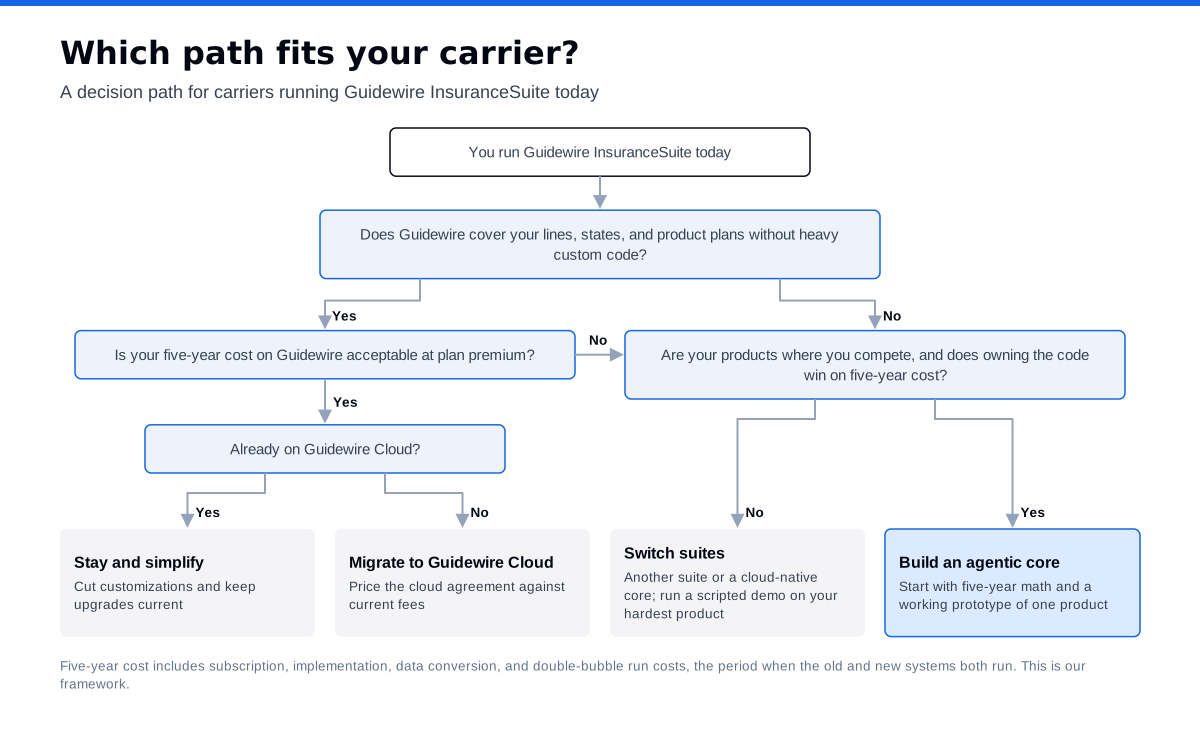
We recommend staying, and simplifying what you have, when your product roadmap fits Guidewire's lines and content, when you have recently finished a major upgrade or a Guidewire Cloud migration, or when your five-year cost on Guidewire beats any replacement once you count conversion and the double-bubble period. Migrating to Guidewire Cloud is the right call when you want to keep the product and hand off infrastructure and upgrades; price the cloud agreement against your current fees before you sign. Replacement belongs on the table when your products are where you compete, premium growth keeps raising your subscription, and owning the code pays back inside five years.
Frequently asked questions
Who are Guidewire's main competitors? Guidewire's fiscal 2026 10-K names Duck Creek, Majesco, Origami Risk, Sapiens, and DXC Technology as P&C software competitors, plus horizontal vendors such as SAP, Salesforce, and ServiceNow. It lists carriers' internally developed systems first and notes that AI may accelerate them. Other common alternatives include Insurity, OneShield, EIS, Socotra, and BriteCore.
Is Duck Creek better than Guidewire? Neither is better for every carrier. Guidewire is public, runs Guidewire Cloud on AWS, and reports more than 570 insurers in 44 countries. Vista Equity Partners owns Duck Creek, which runs OnDemand on Microsoft Azure and reports more than 370 customers. Choose on how each contract prices your premium growth, how long each takes to configure your hardest product, and the talent market where you operate.
Which Guidewire alternatives fit mid-market carriers? Guidewire's own InsuranceNow targets regional and super-regional U.S. carriers and MGAs. BriteCore focuses on mid-size carriers and MGAs in North America, and OneShield Market Solutions bundles implementation, support, and upgrades into one subscription. A custom core can also fit a mid-market carrier with a focused product set when the five-year math favors ownership.
Is Guidewire a big company? Yes, by revenue and reach: Guidewire reported fiscal 2026 revenue of $1,475.4 million and ARR of $1,242 million, and it says more than 570 insurers in 44 countries use its products. It trades on the New York Stock Exchange as GWRE and had 4,174 employees at July 31, 2026, according to its 10-K.
Which insurance carriers use Guidewire? Guidewire says more than 570 insurers in 44 countries use its products, from global carriers to regional and local providers. Its press center announces customer decisions, and in July 2024 it reported that Capital Insurance Group, a regional P&C insurer in the western U.S., had moved InsuranceSuite to Guidewire Cloud for its commercial lines.
Can a carrier build its own core system instead of buying one? Yes, and Guidewire's own 10-K lists internally developed systems, which AI may accelerate, as its first category of competition. A build makes sense when your products are where you compete and owning the code beats a suite subscription plus implementation over five years. Ask for a working prototype of one of your products before you commit.
If your renewal is approaching or premium growth keeps raising your subscription, our Guidewire replacement team will build the five-year comparison with you and prototype one of your own products on a new core.

About the author