What Are Intangible Assets? The Twelve Categories That Hold 90 Percent of Company Value
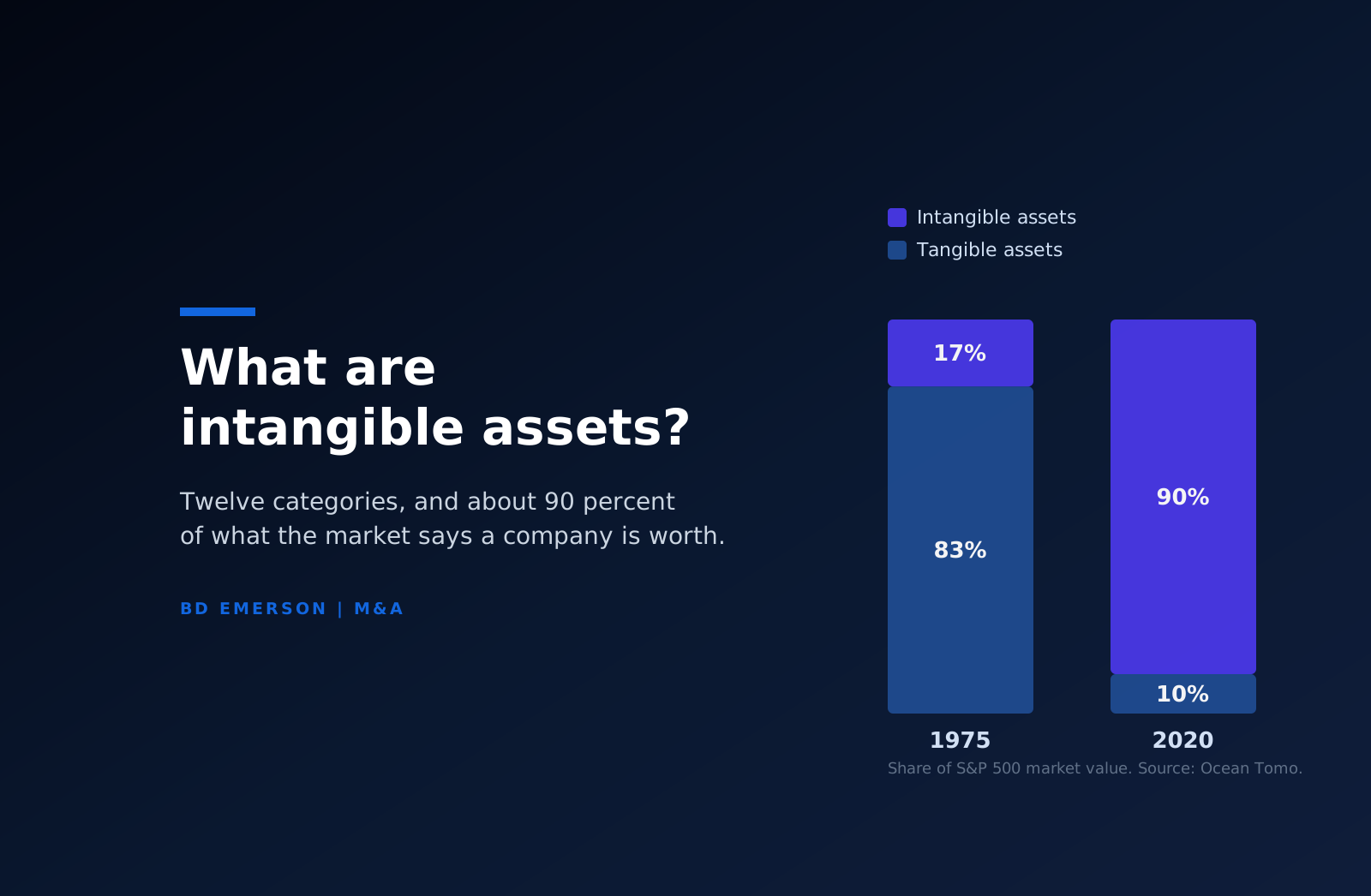
Intangible assets are everything in a business you cannot drop on your foot. That is the definition I have used for twenty years, and it holds up better than the accounting one because it covers what drives value: the data a company has accumulated, the software it runs on, the approvals that let it sell, the brand its customers trust, the relationships that bring repeat revenue, and the know-how in its people's heads. In 1975, about 17 percent of the value of the S&P 500 sat in assets like these. By 2020 the figure was around 90 percent, according to Ocean Tomo's Intangible Asset Market Value Study. Most companies have never listed theirs, let alone valued them. This article is the list, with the twelve categories I use in every engagement and what to do once you have walked through them.
A working definition
The accounting definition, under both IAS 38 and US GAAP, is an identifiable non-monetary asset without physical substance. That is accurate and nearly useless for running a business, because it describes what the asset is not rather than what it does. The operating definition asks a different question: what does this company own or control that a competitor would have to spend years and real money to replicate, and that produces cash flow or protects it?
Ask that question and the answer is rarely the building or the equipment. A device manufacturer's factory can be rebuilt in eighteen months. Its FDA clearance took years and rests on a clinical dataset nobody else has. A lender's offices are interchangeable. Its underwriting data, built from every loan it has ever written, is the reason its loss rates beat the market. The physical assets are the shell. The intangible assets are the business.
From 17 percent to 90 percent
Ocean Tomo has tracked the split between tangible and intangible value in the S&P 500 since 1975. That year, tangible assets accounted for 83 percent of market value. By 2020 they accounted for about 10 percent. The remaining 90 percent is value the market assigns to companies for things their balance sheets mostly do not show.
Two forces drove the shift. The economy moved toward software, services, pharmaceuticals, and platforms, where the product itself is intangible. And even in physical industries, the source of margin moved from making the thing to owning the design, the brand, the distribution relationship, and the data about how the thing is used. A car company's value now depends more on its software, its battery chemistry patents, and its charging network agreements than on its stamping plants.
The shift matters for anyone making a capital allocation decision, because the tools most companies use to make those decisions were built for the 17 percent world. Balance sheets, loan covenants, insurance schedules, and most due diligence checklists still center on assets you can inspect and count. When 90 percent of the value sits outside those tools, the decisions made with them are systematically wrong in the same direction: they underweight what the company owns.
The twelve categories
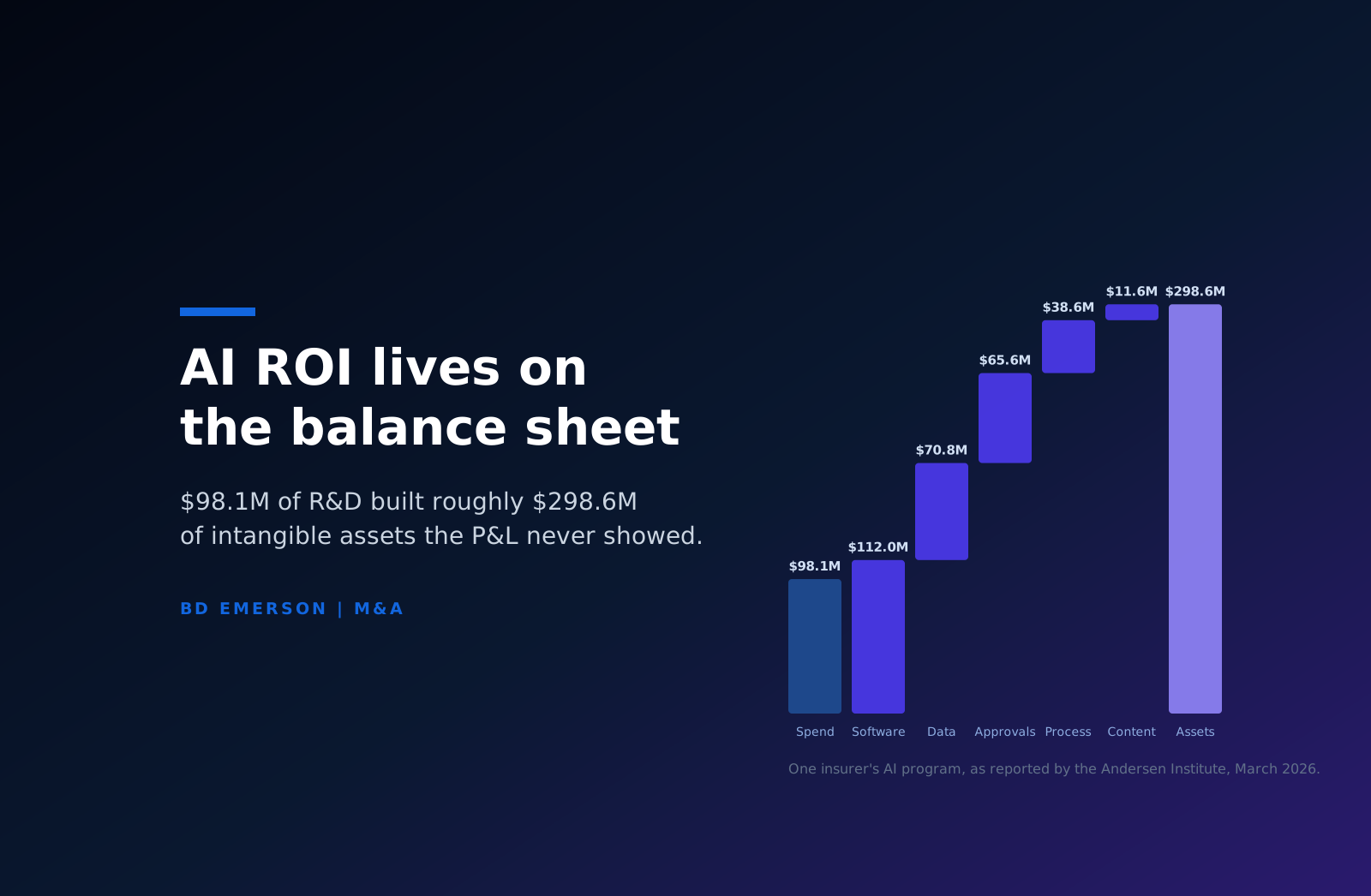
When my colleague Jason Strimpel and I wrote about the relationship between intangible assets and AI for the Andersen Institute earlier this year, we organized the field into twelve categories. The list is the one I use in every engagement, because a company that walks through all twelve almost always finds assets it has never recorded.
- Patents: granted rights and pending applications, valued by the products and margins they protect rather than by their count.
- Software: the codebase, its architecture, and the documentation that makes it maintainable, whether it is sold as a product or run internally.
- Genetic materials: cell lines, seed varieties, strains, and the biological property that underpins agriculture, biotech, and food companies.
- Trade secrets: formulas, processes, and methods that are valuable because they are secret and are protected as such.
- Data: the proprietary records a company accumulates about its customers, operations, and market, as distinct from public data anyone can buy.
- Know-how: the accumulated skill in how work gets done, often held by people rather than in documents.
- Approvals and certifications: regulatory clearances, licenses, and certifications that permit a company to operate or sell where competitors cannot.
- Brand and reputation: the premium customers pay, or the sales cycle they shorten, because of who the company is.
- Design: the visual and functional design of products and interfaces, whether registered or not.
- Content: the written, visual, and audio material a company owns and can use or license.
- Relationships: contracts and standing with customers, suppliers, distributors, and regulators.
- Network effects: the value that accrues because each additional user makes the product more useful to the others.
Every company has some of these. The mix tells you what kind of business it really is. A medical device maker's value concentrates in approvals, patents, and clinical data. A marketplace's value sits in network effects, data, and brand. A consulting firm's sits in know-how, relationships, and reputation. Two companies with identical revenue and identical factories can be worth very different amounts because of which of the twelve they hold and how well those holdings are protected.
Identifiable assets versus goodwill
Accountants split intangibles into two groups, and the split matters most when a company is bought. An identifiable intangible asset is one that can be separated from the business and sold, licensed, or transferred on its own, or that arises from a contract or a legal right. Patents, trademarks, customer contracts, software, and licenses qualify. Goodwill is whatever is left: the amount a buyer paid above the fair value of everything it could identify.
In practice, goodwill is where unidentified intangible assets go to hide. A buyer that does not inventory the target's data, know-how, and relationships before closing will record most of them as goodwill, and goodwill cannot be managed. It sits on the balance sheet until an impairment test writes it down. The same assets, identified and valued, become things a management team can protect, grow, license, and report on. The difference between the two outcomes is whether anyone did the inventory.
Why most of it is invisible
Here is the part that surprises most executives. If a company builds an asset itself, the accounting rules mostly forbid putting it on the balance sheet. IAS 38 prohibits recognizing internally generated brands, customer lists, and similar items outright, and US GAAP expenses research and development as it is incurred. If the same company buys an identical asset from someone else, the asset appears at the price paid.
The result is that the balance sheet of a company that built its position shows almost none of it, while the balance sheet of a company that bought its position shows most of it. Neither number tells you what the assets are worth today. The mechanics of that gap deserve their own article. For now the point is simpler: the absence of an asset from the accounts says nothing about whether it exists or what it is worth, and a management team that reads its own balance sheet as an inventory of what it owns is reading the wrong document.
Where to start
The first step is an inventory, not a valuation. Take the twelve categories and, for each one, write down what the company has, who owns it (the company, a founder, a contractor, a former employee), how it is protected, and which revenue depends on it. Most companies can do a first pass in a few working sessions with the people who run product, sales, legal, and operations. The output is an intangible asset register, and it becomes the reference document for every decision that follows: what to protect, what to value, what to fix before a transaction, and what to tell the board.
Three findings show up in almost every first register. Something material is owned by the wrong entity or by nobody, usually software written by a contractor without an assignment clause, or a brand used for years without a registration. Something valuable is entirely undocumented, usually a process or a dataset that one team relies on and nobody else knows exists. And something the company treats as a cost center, most often its data, turns out to be one of its most valuable assets once you ask what a competitor would pay for it. That last finding is why data strategy and intangible asset strategy have converged. Both start from the same inventory and the same question about what the data is worth and who owns it.
Once the register exists, the valuation question becomes answerable, and so do the strategic ones: which assets drive the company's value, which are at risk, and which are sitting idle. If you want help building the register or putting a defensible number on what it contains, BD Emerson's intangible asset valuation service is where that work starts.

About the author