EU Battery Regulation 2023/1542: What Manufacturers and Importers Must Do
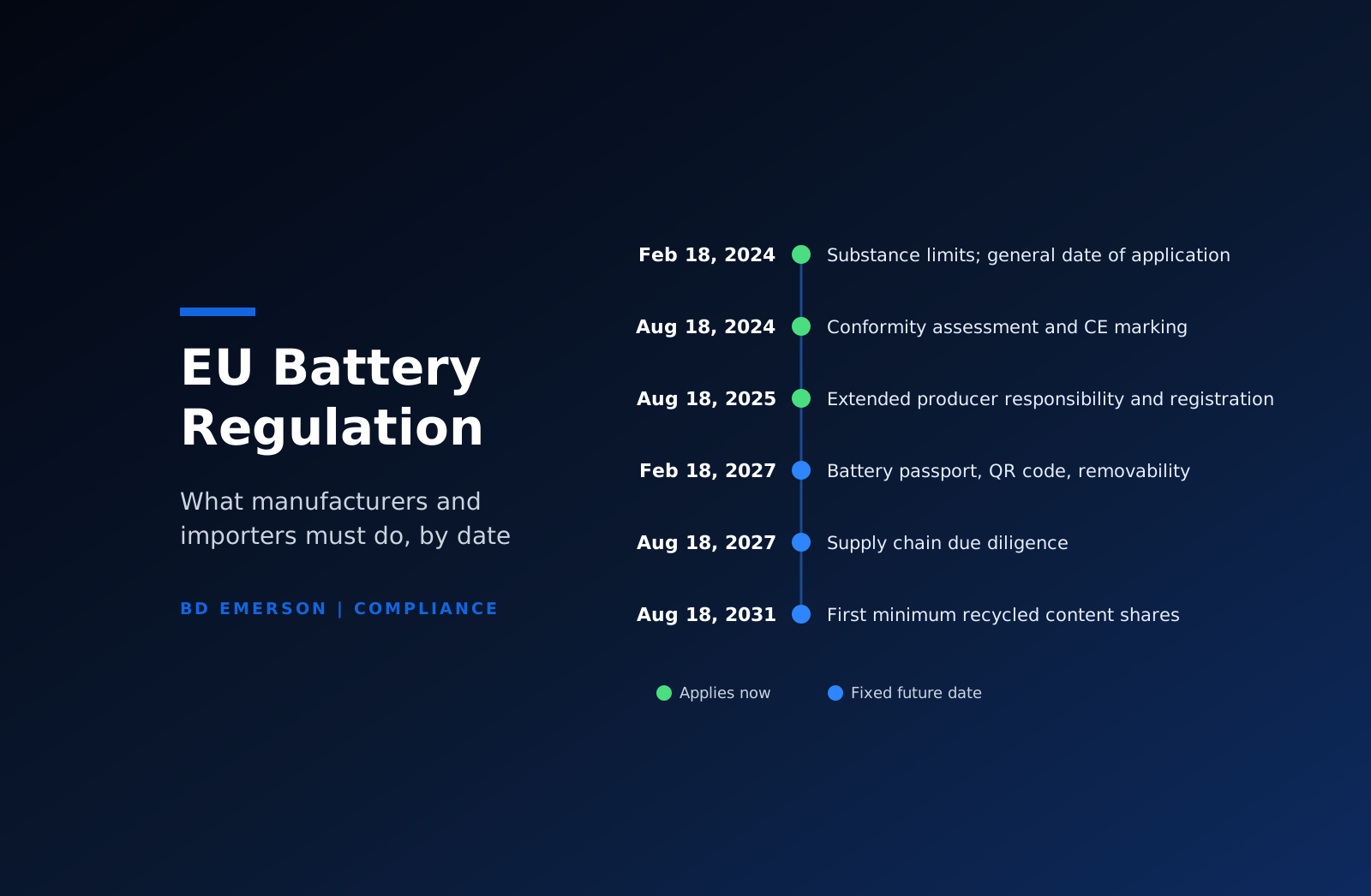
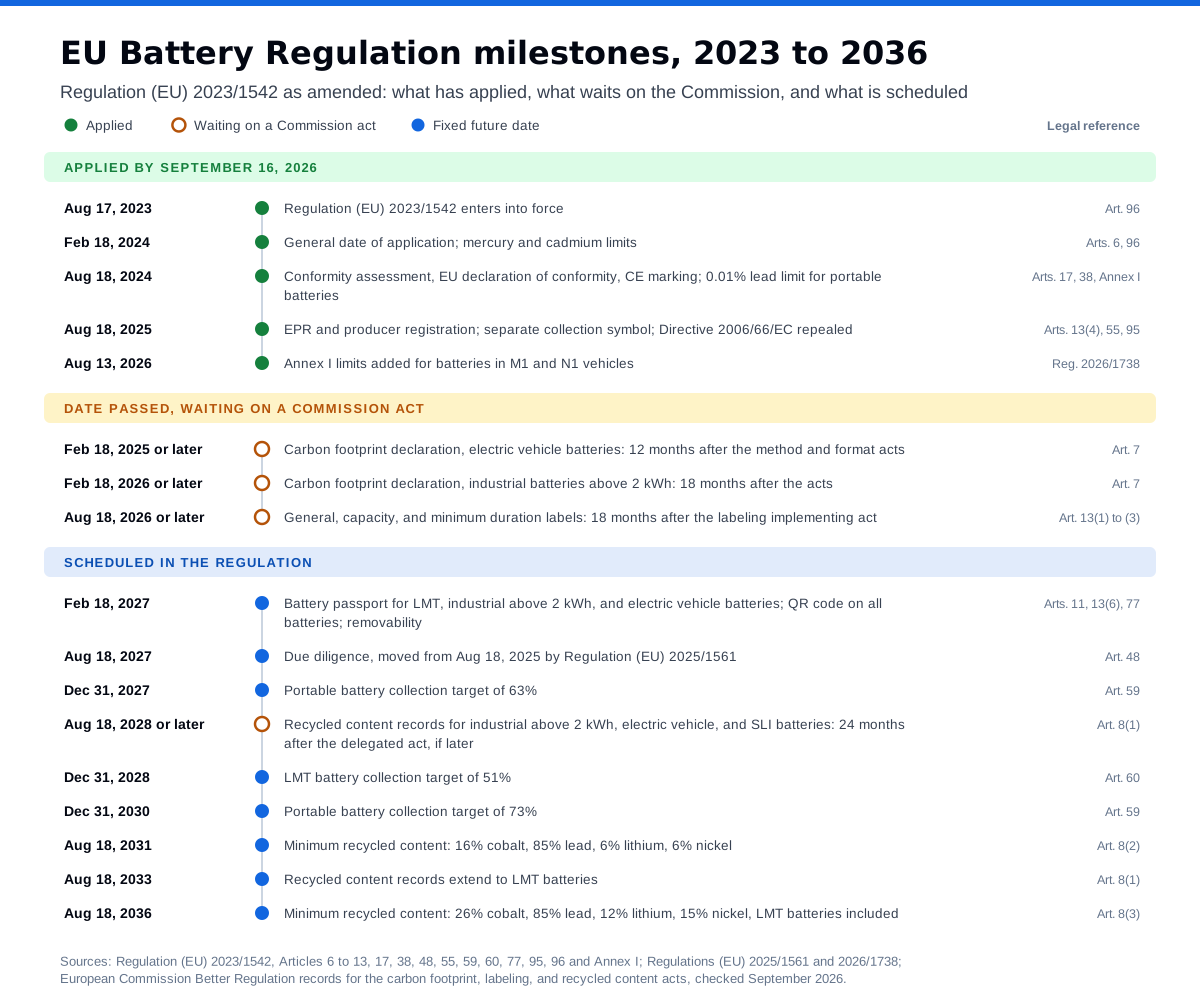
Regulation (EU) 2023/1542, the EU Battery Regulation, entered into force on August 17, 2023, has applied since February 18, 2024, and replaced Directive 2006/66/EC. It sets obligations for manufacturers, authorized representatives, importers, distributors, fulfillment service providers, and producers under extended producer responsibility (EPR), and gives online platforms access to producer registers. It defines five categories: portable, light means of transport (LMT), starting, lighting and ignition (SLI), electric vehicle, and industrial batteries. In September 2026, substance limits, conformity assessment with CE marking, EPR with producer registration, and the separate collection symbol apply. Due diligence starts on August 18, 2027, and the carbon footprint and general label duties wait on Commission acts that are still pending.
Battery categories and how to classify a product
Article 3(1) sets the category, which drives almost every obligation, by design purpose and weight.
| Category | Definition in Article 3(1) |
|---|---|
| Portable (point 9) | Sealed, 5 kg or less, not designed specifically for industrial use, and not an electric vehicle, LMT, or SLI battery |
| LMT (point 11) | Sealed, 25 kg or less, powers the traction of wheeled vehicles driven by a motor alone or with human power, such as e-bikes and e-scooters |
| SLI (point 12) | Supplies power for starting, lighting, or ignition, and can serve auxiliary or backup uses, in vehicles, other transport, or machinery |
| Electric vehicle (point 14) | Provides traction to hybrid or electric vehicles of categories M, N, or O, or to category L vehicles where the battery weighs more than 25 kg |
| Industrial (point 13) | Designed for industrial uses, intended for them after repurposing, or any other battery over 5 kg that fits no other category |
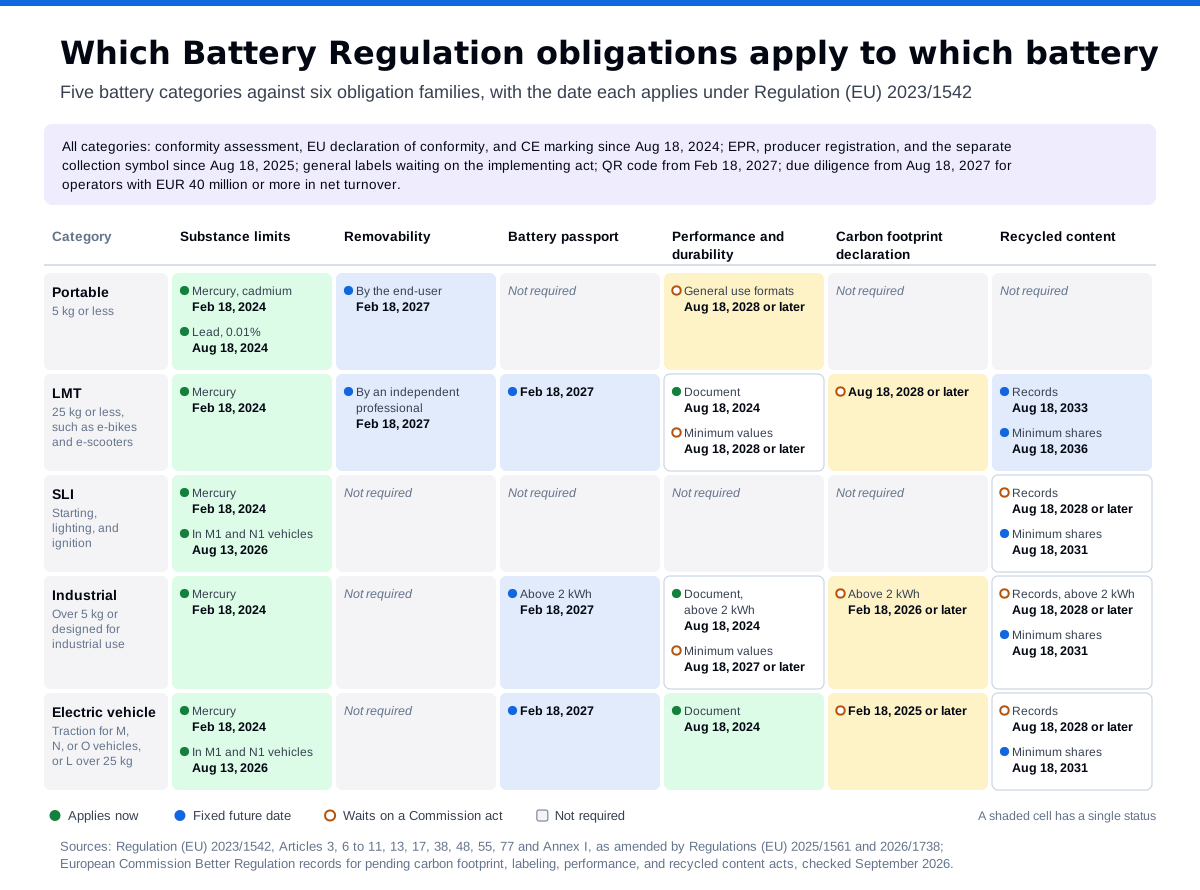
Classify by purpose first and weight second: traction batteries split by vehicle category and the 25 kg line, starter batteries are SLI at any weight, and other batteries are portable up to 5 kg and industrial above it. Stationary energy storage systems are industrial batteries (point 15). Also record whether a portable battery is of general use, such as AA or AAA (point 10), and whether an industrial battery exceeds 2 kWh, the threshold for most sustainability and passport duties. Batteries inside appliances and vehicles are in scope (Article 1(3)).
Obligations that already apply in September 2026
Substance restrictions
Article 6 and Annex I restrict heavy metals on top of REACH Annex XVII. Since February 18, 2024, no battery may exceed 0.0005% mercury by weight and no portable battery 0.002% cadmium. Since August 18, 2024, portable batteries may not exceed 0.01% lead, with zinc-air button cells exempt until August 18, 2028. Regulation (EU) 2026/1738 on end-of-life vehicles amended Annex I from August 13, 2026, adding limits for batteries in M1 and N1 vehicles, such as 0.1% lead and 0.01% cadmium in homogeneous material for electric vehicle and SLI batteries, with exemptions including 12-volt SLI applications.
Conformity assessment, declaration of conformity, and CE marking
Since August 18, 2024 (Article 96), manufacturers must complete conformity assessment, draw up technical documentation and an EU declaration of conformity, and affix the CE marking (Articles 17 and 38). The carbon footprint and recycled content requirements need a notified body under Article 17(2), which applies 12 months after the Commission first publishes its list of notified bodies. Since the same date, rechargeable industrial batteries above 2 kWh, LMT batteries, and electric vehicle batteries must carry a performance and durability document (Article 10(1)), and the battery management systems of stationary storage, LMT, and electric vehicle batteries must hold state of health data (Article 14).
Extended producer responsibility and registration
Chapter VIII, on waste batteries, has applied since August 18, 2025, the day the regulation repealed the Directive (Articles 95 and 96). Producer status is set per Member State: the company established there that makes, rebrands, or first supplies batteries, including those inside products, or a distance seller established elsewhere that sells directly to end-users there (Article 3(1), point 47). Producers register in each Member State where they first make a battery available (Article 55) and finance collection, treatment, information, and reporting, alone or through a producer responsibility organization (Articles 56 and 57). Distance sellers must appoint an authorized representative for EPR in each Member State where they sell (Article 56).
Labels and the collection symbol
Since August 18, 2025, every battery must carry the separate collection symbol (Article 13(4)). The general information label, the capacity label for rechargeable portable, LMT, and SLI batteries, and the minimum duration label for non-rechargeable portable batteries apply from August 18, 2026 or 18 months after the Commission's labeling implementing act enters into force, whichever is later (Article 13(1) to (3)). The Commission published that draft on December 15, 2025, and its initiative record showed no adoption by September 16, 2026, so those labels are not yet mandatory.
Due diligence: postponed to August 18, 2027
Regulation (EU) 2025/1561 of July 18, 2025, part of the Commission's Omnibus IV simplification package, replaced "18 August 2025" with "18 August 2027" in Article 48(1) and moved the deadline for the Commission's guidelines to July 26, 2026. From August 18, 2027, operators placing batteries on the market must run due diligence policies for the cobalt, natural graphite, lithium, nickel, and compounds listed in Annex X, verified by a notified body (Article 48). Article 47 exempts operators with net turnover below EUR 40 million, unless their group exceeds that figure. Omnibus IV proposal COM(2025) 501 would raise that threshold for small mid-cap companies; the Council and Parliament agreed on it provisionally on June 9, 2026, and it had not entered into force by mid-September 2026.
Carbon footprint: waiting on the Commission
Article 7 phases in a carbon footprint declaration, then a performance class label, then a maximum threshold. For electric vehicle batteries, the declaration applies from February 18, 2025 or 12 months after the delegated act on the calculation method and the implementing act on the declaration format enter into force, whichever is the latest. The Commission published both drafts on April 30, 2024, and its records show neither act adopted (calculation method, declaration format), so no battery yet needs a declaration. Rechargeable industrial batteries above 2 kWh (February 18, 2026), LMT batteries (August 18, 2028), and industrial batteries with exclusively external storage (August 18, 2030) follow the same structure, applying from the later of those dates or 18 months after the Commission's acts enter into force.
Obligations scheduled in the regulation
Battery passport and QR codes
From February 18, 2027, each LMT battery, industrial battery above 2 kWh, and electric vehicle battery placed on the market or put into service needs a battery passport, reached by QR code through a unique identifier (Article 77). The operator placing the battery on the market keeps the passport accurate and up to date and uploads the identifier to the EU digital product passport registry under Article 77(10), which Regulation (EU) 2024/1781 added. The Commission opened the registry on July 20, 2026 and published Digital Batteries Passport guidance on August 21, 2026. Every battery needs a QR code from the same February date (Article 13(6)). Our EU battery passport guide covers the details.
Removability and replaceability
From February 18, 2027, portable batteries in products must be readily removable and replaceable by the end-user, using commercially available tools or specialized tools supplied free with the product, and without proprietary tools, heat, or solvents (Articles 11 and 96). Appliances built for regular exposure to water, where safety requires it, and professional medical imaging, radiotherapy, and in vitro diagnostic devices may limit replacement to independent professionals. The end-user duty does not apply where safe continuity of power, or data integrity in products whose main function is collecting data, requires a permanent connection. LMT batteries and their cells must be replaceable by an independent professional, and batteries must stay available as spare parts for five years after a model's last unit. The Commission issued guidelines on January 10, 2025 and, on July 14, 2026, adopted a delegated regulation, C(2026)5031, adding exempted product categories, subject to objection by the Parliament or the Council.
Recycled content
Industrial batteries above 2 kWh (except those with exclusively external storage), electric vehicle batteries, and SLI batteries must document their shares of recycled cobalt, lead, lithium, and nickel from August 18, 2028 or 24 months after the methodology delegated act enters into force, whichever is later, and LMT batteries from August 18, 2033 (Article 8). The Commission published the draft act on August 12, 2026. Minimum shares apply from August 18, 2031 (16% cobalt, 85% lead, 6% lithium, 6% nickel) and from August 18, 2036 (26%, 85%, 12%, and 15%), when LMT batteries join.
Performance and durability
Minimum performance and durability values apply to rechargeable industrial batteries above 2 kWh, except those with exclusively external storage, from August 18, 2027 and to LMT batteries and portable batteries of general use from August 18, 2028, or 18 months (24 for portable batteries) after the delegated act setting the values enters into force, if that is later (Articles 9 and 10). The industrial act was due by February 18, 2026, and its Commission record showed no published draft by September 2026.
Collection targets
Portable battery producers must reach collection rates of 63% by December 31, 2027 and 73% by December 31, 2030 (Article 59), and LMT producers 51% by December 31, 2028 and 61% by December 31, 2031 (Article 60). Producers of SLI, industrial, and electric vehicle batteries must take back waste batteries free of charge (Article 61).
Battery Regulation dates at a glance
"Pending" means the date waits on a Commission act not in force by September 16, 2026.
| Obligation | Battery categories | Date of application | Legal reference |
|---|---|---|---|
| Mercury, cadmium, and lead limits | All (mercury), portable (cadmium, lead) | February 18, 2024; lead from August 18, 2024 | Art. 6, Annex I |
| Limits for batteries in vehicles | M1 and N1 vehicle batteries | August 13, 2026 | Reg. (EU) 2026/1738, Art. 53 |
| Conformity assessment and CE marking | All | August 18, 2024 | Arts. 17, 38, and 96 |
| EPR, producer registration, and collection symbol | All | August 18, 2025 | Arts. 13(4), 55 to 61, and 96 |
| General, capacity, and duration labels | All, by type | August 18, 2026 or 18 months after the act (pending) | Art. 13(1) to (3) |
| Carbon footprint declaration | Electric vehicle | February 18, 2025 or 12 months after the acts (pending) | Art. 7 |
| Battery passport; QR code | LMT, industrial above 2 kWh, electric vehicle; QR code on all | February 18, 2027 | Arts. 77 and 13(6) |
| Removability and replaceability | Portable in products, LMT | February 18, 2027 | Arts. 11 and 96 |
| Due diligence | Operators at or above EUR 40 million turnover | August 18, 2027 | Art. 48, as amended by Reg. (EU) 2025/1561 |
| Recycled content documentation | Industrial above 2 kWh, electric vehicle, SLI | August 18, 2028 or 24 months after the act (pending) | Art. 8(1) |
| Minimum recycled content | Industrial above 2 kWh, electric vehicle, SLI, plus LMT from 2036 | August 18, 2031 and August 18, 2036 | Art. 8(2) and (3) |
What each economic operator must do
Manufacturers carry the Article 38 duties: design, technical documentation, conformity assessment, declaration, CE marking, identification, and corrective action. An importer or distributor that sells a battery under its own name or trademark, modifies it in a way that could affect compliance, or changes its purpose becomes its manufacturer (Article 44).
Importers may place only compliant batteries on the market, and Article 41 requires these checks before the first sale:
- The manufacturer completed conformity assessment and drew up the technical documentation and the EU declaration of conformity.
- The battery bears the CE marking and the Article 13 labels and symbols.
- The required documents and instructions come in a language end-users easily understand.
- The manufacturer has marked its model identification, batch or serial number, name, and postal address.
- The importer adds its own name, registered trade name or trademark, and postal address.
- The importer keeps a copy of the declaration for 10 years and can produce the technical documentation on request.
Importers must hold back suspect batteries and report risky ones to the manufacturer and the market surveillance authorities, and an importer that first supplies batteries in the Member State where it is established is also the producer there.
Distributors check producer registration, markings, documents, and identification (Article 42). Producers register and finance EPR in each Member State (Articles 55 and 56). Authorized representatives act under a written mandate and keep the file for 10 years, and the mandate cannot cover design, due diligence, or drafting the technical documentation (Article 40). Fulfillment service providers protect compliance during warehousing and dispatch and report risky batteries (Article 43). Online platforms that host distance sales get free access to non-public producer registers to check sellers (Article 55(13)).
Penalties and enforcement
Article 93 leaves penalties to the Member States, which must make them effective, proportionate, and dissuasive and had to notify their rules to the Commission by August 18, 2025. The regulation sets no EU fine level. Under Article 79, when a market surveillance authority finds that a battery presenting a risk fails to comply, it orders corrective action, withdrawal, or recall within a set period, and if the operator fails to act, the authority can prohibit or restrict sales and must notify the Commission and the other Member States. Article 83 lets authorities act on formal defects alone, such as a missing CE marking, declaration, technical documentation, or importer contact details, up to withdrawal or recall.
How to prepare
Classify the portfolio: record each battery's category, weight, capacity, chemistry, and general-use status, and list the Member States where you are the producer.
Build an obligations register from the dates table, with an owner, evidence, and status for each line, and treat each pending Commission act as a trigger that starts a clock. A GRC program can hold it beside ISO 27001 or SOC 2 controls.
Set up supplier data collection for due diligence on cobalt, natural graphite, lithium, and nickel and for carbon footprint and recycled content inputs, with the same questionnaires and evidence review that third-party risk management uses. BD Emerson does not calculate carbon footprints; we specify what the delegated act requires and manage the LCA provider's data.
Plan the passport before February 18, 2027: data model, identifiers, QR codes, access levels, and the registry upload. Battery and ESPR passports share the EU registry, so one design can serve both, as our digital product passport guide explains.
Assign an owner to each obligation family, such as procurement for due diligence and IT for the passport. Our ESPR and digital product passport team maps products to roles, obligations, and dates, runs supplier data collection, selects and integrates the passport platform, and designs passport security. BD Emerson is not a notified body and does not perform conformity assessment.
Frequently asked questions
Does the EU Battery Regulation apply to US companies? Yes. The regulation applies whenever their batteries reach the EU market, alone or inside products. The EU importer, distributor, or producer carries the obligations, and a US company selling directly to EU end-users is the producer in each Member State it sells into and must appoint an authorized representative for EPR there.
Did the battery labeling requirements start on August 18, 2026? The general information, capacity, and minimum duration labels did not start on that date, because Article 13 applies them 18 months after the Commission's labeling implementing act enters into force if that is later, and the Commission had not adopted that act by September 16, 2026. The separate collection symbol has applied since August 18, 2025.
When does battery due diligence apply? Battery due diligence applies from August 18, 2027, because Regulation (EU) 2025/1561 postponed the original August 18, 2025 date. It covers operators with net turnover of EUR 40 million or more, or in a group above that figure, and a notified body must verify their policies.
Do electric vehicle batteries need a carbon footprint declaration now? No electric vehicle battery needs one yet. The declaration applies 12 months after the Commission's calculation method and declaration format acts enter into force, if that is later than February 18, 2025, and the Commission had adopted neither act by September 16, 2026.
Which batteries need a battery passport? From February 18, 2027, every LMT battery, industrial battery above 2 kWh, and electric vehicle battery placed on the market or put into service needs one under Article 77. Portable and SLI batteries do not need a passport, though every battery must carry a QR code from that date.
If your products contain batteries or other goods that need a digital product passport, our ESPR compliance practice can map each product to its obligations and dates and plan the passport data, supplier inputs, and platform.

About the author