Intangible Asset Due Diligence: What the IP Audit Finds That the Checklist Misses
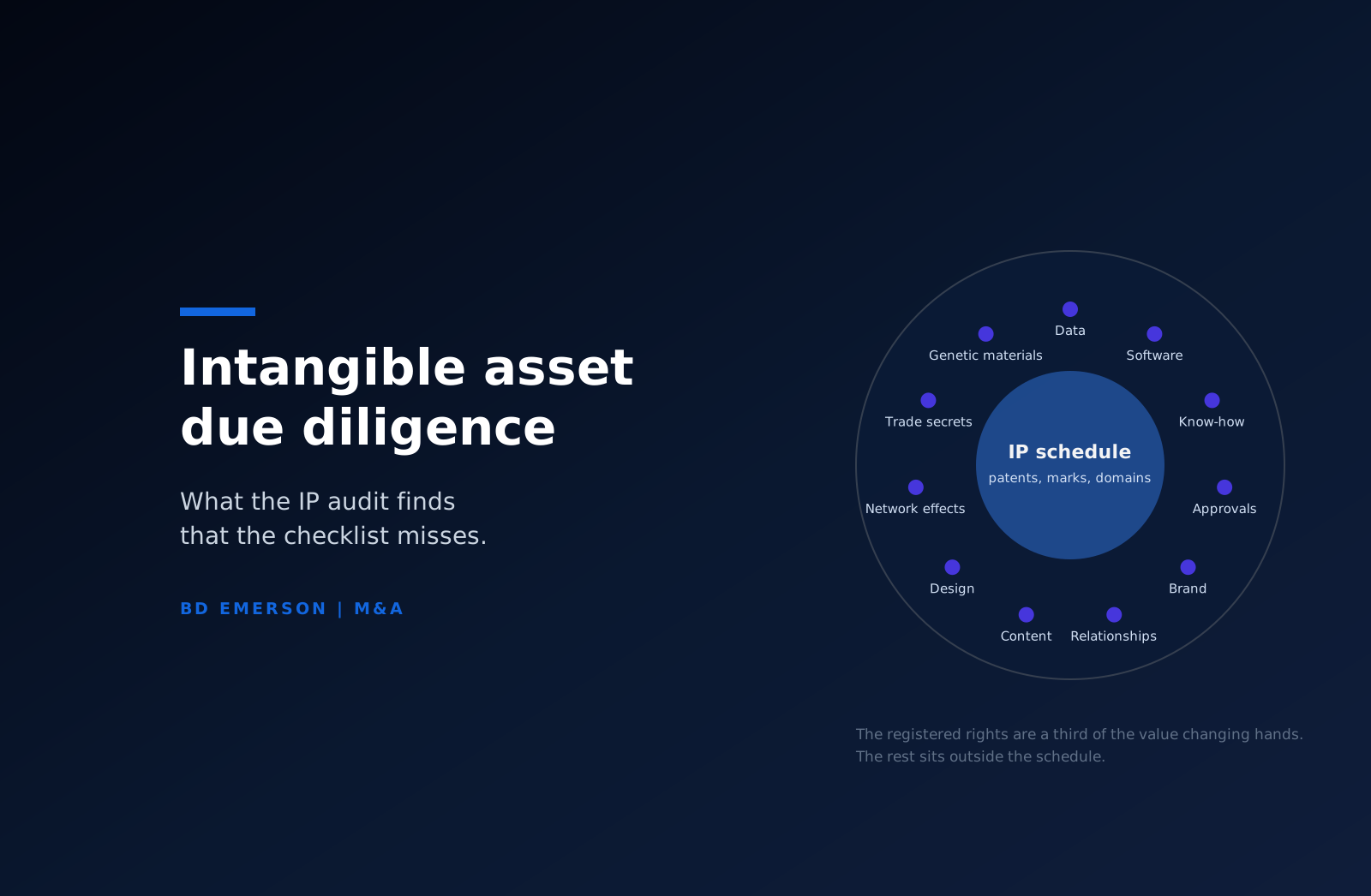
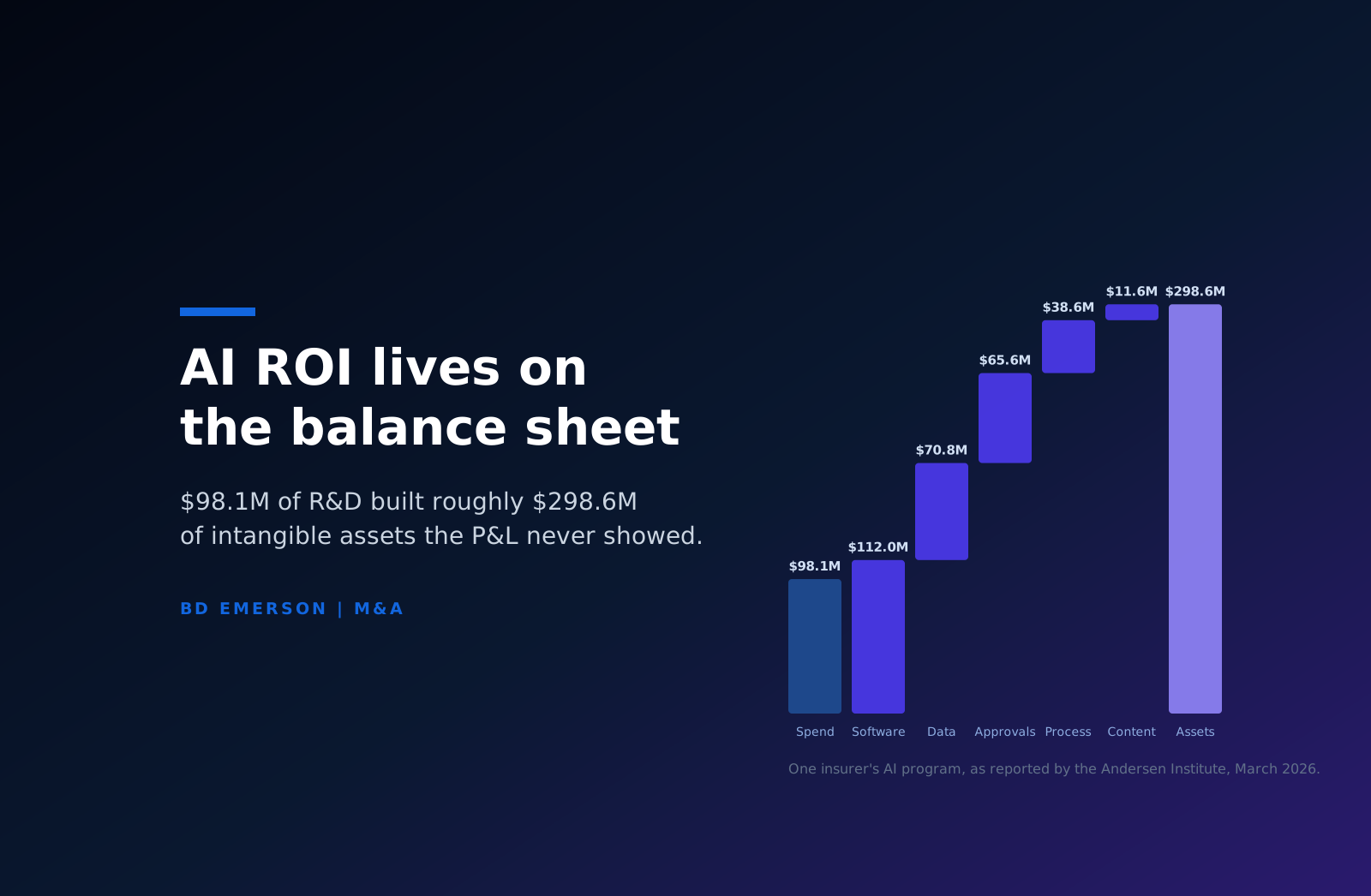
Intangible asset due diligence is the workstream that finds out what a buyer is paying for. In most acquisitions, the IP schedule attached to the purchase agreement lists the registered rights, patents, trademarks, and domain names, and the legal team confirms they exist and are owned. That covers perhaps a third of the intangible value changing hands. The data, the software, the know-how, the approvals, the relationships, and the brand as a commercial asset rather than a registration sit outside the schedule, and they are usually the reason the buyer wants the company. An intangible asset due diligence inventories all of it, verifies the target's rights to it, maps which of it the forecast depends on, values what is material, and finds the encumbrances that change the price. On the sell side, the same exercise run a year before a process is called an IP audit, and it is the highest-return preparation a seller can do.
Why the IP schedule is a third of the picture
Registered IP is easy to diligence because it is registered. A patent has a number, a filing date, an owner of record, and a public file history. A trademark has a registration and a class. The legal workstream checks these, confirms the assignments, and reports. That is necessary work, and it is where most diligence stops on the intangible side.
The problem is that registered rights are a minority of what makes a modern company valuable. Across the twelve categories of intangible asset, only patents, trademarks, and some design rights are registered. Data, software, know-how, approvals, relationships, content, and network effects are not, and they are the categories where value concentrates in software, healthcare, financial services, and consumer businesses. A buyer whose diligence covers the registered third and treats the rest as goodwill has priced the deal on the smallest part of what it is buying.
The buy-side workstream
Buy-side intangible asset diligence runs in five steps, and the order matters because each step depends on the one before it.
The first is inventory. The team builds an intangible asset register for the target across all twelve categories, working from the data room, management interviews, and a review of the product, the technology stack, and the customer base. The output is a list of what the company has, not yet what it is worth or whether it owns it.
The second is rights verification. For each material asset, the team establishes whether the target has the right to use it and to transfer it. For data, that means checking the consents and terms under which it was collected and whether they permit the intended use after closing. For software, it means checking employee and contractor assignments and scanning the codebase for open-source components with restrictive licenses. For brands, it means matching the registrations to the territories where the brand is in use. For know-how, it means finding out who holds it and whether they are staying.
The third is dependency mapping, which I cover below. The fourth is valuation of the material assets, using the methods I described in an earlier article on IP valuation and its companion on the broader intangible categories, at a depth matched to the deal timetable. The fifth is translating the findings into deal terms: price, structure, representations, and specific indemnities.
Dependency mapping
The step that most distinguishes intangible asset diligence from an IP checklist is dependency mapping. The buyer's investment case rests on a forecast. The forecast rests on the business continuing to do what it does. Dependency mapping asks which intangible assets the forecast depends on, and how exposed each of them is.
A software company's forecast might depend on a codebase, a customer dataset, a regulatory approval, and three distribution relationships. If the codebase includes a component under a license that prohibits commercial redistribution, the product cannot legally be sold as it stands. If the customer dataset was collected under terms that do not permit the buyer's intended use, the cross-sell thesis fails. If the approval is held by a subsidiary that is not part of the deal, the product cannot be sold. If two of the three distribution relationships are personal to the founder, they may not survive the founder's exit.
None of these appears on an IP schedule. Each of them can remove a large share of the value the buyer is paying for. Dependency mapping puts them in front of the deal team before signing, when price and structure can still change, rather than after closing, when the only remedies are litigation and write-downs. The exercise also tells the buyer which assets deserve a full valuation and which can be noted and moved past, which is how a diligence workstream stays inside a deal timetable.
The encumbrances that reprice
An encumbrance is anything that limits the target's rights to an asset or the buyer's ability to use it. The ones that most often change a price are exclusive licenses already granted to third parties, which can leave the owner with an asset it cannot exploit in its own best market; co-ownership interests arising from joint development or university collaborations, which can block licensing without the co-owner's consent; change-of-control provisions in key contracts, which let a customer or supplier walk away at closing; data collected under consents that do not travel with the business; and prior ownership gaps, where a contractor or former employee never assigned rights and could assert them later.
The medical device sector illustrates the stakes, because the value there concentrates in approvals, clinical data, and patents. I made the point in an interview last year that manufacturers must document who created each asset, when, and under what agreement, because that documentation is what a buyer's diligence team will ask for first. A device company whose clearance rests on a clinical dataset it cannot show it owns has a chain of title problem sitting under its most valuable asset.
Sell-side: the IP audit
Everything above is run by buyers against sellers who are usually finding out about their own gaps in real time, under a deadline, with a counterparty watching. The IP audit is the sell-side answer. It is the same inventory and rights verification exercise, run by the company on itself, ideally twelve months before a sale process begins.
The audit produces the intangible asset register a buyer will ask for, and it surfaces the fixable problems while there is still time to fix them. Unregistered brands get registered in the territories where they are used. Missing contractor assignments get executed. Know-how that lives in one person's head gets documented. Open-source components with problematic licenses get replaced. Co-ownership arrangements get clarified or bought out. Each of these is a modest task a year before a process and a price negotiation during one. The audit also lets the seller lead with its intangible assets in the information memorandum, with values and evidence attached, rather than waiting for the buyer to discover them and discount them for uncertainty.
Companies that run an IP audit as a standing annual exercise, rather than as sale preparation, get a second benefit: the register becomes a management tool for protecting and growing the assets, and the sale readiness comes for free. Sellers who want to run one as part of a broader sell-side preparation should start with the register and the rights file before anything else.
From findings to price and protections
Diligence findings are only useful if they reach the deal. Intangible asset findings reach it through three channels. Material issues that reduce value go to price, with the valuation providing the basis for the adjustment. Issues that cannot be resolved before closing go to structure, through escrows, earnouts tied to the affected revenue, or deferred consideration. And issues that are probably fine but cannot be proven go to the purchase agreement, through representations and warranties on ownership and non-infringement, and specific indemnities where a known gap exists.
The strongest position for a buyer is to arrive at the negotiation with the register, the dependency map, and the valuations in hand, because every point in the discussion then rests on something specific. The strongest position for a seller is to have arrived there first. Intangible asset diligence sits inside a broader M&A due diligence scope alongside financial, commercial, operational, and technology workstreams, and it is the one most often left out. If you are buying and want to know what you are paying for, or selling and want to know what a buyer will find, BD Emerson's intangible asset valuation service runs the workstream on either side of the table.

About the author