Medical Practice Valuation: Methods, Multiples, and What Moves the Number
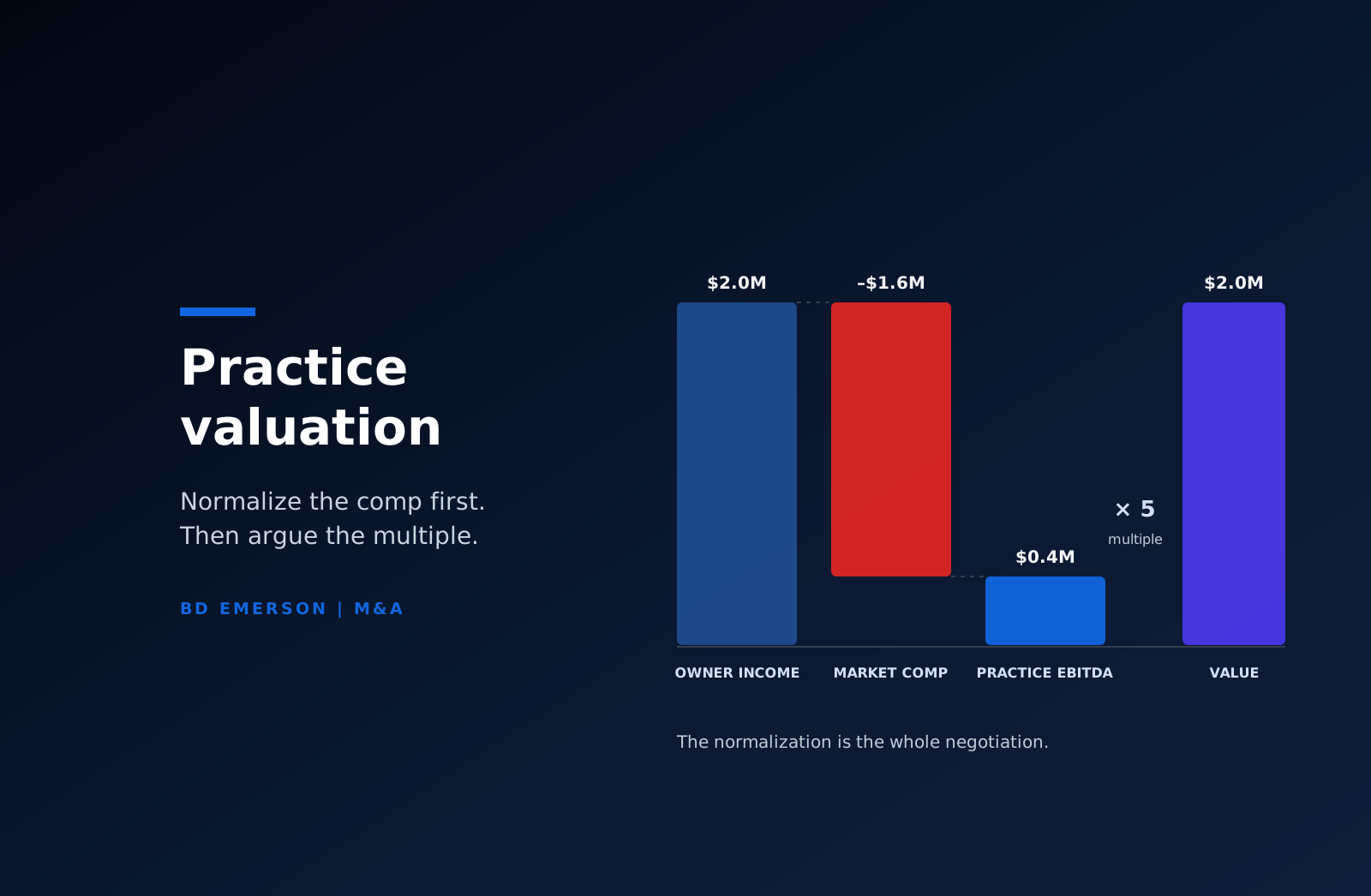
Medical practice valuation starts with a number most practices have never calculated: what the practice earns after its physicians are paid a market wage for the work they do. In an independent practice, the physician-owners typically take everything the practice makes as compensation and distributions, so the reported profit is zero or arbitrary, and the first job of a valuation is to normalize physician compensation to market and see what earnings remain. That normalized EBITDA, multiplied by a rate that reflects the practice's specialty, scale, payer mix, and risk, is the core of the income approach that dominates practice valuation today. Market and asset approaches serve as cross-checks and floors. And for any transaction involving a hospital or health system buyer, the whole exercise runs inside a regulatory constraint: the price must be fair market value, determined without regard to referrals, or the deal violates the Stark Law. This article covers the three approaches, the compensation normalization that decides the number, what moves the multiple, and the fair market value rules.
The three approaches, and which one buyers use
Valuation theory offers three approaches, and practice deals use all three in a fixed hierarchy. The income approach values the practice on the cash flow it will produce for an owner, either by capitalizing a single normalized year of earnings at a multiple or by discounting a multi-year forecast; it is the primary method because a practice's value to a buyer is exactly its future earnings. The market approach values the practice against comparable transactions, expressed as multiples of revenue or EBITDA paid for similar practices, and serves to test whether the income approach's multiple is reasonable in the current market for the specialty. The asset approach values the tangible assets, equipment, receivables, and working capital, less liabilities, and sets a floor, the number a practice is worth if it has no earnings power beyond its physicians' labor, which for many small practices is the actual answer. A defensible valuation reconciles all three and explains why they differ.
Normalizing physician compensation
The normalization is the decisive step and the most contested. The valuer replaces what the physician-owners actually took with what the buyer will pay them post-close, or with market compensation for their specialty and productivity if the post-close model is not yet set. Market compensation comes from published survey data by specialty, adjusted for the physician's productivity, often measured in work relative value units, and for geography. The difference between historical owner take and market compensation is the practice's earnings, and it can be large in either direction: a highly productive surgeon paying herself below market leaves substantial EBITDA in the practice, while a practice whose owners took modest salaries and large distributions may show earnings that evaporate once compensation is set at market. The same normalization applies to other owner-related items, family members on payroll, personal expenses run through the practice, above- or below-market rent paid to an owner-controlled real estate entity, and one-time items, following the same logic as any earnings normalization, covered in our guide to EBITDA adjustments. Buyers and sellers argue about every line, and the argument is really about how much of the practice's income is the physicians' labor and how much is the enterprise.
What moves the multiple
Once normalized EBITDA is set, the multiple carries the rest of the negotiation, and it moves on a consistent set of drivers. Scale: larger groups with more providers command higher multiples because their earnings do not depend on any one physician and because they offer a buyer a platform rather than an add-on. Specialty and consolidation dynamics: specialties in active consolidation by private equity platforms have seen multiples well above those in specialties without a platform bid, and the gap between a platform acquisition and a tuck-in acquisition of a small practice in the same specialty can be several turns. Payer mix: commercial-heavy practices are worth more than government-heavy ones because of rate levels and rate risk. Ancillary revenue: in-office imaging, labs, infusion, ambulatory surgery, and other ancillaries add earnings and usually earn a higher multiple than professional fees alone, subject to the regulatory rules on physician ownership of ancillaries. Provider age and succession: a practice whose physicians are within a few years of retirement is worth less unless succession is in place. Contract and compliance quality: assignable payer contracts, clean coding audits, and a documented compliance program reduce the risk discount. Small independent practices frequently transact in the low-to-mid single digits of normalized EBITDA, and platform-scale groups in consolidating specialties have transacted at high single digits and above, with everything in between explained by the drivers here. Any specific multiple quoted without the specialty, scale, and structure attached is decoration.
The fair market value constraint
When the buyer is a hospital, health system, or any entity that receives referrals from the physicians being acquired, the valuation operates under the Stark Law and the Anti-Kickback Statute. The price paid for the practice and the compensation paid to the physicians afterward must both be consistent with fair market value and commercially reasonable, and neither may take into account the volume or value of referrals the physicians generate for the buyer. Practically, this rules out paying for the referral stream a hospital buyer would gain, which is often the real strategic motive, and it means the income approach must value the practice's own earnings, not the downstream hospital revenue. It also constrains post-close compensation: a hospital cannot make up a lower purchase price with above-market salaries. Independent valuation opinions are standard in these transactions for exactly this reason, and the valuation report becomes a compliance document as much as a pricing tool. Private equity and other non-referral-receiving buyers do not face the Stark constraint on price, but the practice's own arrangements with referral sources still have to be clean.
Personal goodwill, enterprise goodwill, and what is actually being bought
Practice valuations distinguish between enterprise goodwill, the value that attaches to the practice's location, systems, contracts, staff, and reputation as an institution, and personal goodwill, the value that attaches to individual physicians' relationships and reputations and leaves with them. The distinction matters for tax structuring in asset deals and for what a buyer is really acquiring: a practice whose value is mostly personal goodwill is a set of employment agreements with a purchase price attached, and the buyer's protection is retention structure and non-compete enforceability rather than the asset itself. The diligence and integration work that protects that value is covered in our guide to physician practice acquisition.
Sell-side: what a practice can do about its own number
Practices that expect to transact within two or three years can move their valuation before a buyer ever sees it. Clean financial statements on an accrual basis with physician compensation shown separately from distributions, so the normalization is transparent rather than reconstructed. A coding audit performed and remediated, since a buyer's audit will find the same issues with a discount attached. Payer contracts renegotiated where they have lapsed and reviewed for assignability. Ancillary services evaluated for compliance and documented. Succession addressed, with younger physicians bound by agreements that survive a sale. A sell-side quality of earnings review, which for a practice is mostly the normalization exercise done by an outside party, produces the number the seller can defend line by line, as described in our guide to quality of earnings reports. Each of these is a few months of work that changes the multiple or removes a discount, and each is cheaper before the process than in it.
Where BD Emerson fits
BD Emerson performs practice valuations and fair market value analyses through our transaction valuation practice, for health systems and platforms pricing an acquisition, for practices preparing to sell, and for hospital-physician arrangements that need a documented FMV opinion to withstand regulatory scrutiny. The valuation work runs alongside the diligence, so the compensation normalization, the coding findings, and the payer contract review inform the same number.

About the author