Intangible Asset Strategy: How to Get More Value From the Assets You Already Own
An intangible asset strategy is a plan for getting more value out of the assets a company already owns: its data, software, patents, brands, approvals, know-how, and relationships. Most companies have one for their tangible assets, called a capital plan, and none for the assets that make up the other 90 percent of their value. The strategy has six moves. Build the register and give every asset an owner. Protect what can be protected. Close the gaps in title before anyone else finds them. Put the assets to work through licensing, new markets, pricing, and financing. Measure them and report the value to the board. And stop the leaks that quietly erode them. A company that does these six things over a year will usually find it is worth more, can borrow more cheaply, and has more strategic options than it did, without having built or bought anything new.
The foundation problem
I have described intangible assets to clients as the foundation of a building. The foundation determines the size and type of building you can put on top of it. A company with strong intangible assets, a protected brand, proprietary data, exclusive approvals, and durable relationships, can build in many directions: new products, new markets, licensing income, partnerships, premium pricing. A company with weak or unprotected intangible assets has a narrow set of options, however good its current numbers look, because every direction it might grow in is exposed to a competitor with a better foundation.
The trouble is that most management teams have never looked at the foundation. They know their revenue, their margins, and their headcount. They do not know which of their assets a competitor would most want, which are protected and which are not, or which of them the next five years of growth depends on. Strategy work that starts from the P&L misses this entirely. Intangible asset strategy starts from the assets and works forward to the options they create.
Build the register and assign owners
The first move is the one I recommend in every context, because nothing else is possible without it. The intangible asset register lists what the company has across all twelve categories, who owns it legally, who is responsible for it operationally, how it is protected, what revenue depends on it, and what it is worth. The valuation methods can come later. The inventory has to come first.
The ownership column is the one most companies leave blank, and it is the one that changes behavior. A patent with no internal owner lapses when a renewal fee is missed. A dataset with no owner gets collected under inconsistent terms, degrades, and cannot be used when the company finally wants to. A brand with no owner gets used inconsistently across markets and never registered in the ones that matter. Assigning a named executive to each material asset, with the asset's value and risks on their objectives, is the single cheapest intervention in the whole program.
Protect what is protectable
Protection means three things. Registration, where the asset class allows it: patents for inventions worth defending, trademarks in every territory where the brand is used or will be used within three years, and registered designs where the product's appearance is part of its value. Contracts, for everything else: invention and copyright assignments from every employee and contractor, confidentiality agreements that define what is confidential, license terms that reserve the rights the company will need, and data terms that permit the uses the company intends. And controls, for trade secrets and data: access restricted to people who need it, logged, and reviewed, because a trade secret with no secrecy controls is not a trade secret and a dataset with no access controls is a liability.
The judgment in this move is what not to protect. Patenting everything is expensive and discloses the invention to competitors. Some inventions are better held as trade secrets. Some brands are not worth registering in markets the company will never enter. A protection strategy is a set of choices about where legal cost buys real exclusivity, and it should be revisited each year as the register is updated.
Close the gaps in title
Every first register turns up assets the company does not clearly own. Software written by a contractor who never signed an assignment. A brand registered to a founder personally. A patent from a university collaboration with an unresolved co-ownership clause. A dataset licensed in on terms that expired. These gaps are cheap to fix when the company finds them and expensive when a buyer, a lender, or a litigant does. The due diligence workstream I described in an earlier article exists to find them from the outside; the strategy move is to find them from the inside first.
The fix is usually an assignment agreement, a re-registration, a license renewal, or a negotiated buyout of a co-owner's interest. The work is legal and administrative rather than strategic, which is why it gets deferred, and why it is worth putting on a calendar with an owner and a deadline. A company that closes its title gaps in a quiet year negotiates from strength in a busy one.
Put the assets to work
This is the move that turns the register from a defensive document into a growth plan. Each material asset gets the same question: is this asset generating all the value it could, and if not, how could it generate more? The answers fall into four groups.
Licensing takes an asset the company uses in one market and earns income from it in others, through patent licensing, brand licensing, data licensing, or technology licensing to non-competing partners. New markets take an asset that works in one geography or segment and use it to enter another, where the brand, the approval, or the technology shortens the entry. Pricing power takes a brand or a proprietary capability the company has been under-charging for and adjusts the price to reflect what customers value. Financing takes assets a lender or investor can be shown and uses them to raise capital on better terms, whether through IP-backed lending, royalty financing, or simply a better-supported valuation in an equity round.
Not every asset has a monetization path, and the ones that do should be pursued in the order of return on effort. Licensing an idle patent to a non-competitor is low risk and modest return. Repricing a flagship product on the strength of its brand is higher return and needs care. The register tells you which assets are candidates. The strategy decides which to pursue this year.
Measure and report
What gets measured gets managed, and intangible assets have gone unmanaged in most companies for the simple reason that nobody measures them. The fifth move is to value the material assets on the register, using the appropriate method for each, and report the total and the movements to the board alongside the financial statements. The report does not need to be audited and does not change the accounts. It changes the conversation.
A board that sees the company's intangible asset value rise from one year to the next, with the movement explained by assets created, assets grown, and assets lost, is making capital allocation decisions with information it did not have before. Projects that create durable assets can be evaluated on the assets they create rather than only on near-term earnings. Risks to the assets, a key person leaving, a patent expiring, a dataset aging, become visible before they become losses. The measurement also builds the evidence base the company will need the next time it raises capital or entertains an offer, because a five-year record of intangible asset values, methods, and movements is far more persuasive than a number produced for the occasion.
Stop the leaks
Intangible assets erode in ways that never appear in the accounts. Data degrades when collection practices drift, fields go unfilled, and duplicates accumulate, until the dataset that was an asset five years ago cannot support the analytics the company now wants to run on it. Know-how leaves when people do, and it leaves faster when nothing was documented. Brands weaken when they are used inconsistently or licensed carelessly. Patents lapse when renewals are missed. Trade secrets stop being secret when access is not controlled.
The sixth move is a set of standing controls against these leaks: data quality standards with an owner, documentation of critical know-how as a condition of key roles, brand guidelines enforced across markets, a renewals calendar for registered rights, and access controls on trade secrets that are reviewed at least annually. None of this is glamorous. All of it preserves value that would otherwise be lost without anyone noticing.
A 90-day plan
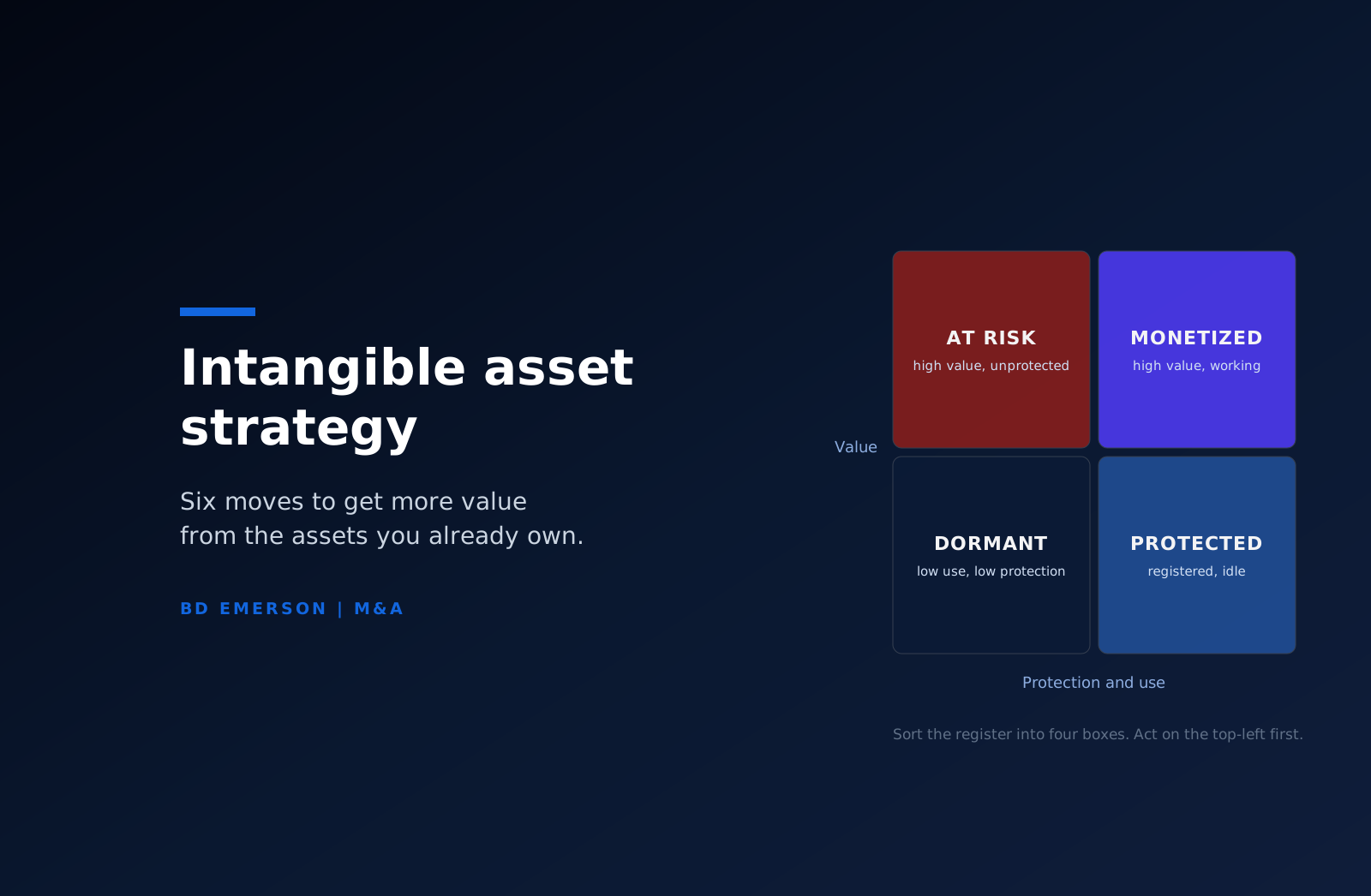
The six moves are a year's work for most companies, but the first ninety days set the direction. In the first month, build the register: working sessions with product, sales, legal, technology, and operations, walking through the twelve categories and recording what exists, who owns it, and what depends on it. In the second month, prioritize: sort the register into assets that drive the current valuation, assets that are dormant and could be put to work, and assets that are at risk from a title gap, a leak, or a dependency on one person. Assign an owner to every asset in the first two groups. In the third month, act on the top of each list: begin the title fixes, commission valuations of the two or three assets that matter most, and take the first monetization or protection decision to the leadership team.
By the end of the quarter the company has a document it did not have, a set of owners who did not exist, and a first view of what its foundation is worth and where it is weak. That is the position from which the remaining moves can be scheduled without drama. For private equity owners, the same sequence fits inside a value creation plan, where the intangible asset register often surfaces exit-multiple drivers that the operating plan had never named.
If you want help building the register, valuing what is on it, or deciding which of the six moves to make first, BD Emerson's intangible asset valuation service covers the strategy work as well as the numbers.

About the author