Investor Due Diligence: Proving You Are Worth the Investment
Investor due diligence is the examination an investor runs on a company between a signed term sheet and wired funds, covering financials, legal standing, the commercial story, technology, security, and the team. The company that passes quickly is the one that treated diligence as a preparation problem months before the raise rather than a response problem during it. Proving you are worth the investment comes down to evidence: metrics that match their definitions, contracts that are signed and findable, a market model with sources, and security posture that survives a questionnaire. This article covers what investors examine in each area, and the specific preparation that turns diligence from the stage where deals die into the stage where your terms get confirmed.
What investors examine, area by area
Financial diligence rebuilds your numbers from the source systems. Investors test revenue recognition, the quality and durability of recurring revenue, gross margin math, customer concentration, and whether the metrics in the deck reconcile with the ledger. Definitions are where companies get hurt: ARR that includes one-time services, retention calculated on a favorable cohort, or CAC that omits half the sales cost all read as either sloppiness or misdirection, and diligence prices both the same way.
Legal diligence checks that the company owns what it claims and owes what it says. The cap table with every grant, note, and warrant documented. Customer and supplier contracts, signed, with assignment and termination clauses understood. IP assignments from every founder, employee, and contractor who touched the product. Pending disputes, regulatory exposure, and employment compliance. None of this is intellectually hard, and all of it is slow to fix under deadline, which is why it is the most common source of closing delays.
Commercial diligence tests the growth story: the market size, the competitive position, and whether customer behavior supports the plan. Expect customer reference calls, win-loss questions, and a rebuild of your market model. The arithmetic standard your market numbers need to meet is covered in our guide to TAM, SAM, and SOM.
Technology and security diligence has moved from a checkbox to a deal factor. Investors examine architecture and scalability, engineering practices, third-party dependencies and licenses, and security posture, and later-stage investors increasingly send a specialist. A current SOC 2 report answers a large share of the questionnaire before it is asked, and the same security evidence buyers weigh in an acquisition carries weight in a raise, a dynamic covered in our article on SOC 2 in M&A due diligence.
Prepare the evidence before the raise starts
The preparation window is before outreach, when you control the timeline. Close the books monthly on a consistent basis and have the last two to three years reconcilable. Write down your metric definitions and apply them without exception, because a footnote you wrote is credibility and a discrepancy the investor found is a repricing. For larger rounds, a sell-side quality of earnings review finds the revenue recognition and adjustment questions before the investor's accountants do, and what that review produces is described in our guide to quality of earnings reports. On the legal side, run the checklist above and fix what is fixable. On security, get the certifications your buyer segment expects and have the evidence current.
Build the data room once, properly
A data room populated before the first meeting signals operational competence, and its absence signals scramble. The structure investors expect: corporate documents and cap table, financial statements and the model, tax filings, customer contracts and revenue data, product and technology documentation, security reports and policies, employment agreements and option grants, and any regulatory or litigation material. Index it, keep versions current, and log access. The strongest signal a data room sends has nothing to do with completeness on request day: it is that the company runs itself in a way that makes evidence easy to produce, which is exactly the operating discipline the investor is underwriting. Stage the sensitive layers: commercial terms, customer names, and security detail can sit behind a second tier released at term sheet, so competitive information reaches only counterparties who have earned it.
What the request list looks like
The diligence request list arrives within days of a signed term sheet, and its shape is predictable enough to pre-build. Expect three years of financial statements and the reconciling detail beneath the metrics; the cap table with every instrument; formation documents and board minutes; the top twenty customer contracts and any with unusual terms; supplier and partner agreements; IP assignments and any open source usage; employment agreements, option grants, and contractor arrangements; insurance policies; tax filings; the security policy set, penetration test results, and any certification reports; and incident history with customer notifications. Companies that answer 90 percent of the list from a standing data room close on schedule. Companies that assemble it under deadline add three to six weeks, and the weeks are where deals wobble.
The two-sided clock
Confirmatory diligence should run two to four weeks for an early-stage round and four to eight for growth rounds with a QoE and specialist workstreams. The company controls more of that clock than it thinks. Response time to requests is the visible variable, and it is read as a proxy for how the company runs. The less visible variable is rework: every answer that changes after it is given, a metric restated, a contract version superseded, resets trust and adds days. One accurate answer beats three fast ones. Assign a single owner for the diligence process, route every response through them, and keep a log, because version control across dozens of threads is where accuracy quietly breaks.
What changes by stage
The examination scales with the check. Seed and early Series A diligence is light on financial history, because there is little, and heavy on the team, the market, the cap table, and the legal formation basics, with the most common early-stage failures being IP assignment gaps and messy SAFE stacks whose conversion math founders have never run. Growth-stage diligence inverts: the historical numbers carry the case, so expect a quality of earnings review, cohort and retention rebuilds from raw billing data, customer calls run by the investor, and a real security and technology examination, often by a specialist firm. Late-stage and pre-IPO diligence adds audit-grade accounting, regulatory and compliance depth, and public-readiness questions. The preparation implication runs backward: the evidence a growth round demands takes a year or more to exist, monthly closes, consistent metric definitions, a security program with reports rather than intentions, so the companies that raise well at scale are the ones that started operating that way two rounds early.
Disclose your problems before diligence finds them
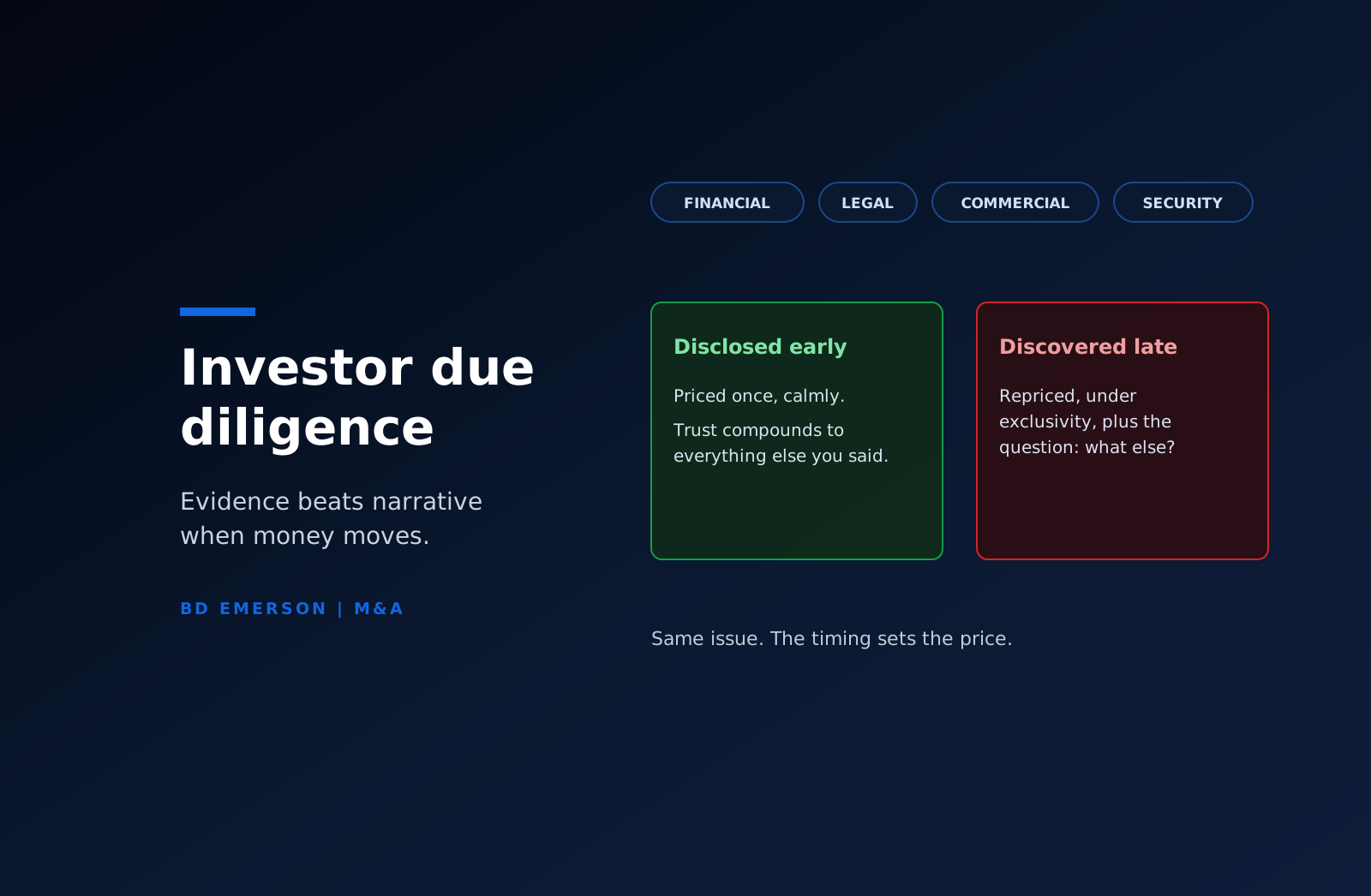
Every company carries issues into a raise. The two customers that are 40 percent of revenue, the contractor who never signed an IP assignment, the incident from last year. The preparation decision that most affects outcomes is disclosing these early, framed with the remediation already underway. Disclosed, an issue is a known quantity the investor prices calmly, and the disclosure itself builds trust in everything else you have said. Discovered, the same issue costs more than its own weight, because it reopens the question of what else the process missed, and late-diligence surprises are how signed term sheets get retraded or pulled.
Diligence runs both directions
Reverse diligence is underused and cheap. Before taking money, call founders in the investor's portfolio, including ones whose companies struggled, and ask how the investor behaved when things went sideways. Check fund vintage and reserves, because an investor without follow-on capacity changes your next raise. Read the term sheet's control provisions against the scenario where you miss plan by 30 percent. The raise process is mutual selection, and investors respect counterparties who treat it that way.
Where BD Emerson fits
BD Emerson prepares companies for institutional diligence through our investor relations consulting practice: the financial evidence, the security and technology file, and the data room, assembled before investors start asking. The preparation work is the same discipline we apply in M&A, where the party with organized evidence consistently keeps more of the price they negotiated.

About the author