Sell-Side Due Diligence: Find Problems Before Buyers Do
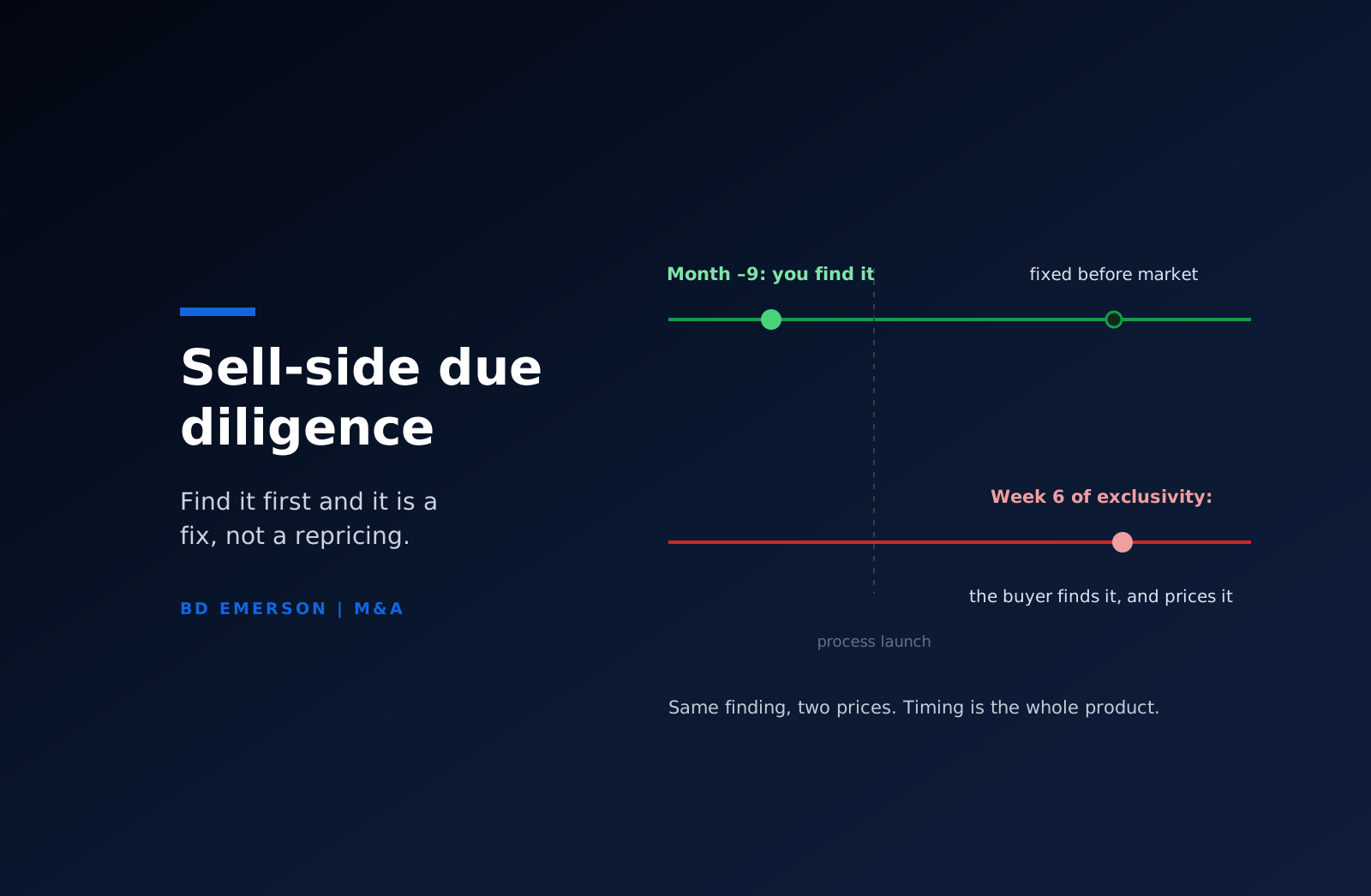
Sell-side due diligence is the examination a company runs on itself before buyers examine it, covering the same ground buyer diligence will: financials, tax, legal, commercial claims, technology, and security. The purpose is control of timing. Every company carrying itself into a sale has findings, and each one is either surfaced by the seller months early, when it can be fixed or framed, or discovered by the buyer under exclusivity, when it becomes a price reduction negotiated without competition in the room. The work matters most in divestitures and carve-outs, where the perimeter of what is being sold creates findings that do not exist in a whole-company sale. This article covers the scope, the economics, and the timing.
How it differs from vendor due diligence
The terms overlap and the deliverables differ. Vendor due diligence produces a formal report, commissioned by the seller but written by an independent firm for buyers to rely on, common in European processes and broad auctions, and covered in our guide to vendor due diligence. Sell-side due diligence as covered here is the seller's own preparation work: an internal-facing examination whose findings go to the seller and its advisors, not to buyers. The vendor report shows buyers what the seller wants verified. The sell-side work decides what the company fixes, discloses, and defends before any buyer is in the room. Sellers running competitive processes at scale often do both, in that order.
The financial workstream: sell-side quality of earnings
The center of sell-side financial diligence is a sell-side quality of earnings analysis: the seller's own accountants rebuild EBITDA, test revenue recognition, normalize for one-time items and owner costs, and document every adjustment with support. The output is an EBITDA number the seller can defend line by line, which matters because the buyer's QoE team will rebuild the same number and every dollar they cannot verify comes off the price, usually multiplied. A seller marketing on an EBITDA that survives buyer scrutiny intact protects the whole valuation math. What the report contains and what it costs is covered in our guide to quality of earnings reports elsewhere on this site. The same workstream produces the working capital analysis that will anchor the peg negotiation, which is where unprepared sellers quietly lose seven figures after the headline price is agreed.
Technology and security: the findings that move price late
Technology and security findings have a specific pathology in deals: they surface late, they are hard to remediate under deadline, and buyers price them with a risk premium rather than at cost. Unlicensed open source in the codebase, a production environment three engineers can access with shared credentials, customer data retained past contractual limits, or an incident that was never disclosed to affected customers. Sell-side technology diligence finds these while the fix is an engineering ticket rather than an indemnity negotiation. Security certifications earn their keep here: a current SOC 2 report answers a large portion of buyer security diligence before it is asked, and the deal-side value of that evidence is covered in our article on SOC 2 in M&A due diligence.
Divestiture and carve-out diligence: the perimeter is the finding
When the transaction is a divestiture rather than a whole-company sale, sell-side diligence has a second job: defining exactly what crosses the line, and what the business looks like after it does. Carve-out financial statements have to be constructed for a unit that never reported standalone, with shared costs allocated defensibly. Entanglements have to be mapped: shared ERP and IT systems, shared contracts and licenses that need consent or splitting, employees who work partly for the divested unit, and the services the parent will have to keep providing under a transition services agreement. Buyers of carve-outs price entanglement risk aggressively when the seller cannot answer separation questions, and confidently when a separation blueprint exists. The seller-side program for running a divestiture end to end is covered in our guide to the corporate divestiture process.
The legal and commercial workstreams
Legal self-diligence is checklist work with a long fix time, which is why it starts early. Corporate records complete and minute books current. Every customer contract located, signed, and reviewed for change-of-control and assignment clauses, because a top-ten customer whose contract lets them walk at closing is a valuation problem the seller wants to know about a year out, not a closing condition discovered under exclusivity. IP assignments from every person who wrote code or created assets, including the contractor from 2019 nobody can reach. Employment classifications, option grants, and any dispute history documented. None of it is hard, and all of it takes weeks per item to repair.
The commercial workstream tests the growth story the CIM will tell: the market model, the pipeline quality, and customer health. Sellers should pressure-test the market claims with the same arithmetic buyers will use, and pre-run customer reference conversations, because buyer diligence will call your customers and it is better to know what they will say. Churn analysis deserves its own pass: buyers rebuild cohorts from raw billing data, so the seller should rebuild them first and be ready to explain every downturn cohort in the file.
What the deliverable looks like
A sell-side diligence program produces three artifacts. A findings register, issue by issue, each rated by expected buyer impact and assigned as fix, disclose, or defend. A remediation plan with owners and dates for the fixable items. And the data room itself, populated and indexed so buyer requests are answered by pointing rather than by producing. The register is the working document: at process launch, the team reviews what is fixed, what gets disclosed proactively in the CIM or management presentations, and what needs a prepared defense. Walking into a process with that register is the difference between managing your risks and discovering them alongside your buyer. It also survives the process: the same register becomes the disclosure schedule backbone when the purchase agreement gets drafted, which is one more place prepared sellers move faster.
The economics: what it costs against what it protects
Sell-side diligence is a five-figure to low-six-figure investment depending on scope and company size, against a transaction where single findings routinely move price by more than the entire program costs. The mechanism is asymmetric: a problem the seller discloses early is priced once, calmly, with competing buyers still in the process, while the same problem discovered by the buyer under exclusivity is priced as both the problem and the question of what else was missed. There is a second return in speed. Diligence conducted against a prepared data room and pre-answered findings runs weeks faster, and in M&A, elapsed time is risk: deal fatigue, market movement, and buyer boards changing their minds all price in days.
What prepared sellers get, in buyer behavior
The return on sell-side work shows up in how the other side acts. Buyers calibrate aggression to the seller's evidence quality, because every unanswered question is priced as risk and every crisp answer removes a lever. Against a prepared seller, buyer diligence teams shorten their request lists, their QoE reviews confirm rather than rebuild, and their partners spend negotiating capital on the truly contested items instead of manufacturing findings. Against an unprepared one, the same teams expand scope, because expanding scope reliably pays. Advisors see the pattern across processes: prepared sellers field fewer retrade attempts, and the retrades they do face are smaller and grounded in real disagreements rather than in discovered surprises. There is also a bidder-count effect that never shows up in any line item: serious buyers stay in processes that respect their time, and a data room that answers the first hundred questions before they are asked keeps more bidders engaged deeper into the calendar, which is the tension that holds the price.
When to start, and with whom
Start six to twelve months before the intended process launch, because the value of finding a problem is proportional to the runway left to fix it. Revenue recognition can be corrected, contracts re-papered, and security certifications earned inside a year, and none of those can be done inside a diligence window. Use practitioners who run buy-side diligence, because the exercise only works if it is as adversarial as the real thing. BD Emerson runs sell-side diligence through our sell-side M&A advisory practice, with the financial, technology, and security workstreams staffed by the teams who run the same examinations for buyers, so the version of your company that reaches the market is the one that holds its price.

About the author