Physician Practice Acquisition: Diligence, Valuation, and Integration
A physician practice acquisition is a deal where the asset is a group of clinicians and the revenue they generate, which makes it different from almost any other transaction: the value walks out the door if the physicians do, the price depends on how much of their historical income you restate as compensation, and the regulatory rules on paying doctors constrain every structure a buyer can propose. Health systems buy practices to secure referral networks and expand service lines, private equity platforms buy them to consolidate specialties under a management services organization, and payers buy them to control cost. In all three cases the work divides into four questions: how the deal is structured, what diligence has to find, how the practice is valued, and how the integration keeps the physicians and the patients. This article walks each one.
Why practices sell, and why it matters to the buyer
Practices sell for reasons that shape the deal. Founding physicians approaching retirement want liquidity and a succession path. Groups facing rising administrative burden, payer pressure, and EHR and compliance costs want scale they cannot build alone. Physicians in a specialty being consolidated want to join a platform before their negotiating position erodes. Each motive implies a different post-close reality: the retiring founder needs a transition plan and a successor, the burdened group needs the buyer's back office to actually work on day one, and the strategic seller needs equity upside that ties them to the platform's outcome. Buyers who diagnose the motive early structure retention correctly; buyers who do not find out at the first renewal of the employment agreement.
Deal structures and the corporate practice of medicine
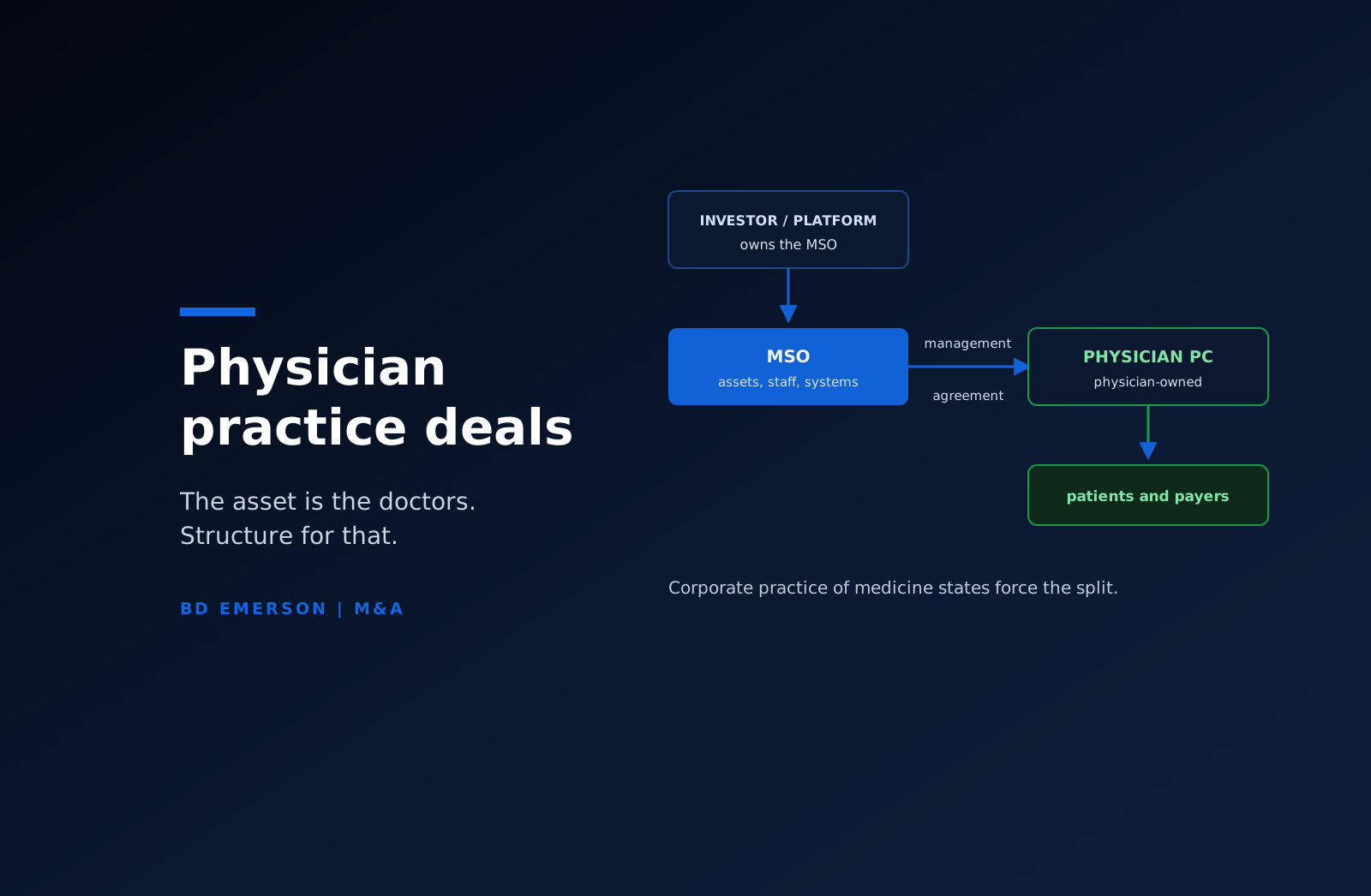
Most practice acquisitions are asset purchases, because buyers do not want to inherit historical billing liability and because state law frequently dictates the form. In states with a corporate practice of medicine doctrine, a non-physician entity cannot own a medical practice or employ physicians to practice medicine, so private equity and other lay buyers use a management services organization structure: the MSO acquires the non-clinical assets and provides administrative services to a physician-owned professional corporation under a long-term management agreement, with the professional entity's ownership held by a friendly physician under transfer restrictions. Health systems, depending on the state and their own structure, may employ physicians directly or through an affiliated medical group. The structure also carries the compensation model: physicians typically become employees of the buyer or the professional entity, paid on a productivity formula such as work RVUs, with a portion of the purchase price often delivered as rollover equity in the platform to keep them invested in the outcome.
The diligence that matters
Practice diligence runs the healthcare workstreams covered in our guide to healthcare M&A due diligence, with a few points of emphasis. Coding and documentation audits sample each physician's claims, because error rates vary by provider and a single high-biller with weak documentation is both a revenue risk and a compliance liability the buyer would otherwise inherit through the patients and payers. Payer contracts are reviewed for assignment and rates, and the buyer models the transition period during which acquired physicians are credentialed under the buyer's contracts, which typically runs 90 to 120 days per payer and can stall cash flow unless bridged. Referral patterns are analyzed to understand where the practice's volume comes from and whether any arrangement with a referral source needs restructuring before close. Employment and partnership agreements are reviewed for restrictive covenants and their enforceability in the state, for buy-sell provisions that a sale may trigger, and for any physician not bound at all. Malpractice coverage is checked for claims history and for who pays the tail on the outgoing policy. And the practice's people beyond the physicians, the office manager who knows every payer quirk and the billing staff who know the denials, are inventoried, because they are usually the integration's single point of failure.
Valuation: the compensation normalization decides the number
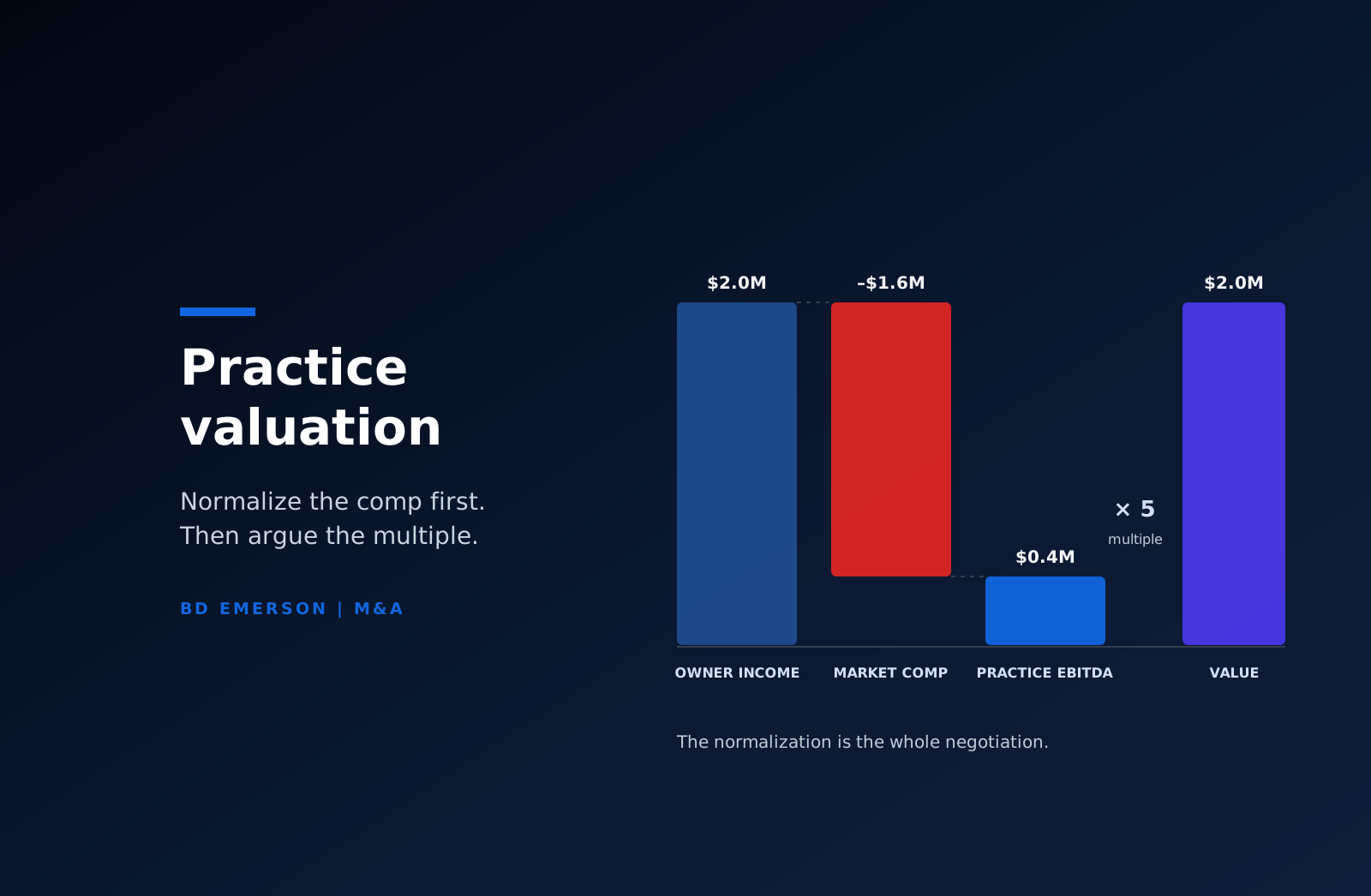
Physician practices are valued on normalized earnings, and the normalization is the whole negotiation. In an independent practice, physician-owners typically take all profit as compensation and distributions, so reported earnings understate or overstate the economic value depending on how the buyer intends to pay them going forward. The buyer restates historical results by replacing owner compensation with the post-close compensation model, at market rates for the specialty and productivity, and what remains is the practice's EBITDA available to the buyer. A practice showing $2 million of physician income may show $400,000 of EBITDA after market compensation is deducted, or zero, and the multiple applies to that number. The multiple itself depends on specialty, scale, payer mix, ancillary revenue such as imaging and ambulatory surgery, and whether the buyer is a platform paying for a foothold or a health system paying for referral alignment. For hospital and health system buyers, an additional constraint applies: the price and the post-close compensation must both be at fair market value and commercially reasonable without regard to the volume or value of referrals, which is why an independent valuation opinion is standard in those deals and why a purchase price that quietly pays for future referrals is a Stark problem rather than a negotiating win.
Integration: keeping the physicians and the patients
Practice integrations fail in predictable ways. Physicians leave when the compensation model changes their income unexpectedly, when the buyer's EHR and scheduling systems slow them down, or when clinical autonomy they were promised gets overridden by centralized protocols. Patients leave when access gets worse, when the phone system changes and appointments fall through, or when a familiar clinician departs. Revenue leaks when credentialing gaps delay billing, when the buyer's revenue cycle team does not know the specialty's payer rules, or when referral relationships the practice depended on are not maintained through the transition. The integration plan addresses each directly: compensation modeled and communicated per physician before signing, EHR conversion sequenced with training and a productivity ramp built into targets, credentialing started at signing rather than closing, and the practice's referral sources contacted by the buyer's liaison team before the ownership change becomes visible. For a health system, this is where the acquisition either strengthens the referral network it was bought to secure or quietly weakens it, a dynamic covered in our article on referral leakage.
Earnouts, rollover, and the structures that share risk
Because the value depends on the physicians staying and producing, practice deals lean on structures that align them with the outcome. Rollover equity gives selling physicians a stake in the platform or the acquiring group, converting part of the price into participation in the next transaction, and it is the standard tool in private equity practice deals. Earnouts tie part of the price to post-close productivity or revenue, and they carry the usual disputes, made sharper by the fact that the buyer now controls the scheduling, billing, and payer contracts that determine whether the targets are hit. Employment agreements with multi-year terms and productivity-based compensation do the everyday alignment work. Hospital buyers have less latitude, since Stark and the fair market value requirement constrain compensation design and rule out anything that varies with referrals, so their retention tools are term, culture, and clinical autonomy rather than equity upside.
Regulatory mechanics on the closing path
The closing checklist for a practice deal is dominated by regulatory sequencing. Medicare change-of-ownership filings and the decision to accept or reject assignment of the practice's provider agreement. Medicaid and commercial payer enrollment for the new entity. State licensure and any facility licenses for in-office procedures, imaging, or labs, including CLIA certificates. DEA registrations, which are tied to individual practitioners and locations and must be updated for the new practice address or entity. Notice to patients where state law or the sale of medical records requires it. And in a growing number of states, advance notice to or review by a state agency for healthcare transactions above a size threshold. Each has a lead time, and closing dates that ignore them produce a practice that is owned but cannot bill.
Where BD Emerson fits
BD Emerson supports practice acquisitions on both sides: for health systems and platforms, the diligence, HIPAA and security review, and integration planning, and for health systems specifically, the referral and access strategy that makes an acquired practice worth what was paid for it, through our healthcare growth strategy practice. The valuation work runs through our transaction valuation team, with fair market value analysis prepared to withstand the scrutiny that hospital-physician transactions receive.

About the author