Operational Due Diligence: What It Examines and the Checklist
Operational due diligence examines how a target actually runs: its people and management depth, its core processes and their capacity, the systems and data they depend on, its supply chain and facilities, and the cost structure that results. Financial diligence confirms the numbers; commercial diligence tests the market; operational diligence answers whether the business can deliver the plan with the machinery it has, and what it would cost to fix the machinery where it cannot. The findings do two jobs at once. They adjust price and structure where the operation carries hidden cost or risk, and they become the first draft of the value creation plan, because every capacity constraint and process gap the diligence finds is an improvement lever the buyer will own. This article covers what the work examines, how it runs, and the checklist buyers use.
One term, two meanings
Before the scope, a disambiguation. In fund investing, operational due diligence means an allocator's review of a fund manager's back office: valuation policy, cash controls, administrators, and compliance. That is a different discipline with a different checklist. This article covers operational due diligence in a company acquisition, where the subject is the operating business itself and the buyer is a strategic acquirer or a private equity fund. The two overlap only in name.
What operational diligence examines
The scope follows the operating model. Organization and management: whether the leadership team can run the business the plan describes, where key-person dependence sits, what the spans and layers look like, and how much of the company's knowledge lives in a few heads. Core processes: for a manufacturer, production, planning, quality, and logistics; for a services business, delivery, utilization, and resourcing; for a software company, engineering throughput, release management, and support. Each process is assessed for capacity against the growth plan, for documented versus actual practice, and for the metrics the company uses to run it. Systems and data: the ERP, CRM, and operational platforms, how well they integrate, how much of the operation runs on spreadsheets outside them, and what an integration or replacement would cost. Supply chain and procurement: supplier concentration, contract terms, single points of failure, and inventory practice. Facilities and assets: condition, capacity, leases, deferred maintenance, and environmental exposure where relevant. Cost structure: the fully loaded cost of running each function against benchmarks, and where the plan's margin expansion is supposed to come from. Compliance and safety: permits, certifications, and incident history that could interrupt operations.
How the work runs
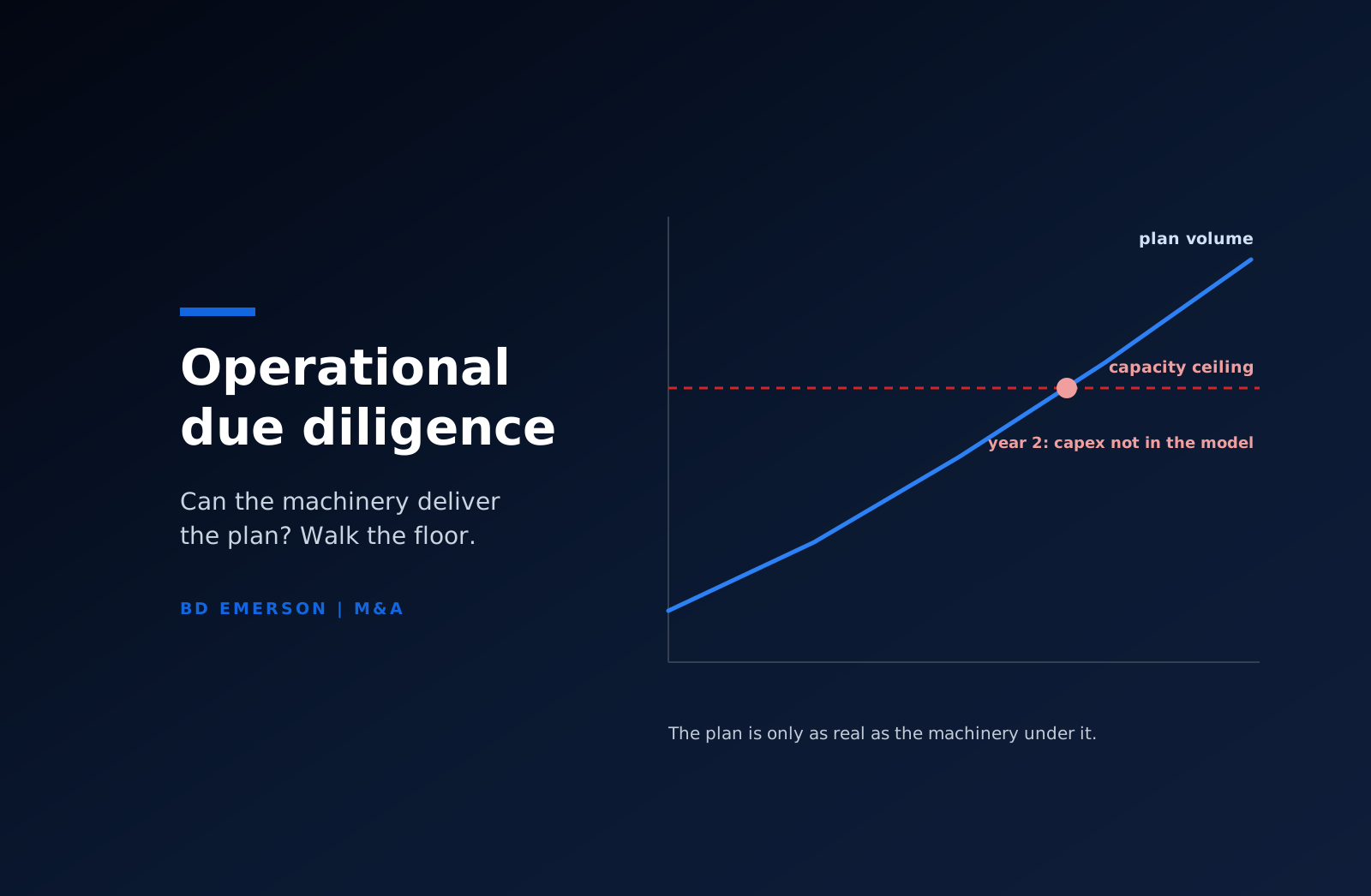
Operational diligence is a site-and-interview discipline more than a data room discipline. The team reviews the operating data and KPIs first, then spends time on site walking the processes, interviewing functional leaders below the executive team, and comparing what is documented to what is done. Three tests recur. Capacity: can current people, processes, and systems produce the volume the plan requires, and at what point does something break? Consistency: do the operating metrics management reports reconcile to the underlying data, and are they the metrics that actually run the business? Fragility: which single suppliers, systems, or people, if lost, would stop the operation, and what mitigation exists? The findings are quantified wherever possible, a capacity ceiling in units or hours, a system replacement in dollars and months, a key-person risk in the revenue that person's relationships hold. In a private equity process the operating partner who will own the plan post-close is usually in the room, because the same walk that finds the risks finds the levers.
Findings that move the deal
The operational findings that reprice or restructure deals fall into a few patterns. Capacity ceilings that the growth plan crosses in year two, requiring capital expenditure the model omitted. An ERP or core system at end of life, with a replacement cost and a disruption risk that belong in the price. Key-person concentration in sales, engineering, or operations that turns into retention packages and earnout structure. Supplier concentration or contract terms that expose margin to a single counterparty. And the gap between reported and actual process performance, where a company's dashboards say one thing and the floor says another, which is both a finding about the operation and a finding about management. On the positive side, operational diligence regularly finds the value the buyer will create: procurement savings from consolidating suppliers, margin from automating a manual process, or revenue from capacity that better scheduling would free up. Those become the first hundred days, covered in our guide to the post-merger integration 100-day plan.
Operational diligence in software and services businesses
The scope adapts to the operating model, and for the two business types most often acquired today the emphasis shifts. In a software company the core process is engineering: release cadence, defect and incident rates, the share of engineering time spent on maintenance versus new development, dependence on a few senior engineers, and the state of the infrastructure and tooling that determine whether the team can scale. Support and customer success are the second process, examined for ticket volumes, resolution times, and the effort required to onboard and retain customers. In a professional or managed services business the core process is delivery: utilization and realization rates, the pyramid of staff seniority against the work being sold, project margin variance, subcontractor dependence, and the recruiting engine that has to keep pace with the growth plan. In both, the systems workstream examines the platforms the business runs on and the data it manages, and the cost workstream asks whether the margin expansion in the plan comes from scale economics that exist or from headcount ratios the company has never achieved.
Timeline and team
Operational diligence typically runs three to five weeks inside the exclusivity window, with a week of data review, one to two weeks of site visits and interviews, and the balance for analysis and the report. The team pairs operators who have run the relevant functions with analysts who can quantify what they find, and in private equity deals it includes the operating partner or the incoming executive who will own the value creation plan. Findings are shared with the deal team as they emerge rather than held for the report, because a capacity ceiling discovered in week two should be in the price negotiation in week two.
The operational due diligence checklist
The request list and the on-site program cover the following areas, each with a defined data request, an interview target, and an output:
- Organization: org charts with tenure and compensation bands, key-person identification, succession depth, turnover by function, and open roles against the plan's hiring needs.
- Core process performance: KPIs by process for the trailing 24 months, capacity utilization, quality and rework rates, on-time delivery or release metrics, and the reconciliation of reported KPIs to source data.
- Systems and data: application inventory with age, license terms, and integration map, the share of critical processes run outside core systems, and the estimated cost and timeline of replacements the plan implies.
- Supply chain and procurement: top supplier concentration, contract terms and change-of-control provisions, single-source components or services, inventory turns and obsolescence, and lead times.
- Facilities and assets: capacity by site, lease terms, condition assessments, deferred maintenance estimates, and environmental, health, and safety records.
- Cost structure: function-level cost against benchmarks, the drivers behind the plan's margin improvement, and the one-time costs to achieve them.
- Compliance and continuity: permits and certifications with expiry dates, incident and outage history, business continuity and disaster recovery testing.
- Improvement opportunities: quantified levers identified during the walk, with owner, timeline, and investment required, as input to the value creation plan.
Operational and commercial diligence together
The two workstreams are strongest read side by side. Commercial diligence establishes what customers want and what the company could sell; operational diligence establishes whether it can deliver that at the promised margin. A growth plan that survives the commercial review and fails the capacity test is a plan that needs capital, and a plan that survives both is the rare one worth paying full price for. Our guide to the commercial due diligence checklist covers the customer and market side. BD Emerson performs operational diligence for strategic acquirers and private equity funds through our operational due diligence practice, with the systems and data workstream run by practitioners who implement those platforms outside of deals, so the replacement estimates come with real costs and timelines rather than placeholders.

About the author