Commercial Due Diligence: What It Covers, the Checklist, and the Report
Commercial due diligence tests whether a target's market, customers, competitive position, and growth plan support the price a buyer is about to pay. Financial diligence tells you what the company earned; commercial diligence tells you whether it will keep earning it and whether the growth in the model is real. The work runs three to six weeks, combines market analysis with primary research, mainly interviews with the target's customers, lost prospects, and competitors, and produces a report that either confirms the revenue plan the price rests on or shows where it breaks. Private equity buyers commission it on almost every platform deal, strategic acquirers commission it when the target is outside their core market, and lenders increasingly ask for it before underwriting acquisition debt. This article covers what the work examines, the checklist, and what the report contains.
What commercial diligence examines
The workstream is organized around the drivers of future revenue. Market attractiveness: how large the addressable market is, how fast it is growing, what drives that growth, and whether the target's definition of its market matches how customers actually buy. Competitive position: who the target wins against and loses to, why, and whether its position is strengthening or eroding, tested against win-loss data rather than the management presentation. Customer quality: concentration, retention by cohort, satisfaction, switching costs, and what customers say when a stranger asks them why they buy. Pricing power: discount patterns, recent price increases and how they landed, and whether the target sells on value or on price. Go-to-market effectiveness: sales productivity, pipeline conversion, channel dependence, and whether the growth plan needs a sales machine the company has not yet built. And the growth plan itself: whether management's forecast reconciles to the market, the position, and the capacity, or requires all three to improve at once.
The evidence: customer interviews carry the work
Desk analysis of market reports and the target's own data frames the questions, but the findings that change deals come from primary research. A standard program interviews fifteen to forty of the target's customers, a set of former customers and lost prospects, and several competitors or channel partners, using a structured guide and an interviewer the respondent has no reason to flatter. The interviews test the claims a buyer cannot verify from documents: whether customers see the product as differentiated or interchangeable, whether they would accept a price increase, whether they are evaluating alternatives, and how they describe the company's weaknesses. Reference customers supplied by management are useful for tone and near-useless for evidence, which is why the program insists on selecting its own sample from the customer list. Where the target sells through channels or to a concentrated set of accounts, the interview program shifts toward those relationships, because a distributor who is quietly building a competing line is a finding that no financial workstream will surface.
Reconciling the growth plan
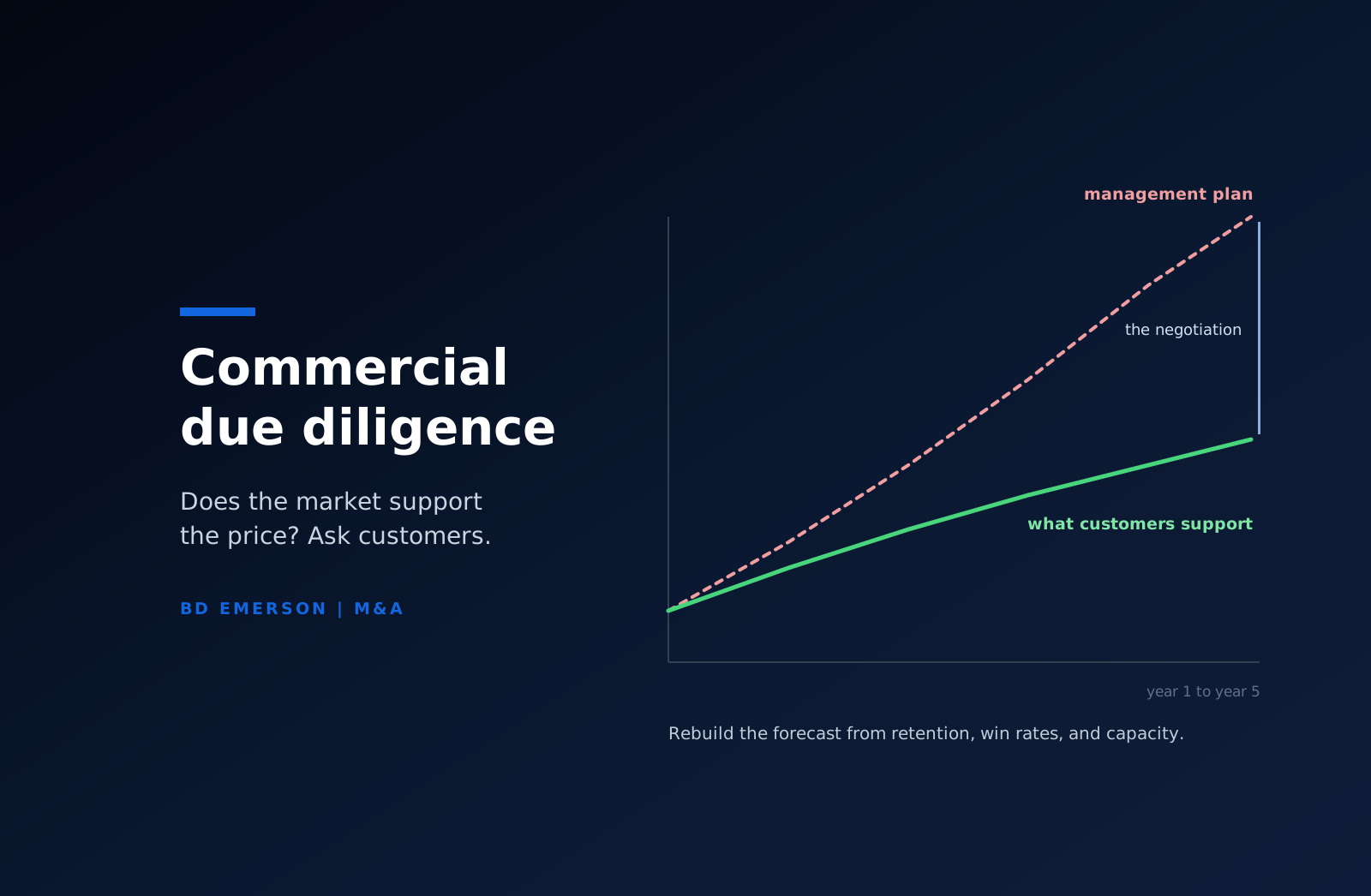
The analytic core of commercial diligence is rebuilding management's revenue forecast from the bottom up and comparing it to what the market and customer evidence supports. The rebuild takes the customer base by segment, applies retention and expansion rates observed in the cohort data rather than the ones in the deck, layers on new customer acquisition at the win rates and sales capacity the company has actually demonstrated, and checks the total against market growth and share. The result is usually a base case below management's plan and a set of specific assumptions where the gap lives: a churn rate that improved in the forecast without a reason, a new segment with no pipeline behind it, or a price increase customers said they would not accept. Those gaps become the negotiation, either as price or as an earnout tied to the disputed growth. The same reconciliation is how a seller should pressure-test its own plan before a process, and the financial side of that preparation is covered in our financial due diligence checklist.
The commercial due diligence checklist
The request list and analysis plan cover the following, each with a defined data request and a defined output:
- Market definition and size, built bottom-up from customer counts and spend, cross-checked against published estimates, with growth drivers and headwinds named and sourced.
- Competitive landscape: named competitors by segment, relative share where estimable, and the target's win rate against each from CRM data and interviews.
- Customer analysis: revenue concentration by customer and segment, cohort retention and net revenue retention, contract terms and renewal timing, and satisfaction from interviews and any survey data.
- Pricing: list versus realized price by segment, discount frequency and depth, recent price changes and their effect on churn, and interview evidence on willingness to pay.
- Go-to-market: sales headcount and productivity, pipeline coverage and conversion by stage, customer acquisition cost and payback, channel dependence and partner economics.
- Product and roadmap: how customers rate the product against alternatives, adoption of newer modules, and whether the roadmap addresses the reasons for lost deals.
- Growth plan reconciliation: management's forecast rebuilt from observed retention, win rates, and capacity, with each variance quantified and attributed.
- Regulatory and structural factors: anything in the market's rules, technology shifts, or supplier and channel structure that changes the outlook within the hold period.
What the report contains
A commercial due diligence report opens with the conclusion: whether the market and customer evidence supports the plan, the base case the evidence does support, and the three to five findings that matter most for price and structure. It then documents each area of the checklist with the evidence behind it, quotes and tallies from the interview program, the market model with sources, and the growth plan reconciliation with variances. A good report distinguishes what it verified, what it inferred, and what it could not test in the time available, because the buyer's investment committee and lenders will read those distinctions as risk. Red-flag versions, delivered in one to two weeks on a narrower scope, exist for early-stage decisions about whether to proceed to full diligence; they identify deal-breakers and defer the rest.
Timeline, cost, and scope choices
A full commercial diligence engagement runs three to six weeks, with the interview program the pacing item, since recruiting and scheduling thirty conversations with a target's customers takes two to three weeks on its own. Cost scales with the interview count, the number of segments and geographies in the market model, and whether the buyer wants a full growth plan reconciliation or a narrower test of specific claims. The scope decisions that matter most are which claims in the thesis need primary evidence, how many customers and which ones to interview, and whether the target's management will facilitate customer access or the program has to work around them. Buyers who cannot get customer access before exclusivity often run a red-flag pass on market and competitive data first and hold the interview program for the exclusivity period, which is a reasonable sequence as long as the price in the letter of intent leaves room for what the interviews find.
Commercial diligence in private equity
Private equity buyers use commercial diligence for two purposes at once: to underwrite the entry price and to draft the value creation plan. The interview program that tests retention also identifies the customers most open to cross-sell, the segments where pricing power exists, and the competitors most vulnerable to a better-funded rival. The report therefore feeds the first hundred days directly, and the best-run processes have the deal team and the future operating partner reading it together. Sellers preparing for a private equity process benefit from knowing this, because a company that can answer the commercial questions with data before the buyer asks them has already done half the buyer's work and gets paid for the certainty. Vendor-commissioned commercial reports, common in broad auctions, exist for exactly that reason and are covered in our guide to vendor due diligence.
Running the workstream
BD Emerson performs commercial due diligence for acquirers, funds, and lenders through our commercial due diligence practice, with market models built bottom-up, interview programs run by our own team, and the growth plan reconciliation delivered as a working model the buyer keeps. For technology-heavy targets the commercial work runs alongside our technology and security diligence, so a customer's complaint about reliability in an interview and the architecture finding that explains it arrive in the same report.

About the author