CMMC Consultant: What One Does, What It Costs, and How to Choose

A CMMC consultant prepares a defense contractor for a Cybersecurity Maturity Model Certification assessment and cannot perform that assessment. The work has five parts: defining where Controlled Unclassified Information (CUI) lives so the assessment boundary is as small as the contract allows, measuring the environment against the 110 requirements of NIST SP 800-171, writing the System Security Plan and the Plan of Action and Milestones, closing the gaps, and running a mock assessment before a certified assessor arrives. Expect $15,000 to $45,000 for a readiness and gap assessment and $20,000 to $150,000 or more for remediation. Choose a consultant on four things: named staff with assessor-level credentials, a documented scoping method, deliverables you can inspect before signing, and independence from the organization that will assess you.
What does a CMMC consultant do?
The first job is scoping. Every later cost follows from the answer to one question: which people, systems, and locations store, process, or transmit CUI? A consultant who traces CUI from the contract to the laptop, and then proposes an enclave that keeps it in a small part of the business, can remove most of the company's assets from scope. A consultant who skips that step and assesses the whole company prices you for a problem you may not have.
The second job is the gap assessment. The consultant tests each of the 110 Level 2 requirements against its assessment objectives and records whether the requirement is met, with the evidence that proves it. The result gives you a real Supplier Performance Risk System (SPRS) score in place of an optimistic estimate.
The third job is documentation. The System Security Plan describes how each requirement is implemented inside the boundary. The Plan of Action and Milestones lists what is not yet met, with owners and dates. Assessors read both before they test anything, and a plan that describes controls the environment does not have fails quickly.
The fourth job is remediation: multifactor authentication, FIPS-validated encryption, logging, configuration baselines, incident response, and the policies and procedures behind them. Some consultants implement, some advise while your IT provider implements, and the proposal should say which.
The fifth job is the mock assessment, run the way a certified assessor would run the real one, with interviews, demonstrations, and evidence sampling.
Do you still need a CMMC consultant while Phase II is suspended?
Yes, if you handle CUI, because the suspension changed who verifies the requirements and left the requirements in place. On July 13, 2026, the Department of Defense suspended the Phase II transition that would have put third-party certification requirements into new solicitations starting November 10, 2026. The department's implementing procedures state that the requirements in DFARS 252.204-7012 "remain in effect" and that the department will enforce CMMC Level 1 and Level 2 self-assessments. The same document promised further guidance at the end of a 60-day review. As of mid-November 2026, the department has published no date for certification requirements to return. Our article on the CMMC Phase 2 suspension covers what was paused.
The self-assessment is where the risk sits. A senior company official affirms the score in SPRS every year, and an affirmation built on an untested System Security Plan is a statement to the government that the company cannot support. The Cyber AB, the program's accreditation body, said in its statement on the suspension that "all CMMC program elements remain operational and available," including certification assessments. Prime contractors continue to ask suppliers for evidence of readiness. The work a consultant does now is the same work a certification assessment would test later.
Which credentials should a CMMC consultant hold?
CMMC has its own credential system, and the names are easy to confuse. The table sorts them by what each one tells a buyer.
| Credential | Who holds it | What it tells you |
|---|---|---|
| Registered Practitioner Organization (RPO) | A consulting firm or managed service provider | The firm is listed by the Cyber AB to give advice. It cannot conduct certified assessments. |
| Registered Practitioner (RP) | An individual consultant | The person completed the Cyber AB's practitioner training. It is an entry-level credential. |
| CMMC-Certified Professional (CCP) | An individual | The person passed the certification exam and can take part in assessments as a team member. |
| CMMC-Certified Assessor (CCA) | An individual | The person is qualified to assess Level 2. A consultant with this credential knows how evidence is judged. |
| CMMC Third-Party Assessment Organization (C3PAO) | An assessment firm | The firm is authorized to conduct certification assessments. It may not assess a company it has advised. |
The Cyber AB describes an RPO as an organization that "delivers a non-certified advisory service" and states that RPOs "do not conduct Certified CMMC Assessments." Its ecosystem roles page is the place to confirm what each credential means. One detail matters when you compare firms: the definitions in the CMMC rule, at 32 CFR 170.4, do not include RPOs or Registered Practitioners. The registration is a marketplace listing run by the accreditation body. A firm without it can still do competent work, and a firm with it has not been tested by the government.
Weight the individual credentials more heavily. Ask which named people on your engagement hold a CCP or CCA and how many assessments each has taken part in. A consultant who has sat on the assessor side knows which evidence satisfies an assessment objective and which evidence only looks complete.
What kinds of firms offer CMMC consulting?
| Firm type | Strength | Watch for |
|---|---|---|
| Compliance consultancy | Scoping, documentation, gap assessment, and mock assessment | May not implement the technical fixes itself |
| Managed service provider with a CMMC enclave | Delivers a prebuilt environment and runs it for you | Becomes an external service provider inside your boundary, so its own controls are assessed with yours |
| C3PAO advisory practice | Deep knowledge of how assessors judge evidence | The same firm cannot perform your certification assessment |
| Large audit and advisory firm | Capacity for multi-site and multi-entity programs | Confirm who will staff a smaller engagement |
Many contractors need two of these: an adviser for scoping and documentation, and a technical provider for the enclave and its operation. When one firm sells both, check that the scoping advice is not shaped by the product it sells. Our guide to what a C3PAO is explains why the firm that prepares you cannot assess you and how to book the assessor separately.
What does a CMMC consultant cost?
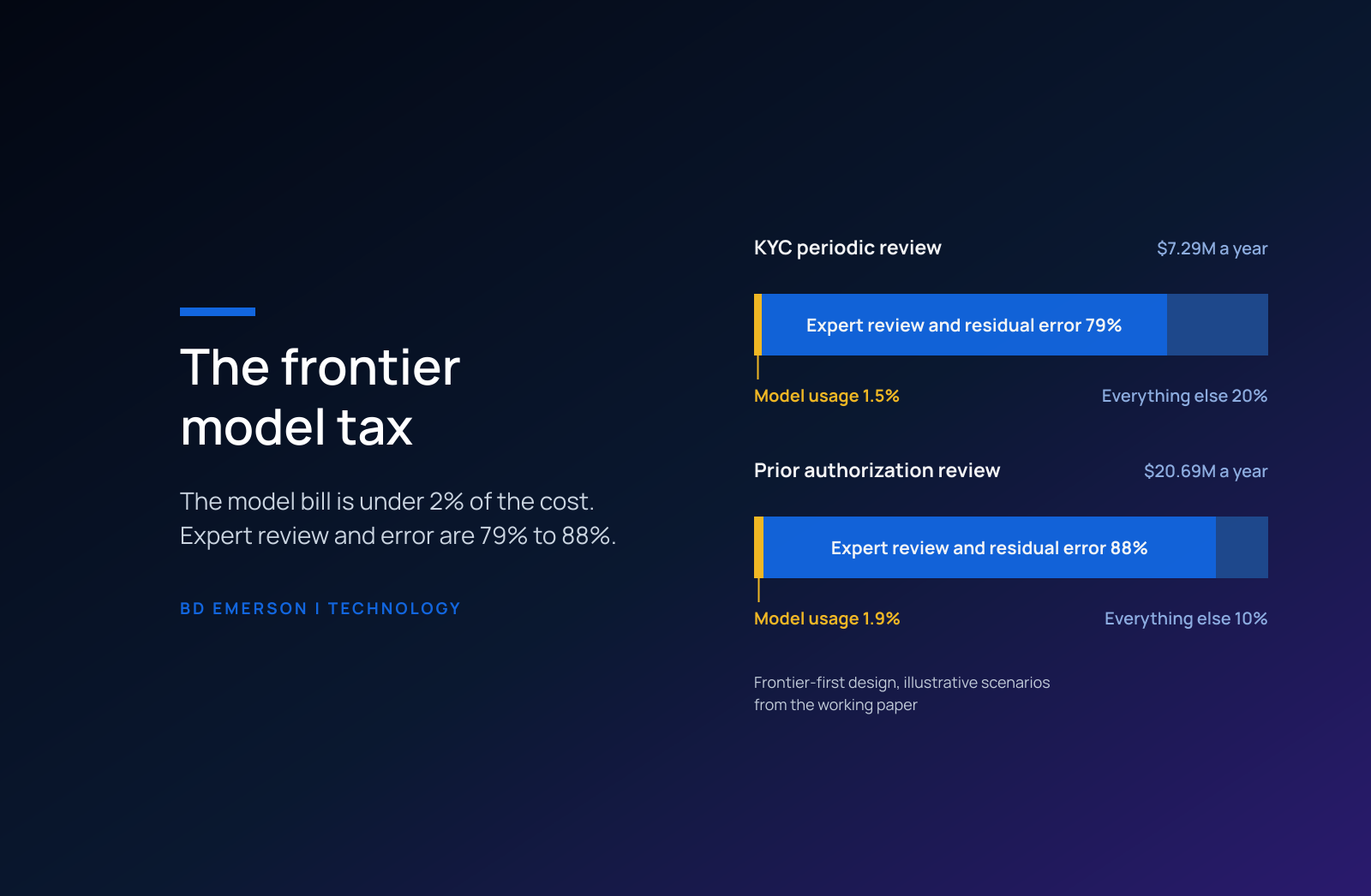
BD Emerson's planning ranges for Level 2 are $15,000 to $45,000 for a readiness and gap assessment and $20,000 to $150,000 or more for remediation. The spread in remediation comes from scope. A 40-person company that moves CUI into a managed enclave of 15 users sits near the bottom. A 400-person manufacturer with CUI on the shop floor, in engineering systems, and at three sites sits near the top. The certification assessment, when a contract requires it, is a separate fee paid to the C3PAO. Our CMMC certification cost guide breaks down every line.
Consultants price in three ways. A fixed fee for a defined deliverable, such as a gap assessment with a System Security Plan, is the easiest to compare. Time and materials suits remediation, where the gaps set the effort. A monthly retainer suits the period after readiness, when someone has to keep evidence current, update the plan, and prepare the annual affirmation. Ask for the gap assessment as a fixed fee and require a remediation estimate as one of its outputs.
What should you ask before you hire one?
Seven questions separate consultants who have taken clients through assessment from those who have read the rule.
- Who will do the work, and which of them hold a CCP or CCA?
- How do you determine the CUI boundary, and will you show us a scoping diagram from a past engagement with the client name removed?
- How many clients have you taken through a C3PAO or government-led assessment, and may we speak with two of them?
- Do you assess against the assessment objectives in NIST SP 800-171A, or only against the 110 requirement statements?
- What do we own at the end: the System Security Plan, the evidence library, and the policies in editable form?
- Which of the technical fixes do you implement yourselves, and which do you hand to our IT provider?
- Do you have a financial relationship with any tool, enclave, or assessor you will recommend?
The fourth question matters more than it appears. The 110 requirements break down into 320 assessment objectives, and an assessor scores a requirement as met only when every one of its objectives is met. A gap assessment performed at the requirement level overstates the score.
What are the warning signs?
Four claims should end the conversation. The first is a guarantee that you will pass, since only the assessor decides and no consultant controls the outcome. The second is a product sold as compliance. No tool or enclave makes a company compliant, because many of the requirements concern people, physical space, and procedures that sit outside any software. The third is a consultant who says the company itself is "CMMC certified" as proof of expertise, when the question is whether the people have assessment experience. The fourth is an offer to both prepare you and certify you.
The rule on conditional status is a useful test of a consultant's knowledge. Under 32 CFR 170.21, a Level 2 assessment can end in a conditional status only when the score divided by the number of requirements is at least 0.8, which is 88 of 110, and the open items must be closed and confirmed by a closeout assessment within 180 days. Some requirements cannot sit on a Plan of Action and Milestones at all. A consultant who tells you to "put it on the POA&M" without checking whether the requirement is eligible has not read the section.
Where BD Emerson fits
BD Emerson is a CMMC consultant and is not a C3PAO. We scope the CUI boundary, assess against the 320 objectives, write the System Security Plan and the Plan of Action and Milestones, manage remediation, and run a mock assessment. A separate authorized C3PAO that you select performs any certification assessment. If you need a defensible SPRS score for this year's affirmation, or you want to be ready when certification requirements return, our CMMC consulting service starts with a gap assessment and a remediation estimate you can take to your leadership.

About the author