Palantir in Hospitals: What the Layer on Top of the EHR Actually Does
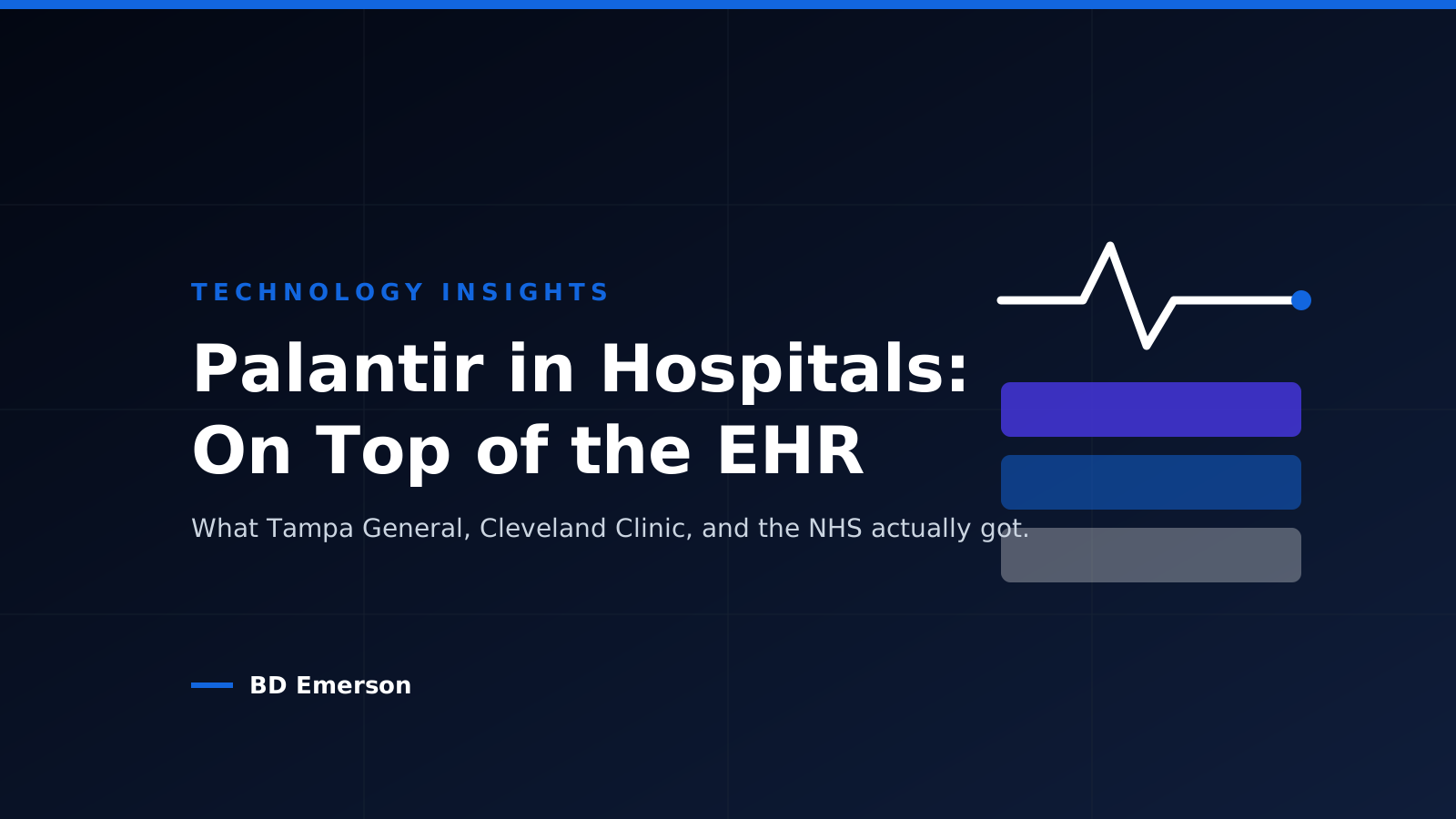
The first thing to understand about Palantir in a hospital is what it does not do. It does not replace the electronic health record. Epic or Cerner keeps the chart. Foundry sits above the EHR, the scheduling system, staffing, supply chain, and bed management, and turns them into one operational picture that people can act on.
That distinction matters because the EHR already won its war. The open problem in hospital operations is that the systems of record do not talk to each other fast enough to run the building. That is the gap the platform fills.
The published outcomes
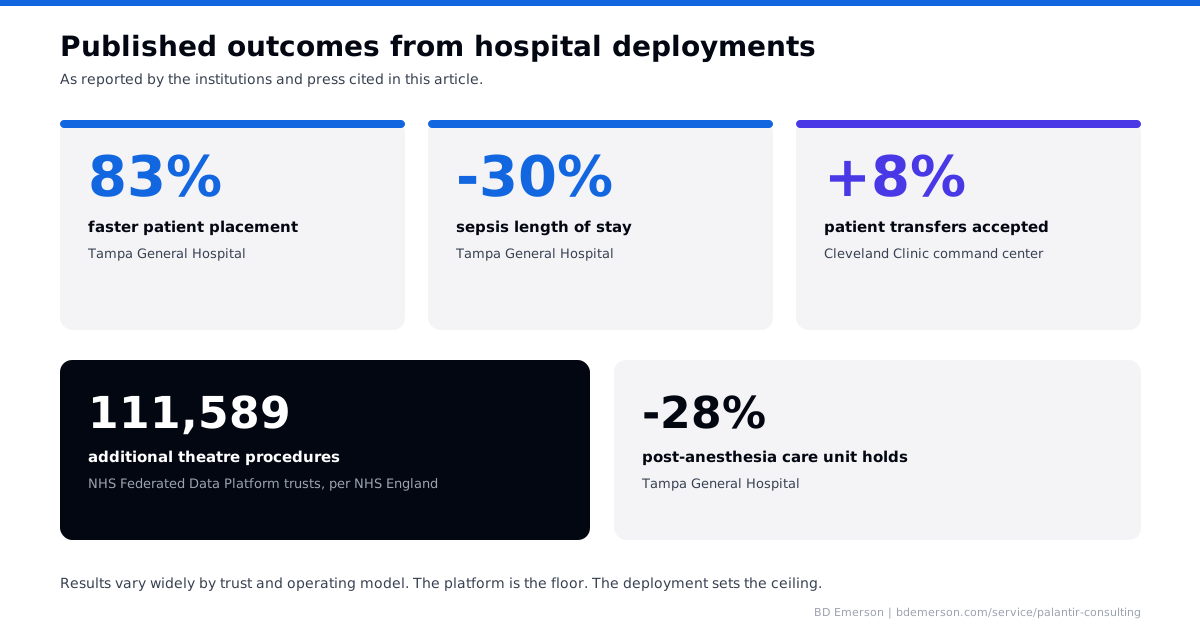
Tampa General Hospital, one of Palantir's first hospital customers, reports the deepest results: patient placement time down 83 percent, post-anesthesia care unit holds down 28 percent, and mean length of stay for sepsis patients down 30 percent. Its care coordination program has been credited with helping save nearly 600 lives.
Cleveland Clinic built a Virtual Command Center on Foundry to forecast admissions, discharges, and transfers against bed and caregiver availability. Within months of launch, the main campus was accepting 8 percent more patient transfers from other hospitals.
In England, the NHS Federated Data Platform runs on Palantir across more than 130 trusts. NHS England attributes 111,589 additional theatre procedures to its inpatient care coordination tool and estimates the platform will return five times its cost.
The honest caveat, and why it matters
The NHS data also carries a warning. Independent analysis found results are uneven: a single trust drove most of the outpatient waiting list reduction, and a third of trusts using the scheduling tool delivered fewer operations than before. Same software, opposite outcomes.
That spread is the most useful fact in this article. The platform sets the floor. The deployment sets the ceiling: whether the ontology models how the hospital actually runs, whether charge nurses and bed managers adopt the workflows, and whether governance keeps clinicians confident in the data. Hospitals that treat this as an IT install get IT-install results.
What sits on top of the EHR, concretely
The recurring build list: a live capacity picture across beds, staffing, and discharge barriers. Patient placement workflows that suggest and book rather than report. Discharge coordination that surfaces the blockers, from imaging queues to transport. OR utilization and theatre scheduling. And supply and workforce planning of the kind Option Care Health runs for nurse scheduling.
Each is an ontology of the hospital: patients, beds, staff, equipment, and the governed actions that move them, the architecture we cover in our Foundry explainer.
The compliance layer hospitals cannot skip
Hospital deployments concentrate PHI, which makes HIPAA-grade configuration part of the build: markings on patient data, purpose-based access mapped to clinical roles, audit trails, and business associate discipline. This is where BD Emerson's model differs from a pure platform integrator: the same practice that runs healthcare security and compliance programs configures the deployment, as we detail in Securing Palantir Deployments.
BD Emerson delivers hospital and health system programs through our Palantir consulting practice, from Foundry implementation to the operating model that decides which side of the NHS spread you land on.

About the author