Palantir in Insurance: The Swiss Re Numbers and the Policy Admin Problem

Insurance runs on systems that outlived their architects. Policy administration platforms written decades ago still hold the book of record at carriers and reinsurers, surrounded by extract jobs, spreadsheets, and heroic actuaries. Every modernization conversation eventually hits the same wall: replacing a policy admin system is a five-year, nine-figure bet that fails often enough to end careers.
The most interesting thing happening in insurance technology is that the leading deployments stopped trying. They put an operational layer over the estate instead, and the measured results are hard to argue with.
Swiss Re, independently measured
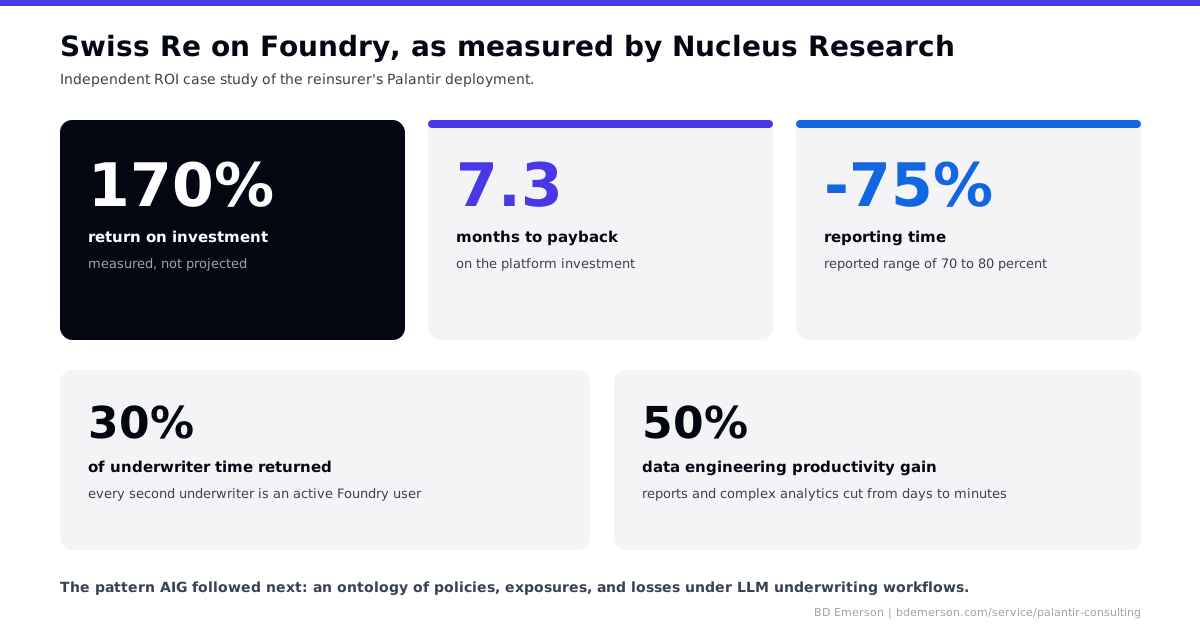
Nucleus Research's ROI case study of the reinsurer's Foundry deployment reports a 170 percent return with payback in 7.3 months, reporting time down 70 to 80 percent, a 30 percent time saving for underwriters, and a 50 percent productivity gain for data engineers. Per Palantir's own account, more than one in three Swiss Re employees is an active Foundry user, including every second underwriter, with complex analytics cut from days to minutes.
Read those numbers carefully and the story is not analytics. It is that underwriters, actuaries, and data teams finally work from one governed picture of risk instead of reconciling extracts.
AIG and the underwriting ontology
AIG pushed the model further. In late 2025 it announced a Lloyd's syndicate built with Amwins and Blackstone that uses Palantir to construct and manage a balanced follow portfolio, and an ontology that gives large language models governed access to more than four million industry data points for underwriting. Submission triage that took days compresses to hours when the model reads from an ontology of policies, exposures, and historical losses rather than from PDFs.
That is the same architecture we describe in our Foundry explainer, pointed at insurance: objects for policies, insureds, exposures, treaties, and claims, with governed actions and full audit.
The policy admin answer nobody markets
For carriers staring at an aging policy admin estate, the ontology layer changes the decision. Instead of replacing the system of record first, you unify above it: connect the legacy platforms, model the book once, run underwriting, portfolio, and reporting workflows on the layer, and let the eventual core replacement become a data migration into a model that already works, not a bet the company project. Reinsurers and program businesses with many source systems feel this first, which is why the Swiss Re profile matters more than any demo. For carriers whose policy and underwriting data sits in Guidewire PolicyCenter, our guide to what Guidewire is and how its products fit together explains where that data lives and how it moves between systems.
What it takes to do this well
Insurance deployments concentrate regulated data and feed models that make pricing decisions, so governance is not optional decoration: purpose-based access for underwriters versus actuaries versus auditors, lineage that regulators can follow, and controls on what any AI agent may see and do. Our security guide covers the configuration layers, and our AIP and forward deployed engineering practice delivers the agent workflows with evaluation and human checkpoints built in.
BD Emerson works these programs through our Palantir consulting practice: implementation, the underwriting ontology, and the compliance evidence that keeps your regulators and your reinsurance partners comfortable. The Swiss Re math says the payback argument is short. The hard part is the build, and that is a delivery problem, not a platform one.

About the author